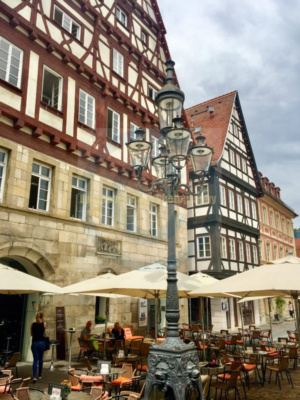
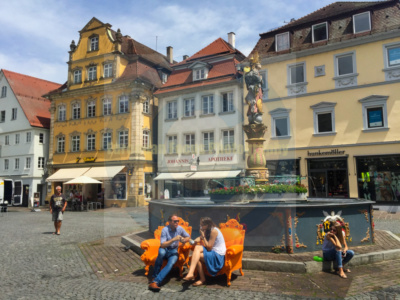
Schwäbisch Gmünd, Baden-Wuerttemberg
Schwaebisch Gmuend, Germany was photographed by James Derheim, European Focus Private Tours, in 2016 and 2017.
Schwäbisch Gmünd until 1934: Gmünd is a city in the eastern part of the German state of Baden-Württemberg. With a population of around 60,000, the city is the second largest in the Ostalb district and the whole East Württemberg region after Aalen. The city is a Große Kreisstadt since 1956, i.e. a chief city under district administration; it was the administrative capital of its own rural district until the local government reorganisation on 1 January 1973.
There are some institutions of higher education in the city, most notably the Pädagogische Hochschule Schwäbisch Gmünd (University of Education Schwäbisch Gmünd) and the Landesgymnasium für Hochbegabte (State Highschool for gifted children).
Schwäbisch Gmünd was a self-ruling free imperial city from the 13th century until its annexation to Württemberg in 1802.
From about AD 85, the Neckar-Odenwald line was part of the northern frontier of the Roman Empire. The Romans built the Limes Germanicus to secure this border; i.e., a line of fortifications at regular distances, which included a small castrum on the site of the present-day Schirenhof field in Schwäbisch Gmünd. A first major settlement in this area arose around the 2nd century AD, when Roman soldiers were deployed near the Upper Germanic limes. From 223 onward, the border lines were assaulted and taken by the Alemanni, who settled down in the areas abandoned by the Romans.
In the 8th century a counterfeit document in the name of Charlemagne, prepared at the Abbey of St Denis near Paris, mentioned a monastic cell called Gamundias built by Abbot Fulrad of St Denis. Whether or not this refers to Gmünd is uncertain. There are no archaeological indications of a cell of this type in Gmünd.
Gmünd was first mentioned in an 1162 deed issued at nearby Lorch Abbey, then under the rule of the Hohenstaufen emperor Frederick Barbarossa. The self-proclaimed Stauferstadt achieved the status of an Imperial City in 1268, which it held until 1802, when it was mediatised to the Electorate of Württemberg.
By the end of the 14th century, the name “Etzel castle” was used for the remains of the Roman fort, which had been built to protect the Neckar-Odenwald border of the Roman Empire. In a Baroque chronicle of the city of Schwäbisch Gmünd, written by the councillor Friedrich Vogt (1623–1674), the “Castle” was mentioned in ancient writings as “Etzel castle”. Even at the time of Vogt, the Roman remains were cheaper than stones from quarry, and these were thus removed to the ground. Only parts of the moat would still be visible.
The demesne officer, wine expert and archaeologist Carl Gok [de] (1776–1849), a half brother of the poet Friedrich Hölderlin, suspected in 1847, that the alleged castle on the Schirenhof manor had probably once been a Roman fort.[3] The first modern and scientific excavations took place under the guidance of retired army chief of staff of the Württemberg army, General Eduard von Kallee and by Major Heinrich Steimle in the years 1886 to 1888, i.e. before the Imperial Limes Commission (Reichslimeskommision) had been set up. The so-called Schirenhof Castrum is now part of the UNESCO World Heritage Site Limes Germanicus.
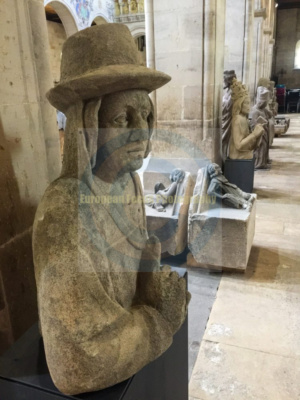
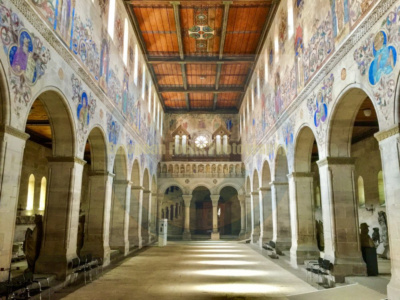
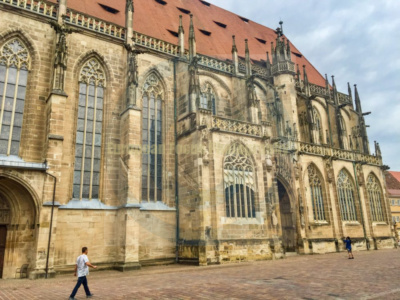
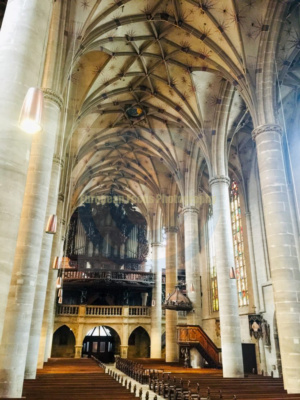
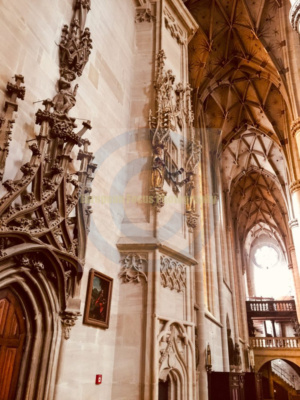
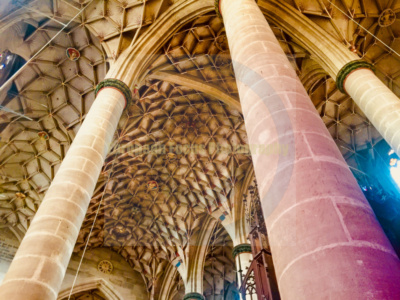
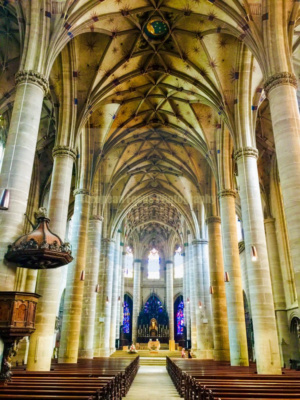
The Holy Cross Minster (Heilig-Kreuz-Münster) is the city’s main Catholic church. It stands on the site of a former, much smaller romanesque church. It took about 500 years to be completed, though not consecutively. Initial construction began around 1325 under the leadership of an unknown master builder on what was left of the previous romanesque church, the towers of which were still standing. In 1497, the south tower fell onto the north tower, which knocked over the north tower after a bow connecting the two was removed and in 1515, all repair work was finished.
The Church of Saint John
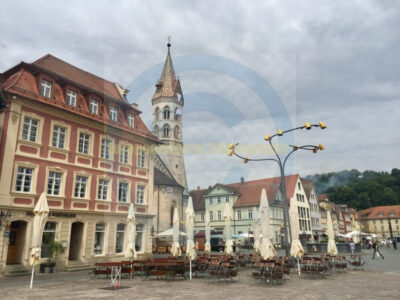
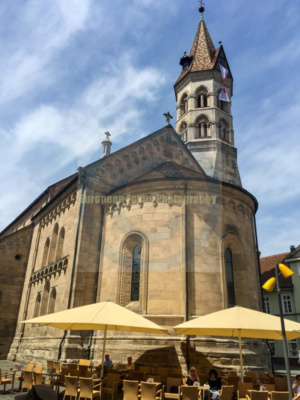
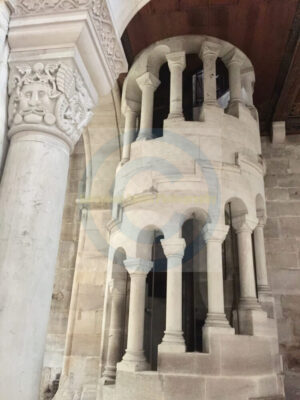
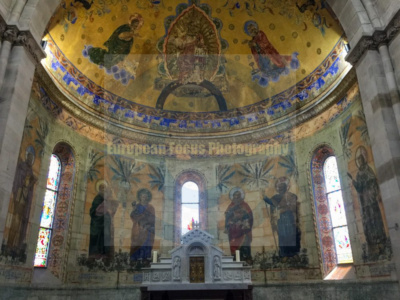
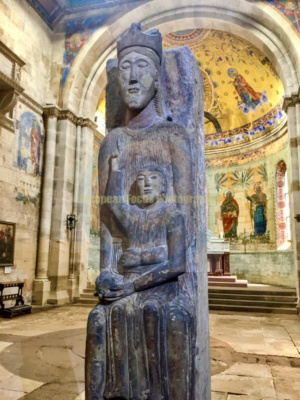
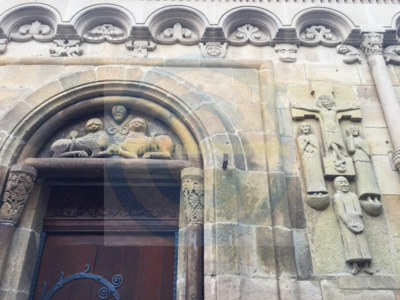
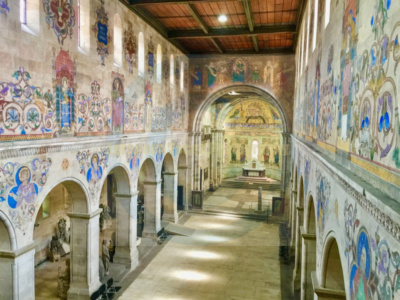
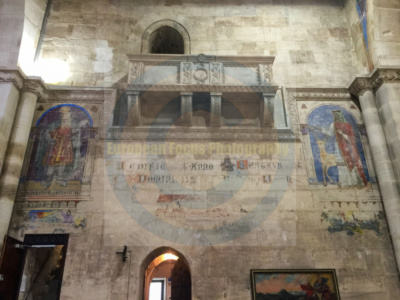
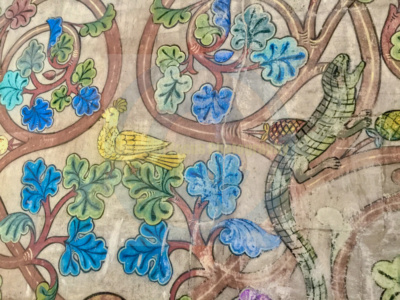
Sitting on the southeast of the Markt Square (only 78 meters northeast of the city hall), there lies a late Romanesque and neo-Romanesque church called the Johanneskirche, or Church of Saint John, also a Catholic church. As the story of its founding goes, Agnes of Hohenstaufen was out hunting in the Remstal one day and she lost her wedding band. She vowed to have a church built at the site where it would be recovered. Later, the ring was found in the antlers of a fallen stag at the site where the church now sits, and accordingly, Agnes commissioned the construction of the church. A cannonball fired during the Thirty Years’ War (1618–1648) remains visibly lodged in the apse of the church.
St. John’s Church in Schwäbisch Gmünd is a late Romanesque pillar basilica built in the 13th century and dedicated to St. John the Baptist. The Catholic city church is located directly between Johannisplatz and Marktplatz and is a popular photo motif. This is not least due to the leaning tower, which has tilted by about one meter due to the boggy ground. In the meantime, St. John’s Church in Schwäbisch Gmünd with its well-known silhouette has even become the city’s landmark and can be found in some logos, for example for the city’s anniversary in 2012. The church’s tower is accessible and offers a unique view from the tower room.
(Wikipedia)