Tours
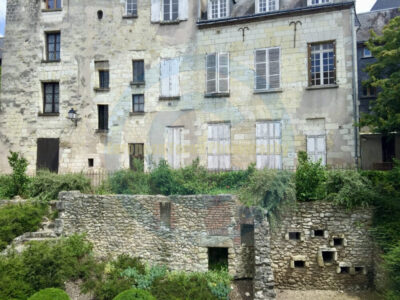
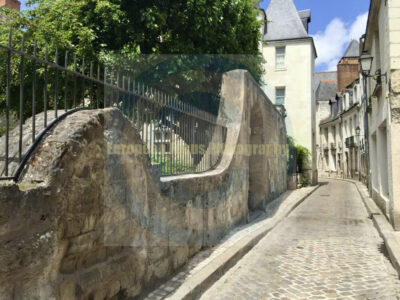
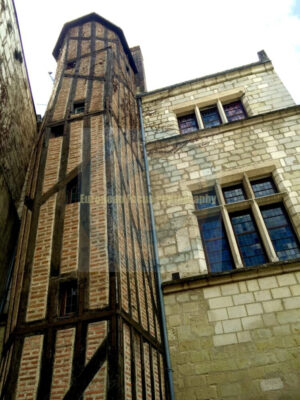
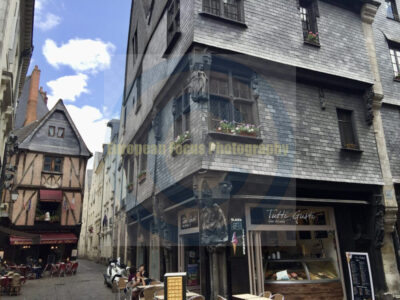
Tours is a city in the Loire Valley of France photographed by James Derheim, European Focus Private Tours, 2015
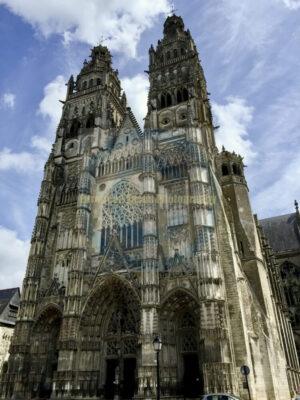
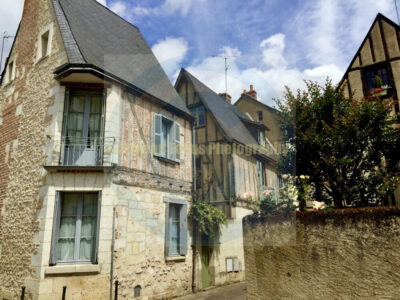
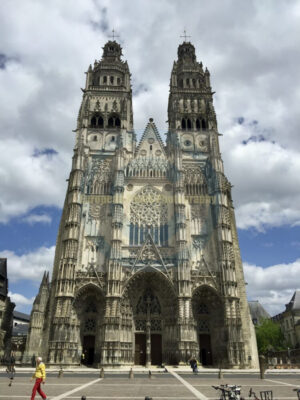
Tours is a university town between France’s Cher and Loire rivers. Once a Gallic-Roman settlement, today it’s a university town and a traditional gateway for exploring the chateaux of the Loire Valley region. Major landmarks include the cathedral, Saint-Gatien, whose flamboyant Gothic facade is flanked by towers with 12th-century bases and Renaissance tops.
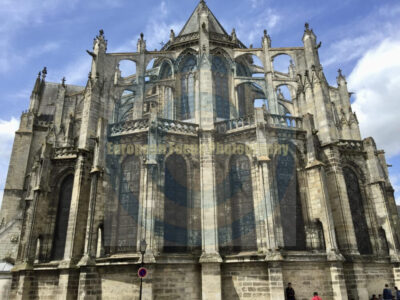
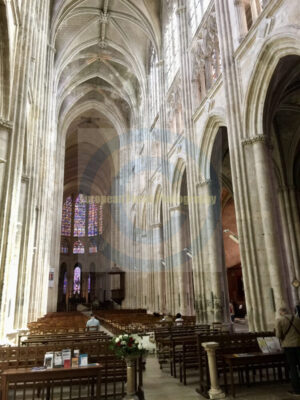
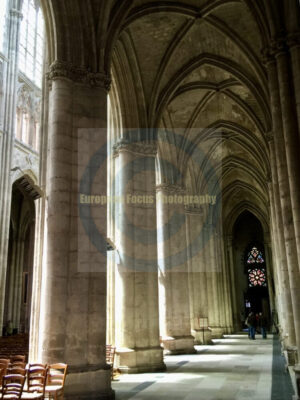
Tours Cathedral (French: Cathédrale Saint-Gatien de Tours) is a Roman Catholic church located in Tours, Indre-et-Loire, France. It is the seat of the Archbishops of Tours, the metropolitan cathedral of the Tours ecclesiastical province and is dedicated to Saint Gatianus. Built between 1170 and 1547, the church has been a classified monument historique since 1862 and has been owned by the French State, with the Catholic Church having the exclusive rights of use. (Wikiopedia)
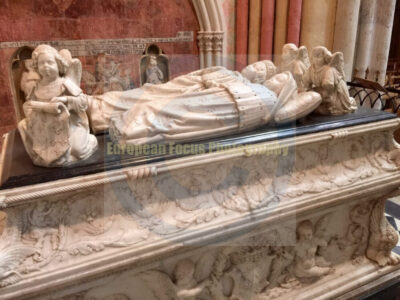
In the cathedral, one finds the Carrara marble tomb of the children of Charles VIII and Anne of Brittany, considered a masterpiece of early French Renaissance sculpture. It was sculpted between 1500 – 1507 by Michel Columbe, and contains the remains of several of the couples’ children, none of whom survived into adulthood.
Three earlier cathedrals existed on the same site. The first cathedral, dedicated to Saint Maurice, was built by Bishop Lidorius from 337 to 371 and located at the south end of the bridge over the river Loire, on the road from Paris to the southwestern regions of the country. It burned down in 558, and was rebuilt by the Bishop Gregory of Tours and rededicated in 590. Its location, at the south-west angle of the castrum, or old Roman walls, resulted in the cathedral entrance being part of the old Roman city wall.[3] Beginning in about 1160, another structure built in the Angevin style was begun; it was badly damaged by fire and never finished.[4]
Work recommenced with the choir in about 1220 after receiving financial assistance from Louis IX. The choir and transept were rebuilt between 1240 and the beginning of the 14th century, using portions of the lower walls of the Romanesque structure. At the end of the 14th century, the transept was completed, and the cathedral was re-dedicated in 1356 to Saint Gatianus.
Further work and the construction of the towers were interrupted by the Hundred Years War. The nave was only finished during the 15th century by architects Jean de Dammartin, Jean Papin and Jean Durand, with financial assistance from Charles VII and the Duke of Brittany Jean V. In 1484 the lower portals were completed, and the two new towers were erected just outside the old city walls. The first tower was finished in 1534 and the second in 1547, with French Renaissance features in their crowns.
The very slow construction of the cathedral led to a local saying: “… not until the cathedral is finished”, to mean something particularly long and difficult to achieve. It also meant that the building presents a complex pattern of French religious types of architecture from the 13th century to the 16th.
The cathedral in the 18th century (Musée des Beaux-Arts de Tours)
In 1787, responding to Vatican doctrines calling for making interiors of churches more open and welcoming, the jubé, or choir screen, which separated the choir from the nave, was removed. In 1793, during the French Revolution, the church was heavily damaged by Jacobins, who smashed the statues on the church portal. However, unlike other churches in France, the cathedral was spared from complete destruction and functioned as a Temple of Reason until the reign of Napoleon I. In 1848, a small restoration project was done, with portions of the cathedral, including the portal sculpture, restored.
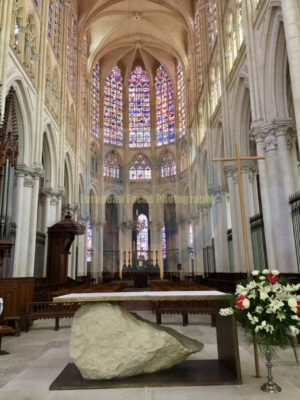
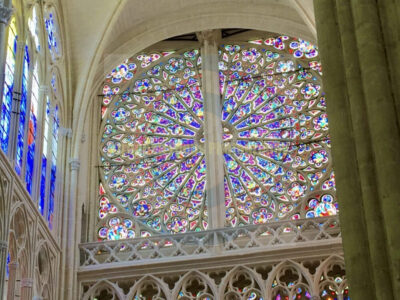
A major restoration of the cathedral began in 1993, beginning with the upper windows. The organ restoration was completed in 1996, followed with the north transept and its rose window in 2010 and 2013. In addition to restoration, two hundred square meters of new windows, dedicated to Saint Martin, were added to cathedral and a new main altar was dedicated in 2018.
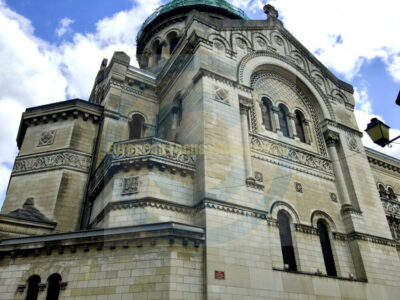
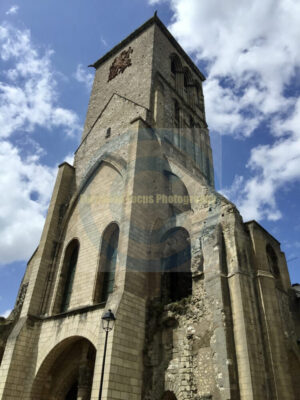
The Basilica of Saint Martin is a Catholic basilica dedicated to Saint Martin of Tours, over whose tomb it was built. It is located in Tours, France.
The first basilica was established here in the 5th century (consecrated in 471) on the site of an earlier chapel. It was at first served by a community of monks under an abbot, the Abbot of Saint Martin, who between 796 and 804 was Alcuin, the adviser of Charlemagne. Shortly before this the monastic establishment was changed to a collegiate church manned by a community of canons, but the office and title of abbot persisted.
The medieval basilica was completely demolished during the French Revolution. The present church was built between 1886 and 1924 by French architect Victor Laloux in a Neo-Byzantine style, on part of the site of the original basilica which was repurchased by the Church. It was dedicated on 4 July 1925. (Wikipedia)
(Wikipedia)