Charlton Mackrell, Somerset
Photographed in May, 2017 by James Derheim, European Focus Private Tours
Charlton Mackrell is a village and former civil parish, now in the parish of The Charltons, in the Somerset district, in the ceremonial county of Somerset, England, situated 3 miles (5 km) east of Somerton. The village has a population of 1,020.[1]
The parish consists of two villages, Charlton Mackrell and Charlton Adam. Both villages have approximately similar populations. There are also small settlements at Lytes Cary, Cary Fitzpaine (east of the A37 Fosse Way), and West Charlton. West Charlton is the shrunken remains of the original village of Charlton Mackrell.
History
The Fosse Way runs through the parish, and Roman villa sites associated with it have been found at Windmill Hill.[2] The parishes of Charlton Adam and Charlton Mackrell were part of the hundred of Somerton.[3]
In the 16th century, two medieval fields were divided, which delayed inclosure until the 18th century, leading to the current patchwork of fields.[4]
The Charltons have been home to several of the ancestors of politicians in the United States of America. Henry Adams, of nearby Barton St David, and Edith Squire of Charlton-Mackrell were married in the parish church in 1609, and they were the ancestors of Presidents John Adams, John Quincy Adams, and Calvin Coolidge, as well as of Samuel Adams, who also signed the Declaration of Independence, while Presidents Millard Fillmore and William Howard Taft were descendants of her two sisters Ann and Margaret.[5]
Around 1800, Kingweston resident William Dickinson purchased the manor, and his family owned it until 1930.[2]
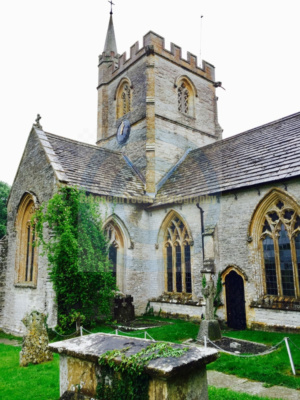
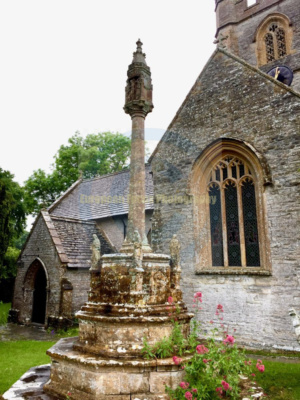
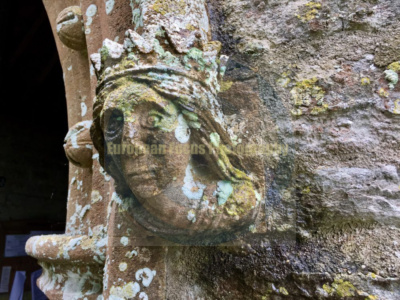
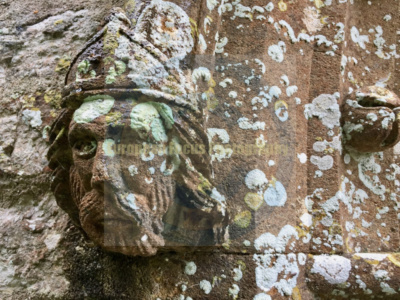
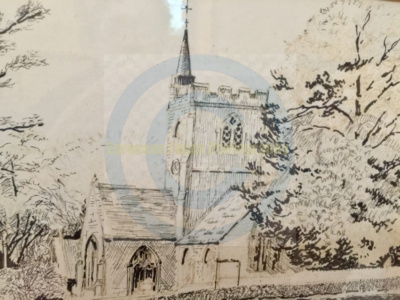
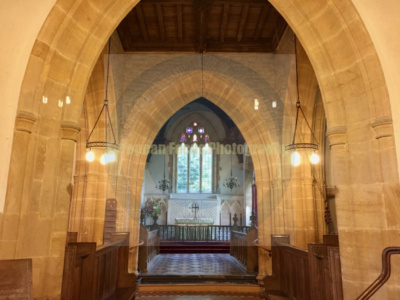
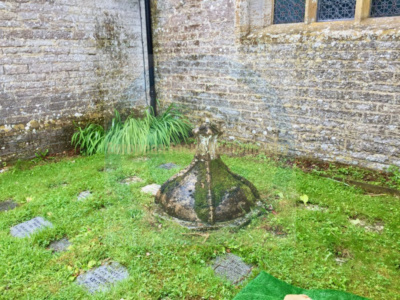
The Anglican Church of St Mary in Charlton Mackrell, Somerset, England was built in the 13th century. It is a Grade II* listed building.[1]
History
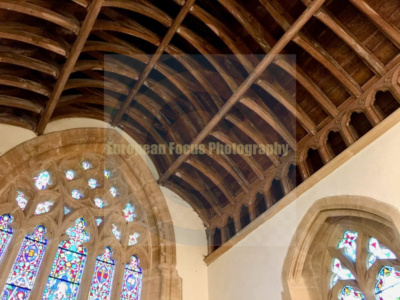
The church was built in the 13th century and restored in the 1790s and 1840s.[1][2] The tracery of the window of the transept was installed about 1330, however the original glass is no longer in place.[3]
The 1840 restoration included the removal of the singing gallery and extensive reconstruction and the addition of a vestry on the north side.[2]
The parish is part of the benefice of Somerton with the Charltons and Kingsdon within the Diocese of Bath and Wells.[4]
Architecture
The hamstone building has slate roofs. The chancel has corner buttresses as does the south transept.[1] The tower has gargoyles on the outside and six bells within.[1][3]
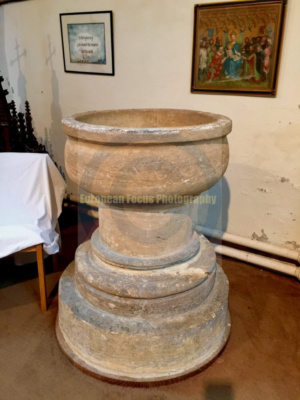
Inside the church is a 13th-century circular font,[5] while most of the decoration and stained glass is from the 19th century Victorian restoration.