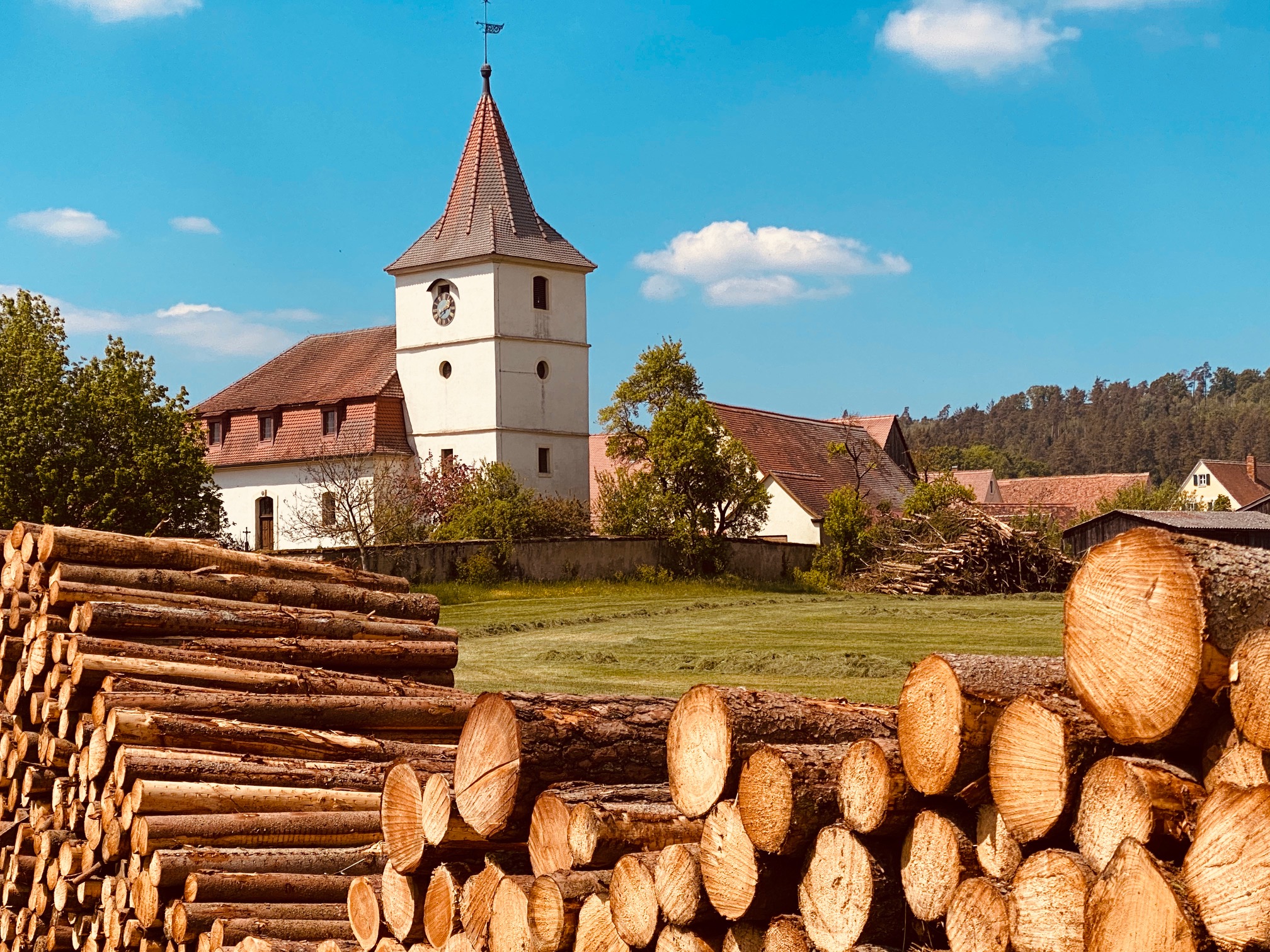
Chagford, Devon
Photographed by James Derheim, European Focus Private Tours, on May 30, 2017
Chagford is a market town[a] and civil parish on the north-east edge of Dartmoor, in Devon, England, close to the River Teign and the A382, 4 miles (6 km) west of Moretonhampstead. The name is derived from chag, meaning gorse or broom, and the ford suffix indicates its importance as a crossing place. At the 2021 census, it had a population of 1,539, which was slightly more than the 1,449 recorded at the 2011 census.[4]
History
Archaeological remains confirm that a community has existed here for at least 4000 years. In historical times, Chagford grew due to the wool trade and from tin mining in the area.[5] A weekly market was held here from before 1220,[2] and a monthly livestock market in the town survived until the 1980s. In 1305 it was made a stannary town where tin was traded. Among the most prominent tin-mining families in the 16th century were the Endecotts, Knapmans, Whiddons and Lethbridges.[6]
The population in the 1841 census was 1,043 inhabitants.[7]
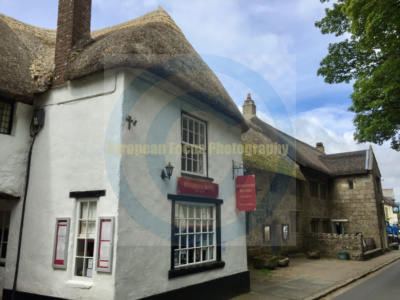
In an English Civil War skirmish Sidney Godolphin, the poet and Royalist MP for Helston, was shot and killed in the porch of the Three Crowns.[8]
In 1987, the New Scientist reported that Chagford contained “the most radioactive loo in the world”,[9] a reference to the high levels of Radon gas in this granite area.
Historic estates
The parish of Chagford comprises historic estates including:
- Whiddon, seat of the Whiddon family. Sir John Whiddon (d.1576),[10] a Justice of the King’s Bench[11] under Queen Elizabeth I, purchased the manor of Chagford, built a new manor house at Whiddon, part of which survives today, and built a deer park, the massive granite block wall of which survives today.
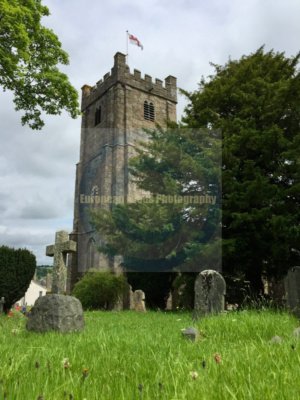
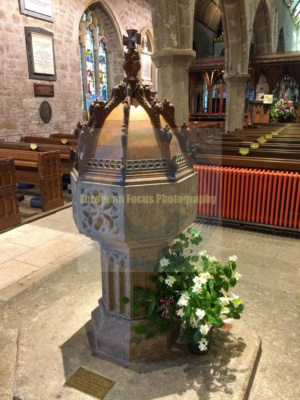
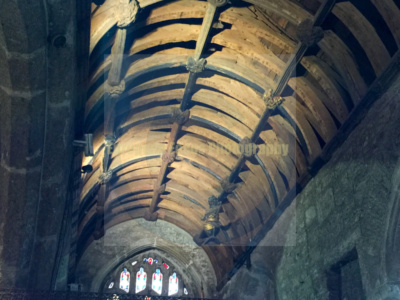
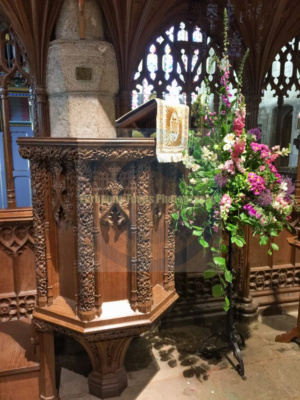
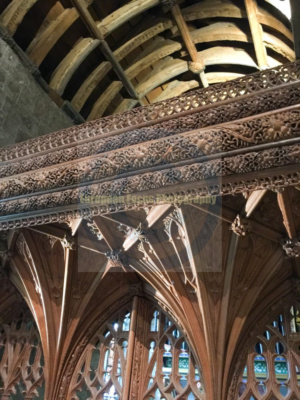
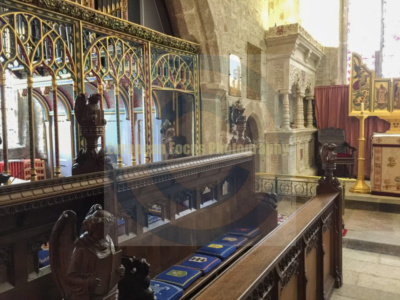
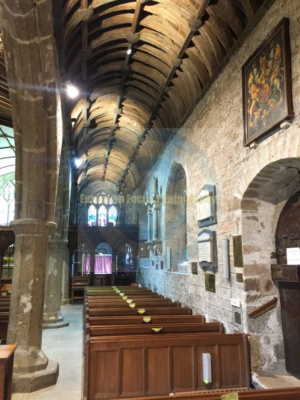
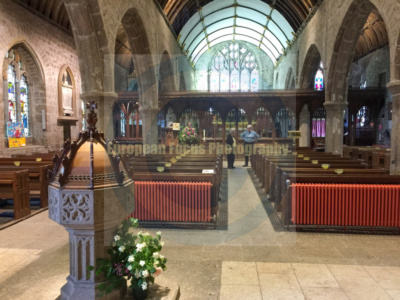
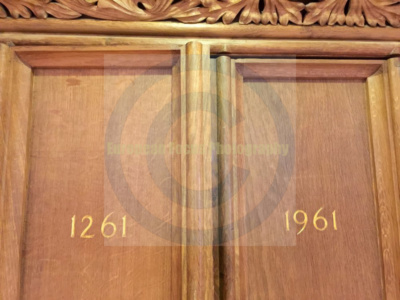
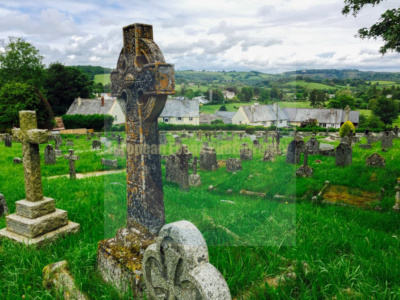
The Anglican parish church of St Michael the Archangel was dedicated in 1261 (originally Roman Catholic church), although little remains from this period. The tower dates back to the 15th century. The Grade I listed building was restored in 1865 and extended during the 20th century. It features carved roof bosses, similar to those found at St. Pancras’ church, Widecombe-in-the-Moor, including the tin miners’ emblem of three hares.
The churchmanship as in many churches in Devon has traditionally been Broad/High Church.
Chagford forms part of a “united benefice” of seven ecclesiastical parishes, known as The Whiddon Parishes of Dartmoor, the others being Throwleigh, Gidleigh, Drewsteignton, Spreyton, Hittisleigh and South Tawton.
A Wesleyan Chapel (est. 1834) was replaced by a Methodist church built in 1861; it closed in the 1990s and is now in secular use. Victorian era directories list a Baptist church (established 1829), but long since disappeared. However, the Bible Christian Chapel (est. 1844) continues to flourish as Chagford Gospel Church, and a purpose-built Roman Catholic church was founded in 1963.
The Legend of Mary Whiddon
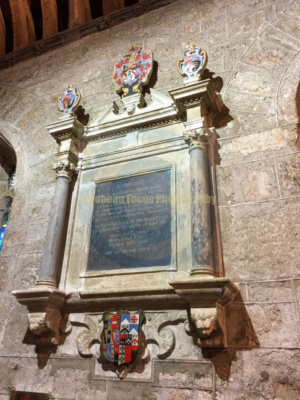
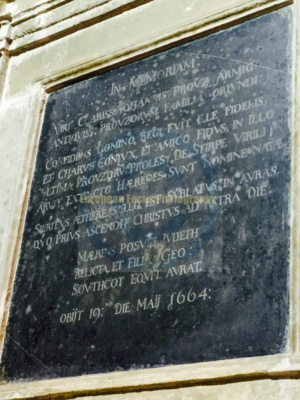
St Michael’s church contains a memorial to Mary Whiddon, dated 11 October 1641 or 1647 (the inscription is unclear), whose death is thought to have been one of the inspirations behind an episode in R.D. Blackmore’s novel, Lorna Doone. Although his novel is set on Exmoor, the author may have been moved by a local legend about Mary who, it is claimed, was shot dead on her wedding day as she came out of church. The climax of Lorna Doone involves such a shooting, but in that case the heroine survives.
Whether this actually happened is unclear. Mary’s tomb records that she died “a matron, yet a maid” (“a married woman, yet a virgin”). On the other hand, “maid” is a common term in Devon for a “girl” and the inscription may just mean that Mary died young (“although married, still just a girl”). The church’s Marriage and Burial registers for the Civil War period are lost, and the only contemporaneous record is Mary Whiddon’s undated will. It mentions no husband, but as her maiden name is also thought to have been Whiddon (i.e. she married a cousin), it might have been written before her marriage.
In the 21st century, a tradition has developed whereby new brides at the church lay a bouquet of flowers on Mary’s memorial. This ritual is aimed at bringing good luck in the forthcoming marriage.[14]
The ghost of Mary Whiddon is said to haunt Whiddon Park House, 2 miles outside the town.[15]
Source: Wikipedia