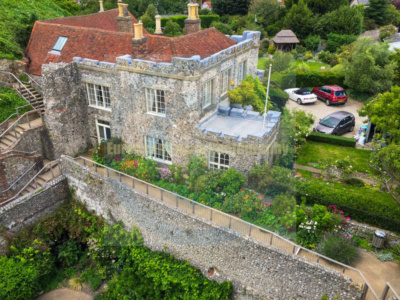
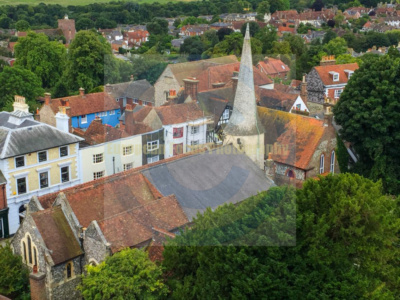
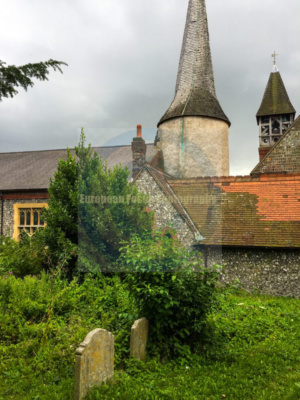
Lewes, Sussex
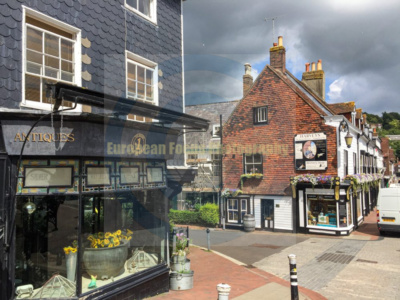
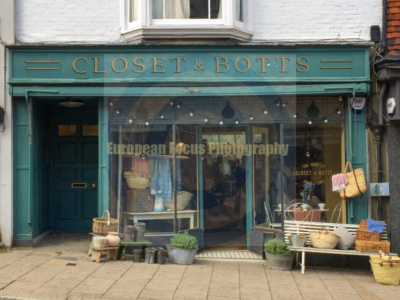
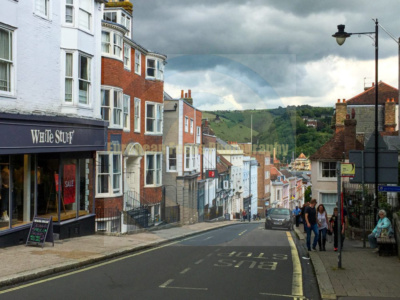
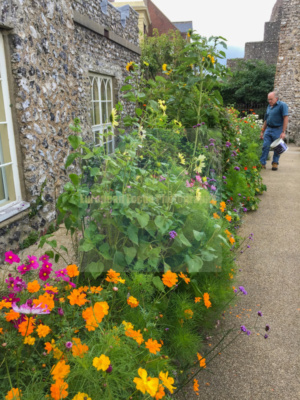
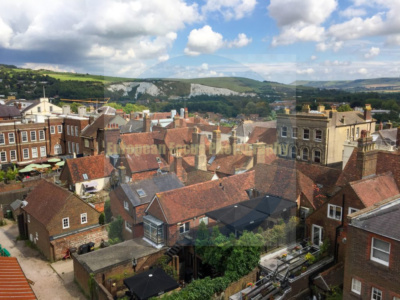
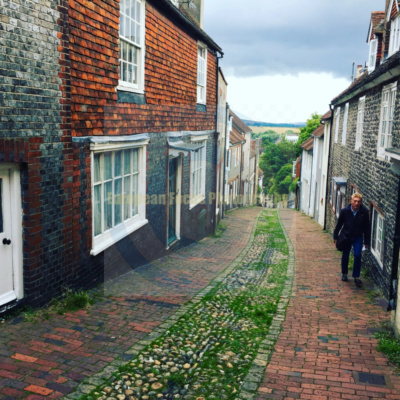
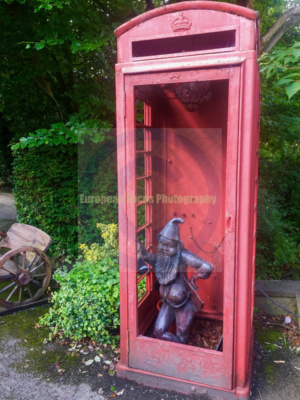
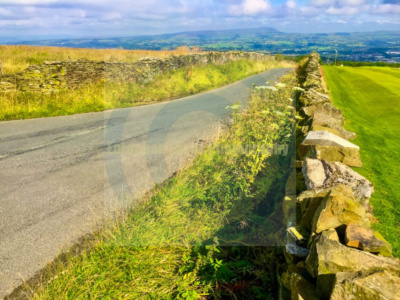
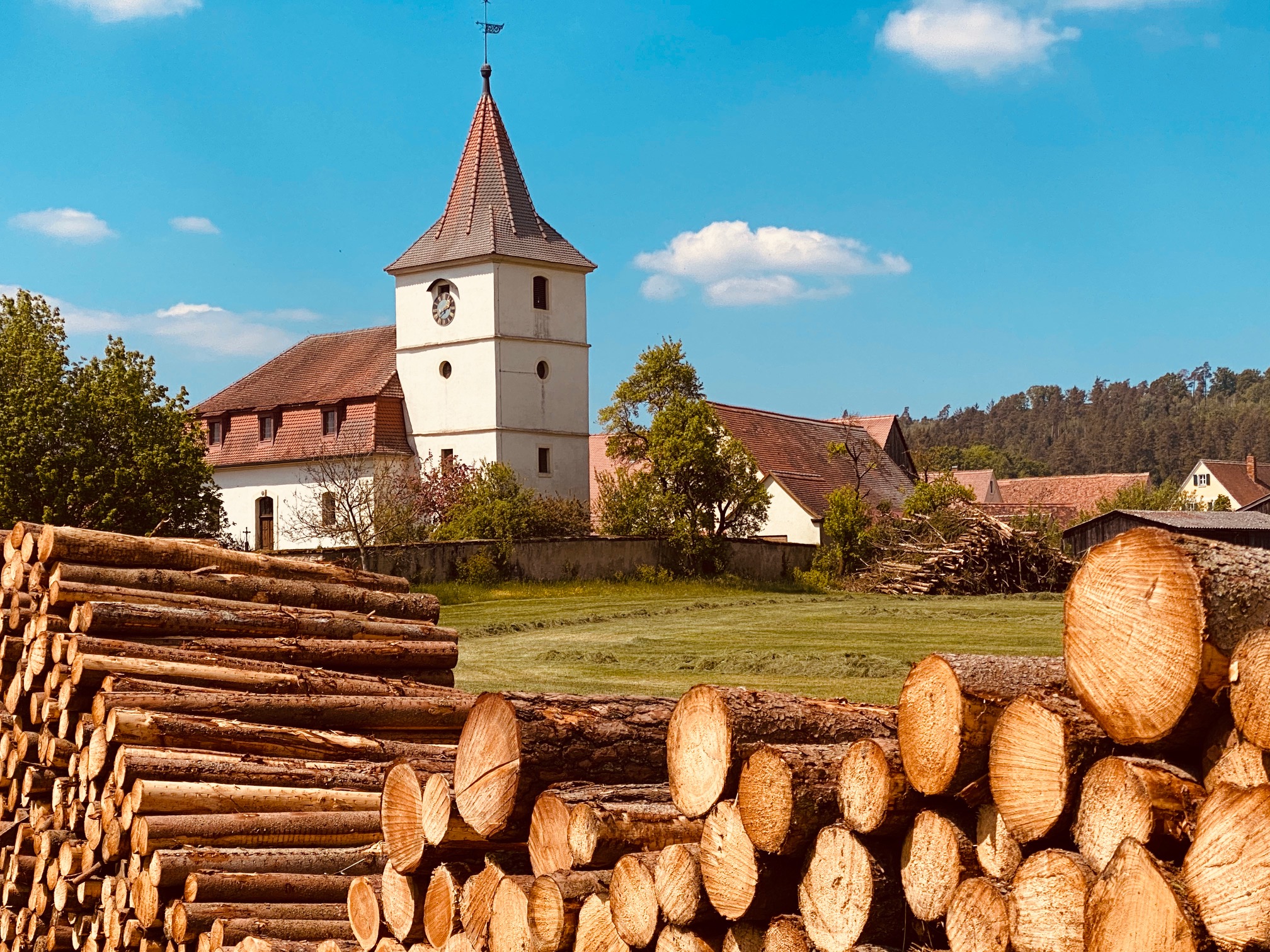
Photographed by James Derheim, European Focus Private Tours, in August, 2017. James was leading a private and customized tour with a family historian who had ancestry from this region of Sussex. If you have ancestors from Lewes and wish to see a different aspect of the town or region, please contact James through the contact form found on this site.
Lewes (/ˈluːɪs/ ⓘ) is the county town of East Sussex, England.[note 1] The town is the administrative centre of the wider district of the same name. It lies on the River Ouse at the point where the river cuts through the South Downs.
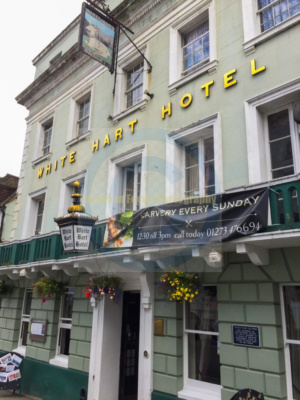
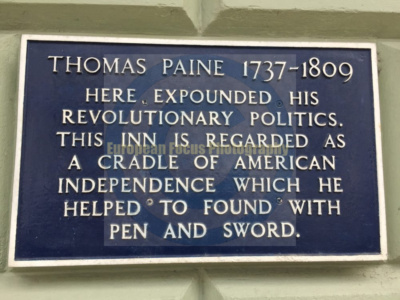
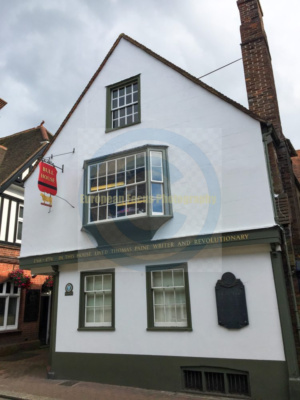
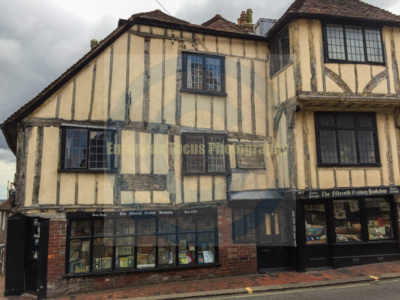
A traditional market town and centre of communications, in 1264 it was the site of the Battle of Lewes. The town’s landmarks include Lewes Castle, Lewes Priory, Bull House (the former home of Thomas Paine), Southover Grange and public gardens, and a 16th-century timber-framed Wealden hall house known as Anne of Cleves House. Other notable features of the area include the Glyndebourne festival, the Lewes Bonfire celebrations and the Lewes Pound.
History
Pre-Saxon
The immense strategic value of the site, which is able to command traffic between the Channel coast and the Sussex interior, was recognised as early as the Iron Age, when a hill-fort was built on Mount Caburn, the steep-sided hill that overlooks the Ouse (and the modern town of Lewes) from the east.
During the Roman period, there was an aristocratic villa at Beddingham,[14] at the foot of Mount Caburn, and there have been several finds of Roman coins and pottery sherds in Lewes itself. The Victorian historian Thomas Walker Horsfield therefore reckoned that there must have been a Roman settlement on the site, and he identified it with the otherwise unlocatable town of Mutuantonis.[15] Another antiquarian, John Elliot, even suggested that central Lewes’s distinctive network of twittens was based on the layout of a Roman legionary fortress; however modern historians are rather more cautious about the possibility of a Roman Lewes, as there is as yet no archaeological evidence for a built-up area dating back to the Roman period.[16]
Anglo-Saxon and Anglo-Norman
The earliest phase of Anglo-Saxon settlement in Sussex was concentrated between the Rivers Ouse and Cuckmere,[17] and Anglo-Saxon finds begin to appear in Lewes from the sixth century.[18] The town of Lewes was probably founded around this time, and it may have been one of the most important settlements in the Kingdom of Sussex, along with Chichester and Hastings, though the evidence for this early period is very sketchy.[19]
By the ninth century, the Kingdom of Sussex had been annexed to the Kingdom of Wessex, and in 838 Ecgberht, King of Wessex donated the estate of Malling, on the opposite side of the Ouse from Lewes, to the Archbishop of Canterbury. As a result, the Parish of Malling became a ‘peculiar’, which means that the parish was directly subject to the Archbishop of Canterbury rather than the Bishop of Chichester like every other parish in Sussex. Malling would retain this anomalous status until as late as 1845.[20]
Information about Lewes becomes much more plentiful from the reign of Alfred the Great onward, as it was one of the towns which he fortified as part of the network of burhs he established in response to the Viking raids. The peace and stability brought by Alfred and his successors evidently stimulated economic activity in the area, for in the late Anglo-Saxon period Lewes seems to have been a thriving boom town – during the reign of Alfred’s grandson Æthelstan it was assigned two royal moneyers, more than any other mint in Sussex, and according to Domesday Book it generated £26 of revenue for the Crown in 1065, almost twice the amount of any other town in the county, and comprised 127 households.[21][22]
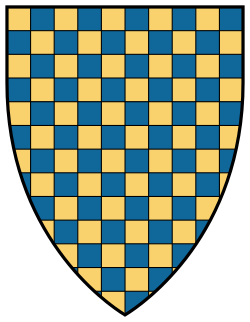
After the Norman Conquest, William the Conqueror rewarded his retainer William de Warenne by making him Earl of Surrey and granting him the Rape of Lewes, a strip of land stretching along the Ouse valley from the coast to the Surrey boundary. De Warenne constructed Lewes Castle within the walls of the Saxon burh, while his wife Gundreda founded the Priory of St Pancras, a Cluniac monastic house, in about 1081.
Battle of Lewes
During the Second Barons’ War, King Henry III was ambushed at Lewes by a force of rebel barons led by Simon de Montfort. Henry marched out to fight de Montfort, leading to a pitched battle on the hills above the town (roughly in the area of modern Landport Bottom). The king’s son Prince Edward, commanding the right wing of the royal army, succeeded in driving off some of the baronial forces, but he got carried away with the pursuit, which took him as far as Offham. In Edward’s absence the remainder of the royal army was attacked by de Montfort and Gilbert de Clare and decisively defeated. The king’s brother Richard of Cornwall was captured, and the king himself was forced to sign the Mise of Lewes, a document which does not survive but was probably aimed at forcing Henry to uphold the Provisions of Oxford. Despite this uncertainty about its consequences, the battle is often seen as an important milestone in the development of English democracy. [23][24]
Late Mediaeval and Early Modern

The de Warenne family died out with Earl John in 1347, whereupon lordship of the Rape of Lewes passed to his sororal nephew Richard Fitzalan, 4th Earl of Arundel. Fitzalan preferred to reside at Arundel Castle rather than at Lewes, and the town therefore lost the prestige and economic advantages associated with being the seat of an important magnate. This was only the beginning of a series of misfortunes that struck Lewes, for in 1348 the Black Death arrived in England and later on in the century the Hundred Years War led to a series of French and Castilian raids on Sussex,[25][26] which badly disrupted trade. On one occasion in 1377 the Prior of St Pancras, John de Charlieu, was abducted by the raiders and held to ransom. Furthermore, after the main branch of the Fitzalan family died out in 1439, the Rape of Lewes was subsequently partitioned between the three sororal nephews of the last earl, namely John Mowbray, 3rd Duke of Norfolk, Edward Neville, 3rd Baron Bergavenny, and Edmund Lenthall. As a result of this dismemberment the district became even more neglected by its lords, although feudal politics was starting to become less important anyway due to the centralising reforms of the Yorkist and Tudor kings.[25]
The English Reformation was begun by one of these Tudor monarchs, Henry VIII, and as part of this process the monasteries of England were dissolved; Lewes Priory was consequently demolished in 1538 and its property seized by the Crown. Henry’s daughter Mary I reversed the religious policy of England, and during the resulting Marian Persecutions of 1555–1557, Lewes was the site of the execution of seventeen Protestant martyrs, most of them actually from the Weald rather than Lewes itself, who were burned at the stake in front of the Star Inn (now the site of Lewes Town Hall). Commemoration of the martyrs is one of the main purposes of Lewes Bonfire, and a stone memorial to the martyrs was unveiled on Cliffe Hill in 1901.[27]
Lewesian politics was dominated by a strongly Puritan faction in the reign of Charles I, and during the English Civil War it was one of the most important Parliamentarian strongholds in Sussex. As such it became the target of a royalist attack in December 1642, but the royalist army was intercepted and defeated at the Battle of Muster Green by Parliamentarian forces commanded by Herbert Morley, one of the two Members of Parliament (MPs) for Lewes.[28]
Lewes recovered relatively quickly after the Civil War, and prospered during the late seventeenth and eighteenth centuries. It had always been one of the principal market towns of Sussex, as well as an important port, and by the end of the Georgian era it also had well-developed textiles, iron, brewing, and shipbuilding industries. [28]
Church of England
- St Michael’s is located at the top of the High Street and like St Peter’s in nearby Southease it has a round tower (with a shingled spire). Its length runs along the street rather than away from it and the cemetery is separated from the High Street by stone walls with iron railings on top. Next to it is a building which is used upstairs as a Sunday school.
- Further west is St Anne’s,[57] a quiet church surrounded by its graveyard, which gives its name to the street it is on.
- St John sub Castro (Latin for St John-under-the-Castle) is the northernmost church in the old town. The surrounding town quarter is called St John’s. The church’s boundaries are actually protected on one side by the Town Walls, although originally St John’s was a small Saxon building. It was destroyed in the 19th century but the main door was kept and used as an east door for the large new church, built in 1839 by George Cheeseman[58] in flint and brick. In the graveyard there is a memorial to the Finnish prisoners kept in the old naval prison in the 19th century. St John’s Church Hall is a couple of streets away in Talbot Terrace.
- In Cliffe there is St Thomas à Becket’s, where the Orthodox Community also worship.
- In Southover, St John the Baptist’s is located on Southover High Street. The nave incorporates the hospitium of the Priory of St Pancras.[59] Neighbouring it is Church End and down the road at St James Street cul-de-sac, the Church Hall. In its grounds is the Southover War Memorial, which is distinct from the main Lewes War Memorial.
- St. Michael, South Malling, dates from 1628.
Deconsecrated
- All Saints’ is next to the site of a Priory of Grey Friars (Franciscan friars) the only relic of which is an archway at the end of the church boundary wall, which is on the line of the town wall. The medieval tower survives, abutting a later brick nave by Amon Wilds (1806)[58] and 19th-century Gothic-style chancel. This church is now deconsecrated and serves as a community arts space, managed by the Town Council.[60]
Landmarks
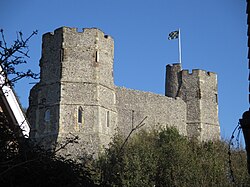
The town is the location of several significant historic buildings, including Lewes Castle, the remains of Lewes Priory, Bull House (the former home of Thomas Paine), Southover Grange and public gardens, and a 16th-century timber-framed Wealden hall house known as Anne of Cleves House because it was given to her as part of her divorce settlement from Henry VIII, though she never lived there. Anne of Cleves House and the castle are owned and maintained by the Sussex Archaeological Society (whose headquarters are in Lewes). The Round House, a secluded former windmill in Pipe Passage, was owned by the writer Virginia Woolf.
The steep and cobbled Keere Street is home to many historic buildings, including a timber framed antiquarian bookshop. The gardens of the buildings on the east side of the street border the old Town Walls. The Prince Regent once drove his carriage down the street, and a sign at the bottom commemorates this event.

The ancient street pattern survives extensively as do a high proportion of the medieval building plots and oak framed houses, albeit often masked with later facades. The 18th-century frontages are notable and include several, like Bartholomew House at the Castle Gate, that are clad in mathematical tiles which mimic fine brick construction. Numerous streets of 18th- and 19th-century cottages have survived cycles of slum clearance as models of attractive town housing.
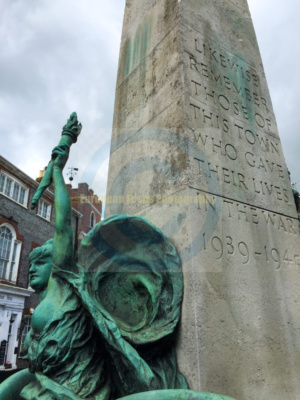
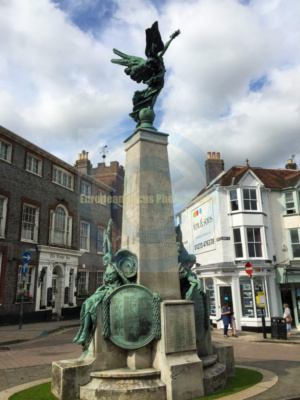
At the highest point of the old town the Portland stone and Coade stone facade of the Crown Court (1808–12, by John Johnson), the brick Market Tower and florid Lewes War Memorial mark the historic centre, although trade has tended to concentrate on the lower land in modern times. At the lowest part of the town, by the river, Harvey & Son’s Brewery, ‘The Cathedral of Lewes’ is an unspoilt 19th-century tower brewery and is the only one of the town’s five original major breweries still in use. Nearby Fitzroy House is a George Gilbert Scott designed building, constructed as a library in memory of Lewes MP Henry FitzRoy in 1862 and now a private residence.[72] The railway station is the other important monument of the industrial era.

Southover Grange is a grade II*listed Tudor manor house built in 1572 with Caen limestone taken from the ruins of Lewes Priory.[73] The house and its gardens were bought by Lewes District Council and opened to the public in 1945. The house is now owned by East Sussex County Council, and it is currently being refurbished into a wedding venue, registry office and community facility. The east wing is leased to an art shop and the Window café (open in spring and summer). The Grange gardens are divided by the Winterbourne stream and contain formal bedding displays, a wildflower area, a knot garden and some notable trees, including a large Magnolia grandiflora, a mulberry tree dating perhaps to the 17th century and a tulip tree planted by Queen Elizabeth II. The gardens are open to the public during daylight hours all year round.

Pelham House dates back to the 16th century and features architecture of all subsequent eras and a private landscaped garden facing the Downs. It now serves as an independent hotel. The Shelleys, also now a hotel, is likewise of some antiquity with a private garden and family associations with Percy Shelley.
The centre of Lewes is notable for a consistently high calibre of regional vernacular architecture and variety of historic construction materials and techniques. A comprehensive survey of all historical plaques was conducted in 2013 by a local civic society, the Friends of Lewes.[74]
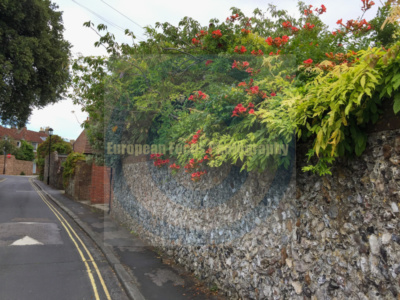
A distinctive feature of the centre of Lewes is the network of alleyways or ‘twittens’ which run north–south on either side of the High Street and date back to Anglo-Saxon times. According to the Dictionary of the Sussex dialect and collection of provincialisms in use in the county of Sussex published in Lewes in 1875. “Twitten is a narrow path between two walls or hedges, especially on hills. For example, small passageways leading between two buildings to courtyards, streets, or open areas behind”. Some twittens (e.g. Broomans Lane, Church Twitten, Green Lane, Paine’s Twitten) remain flint-wall-lined pedestrian thoroughfares, others (e.g. Watergate Lane, St Andrew’s Lane and renamed Station Street (formerly St Mary’s Lane)) are now narrow usually one-way roads. The most notable of all Lewes’ twittens is Keere Street. A weekly Sunday morning run up and down all the twittens on the south side of the High Street – the so-called Twitten Run – has operated in the town since November 2015.[75]
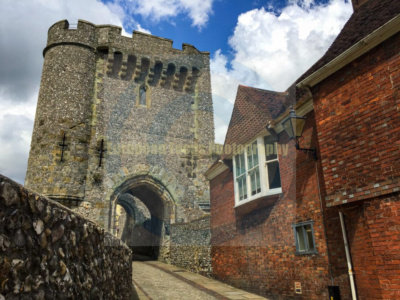
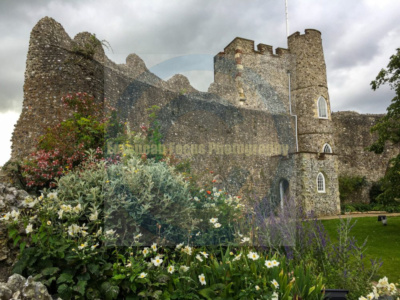
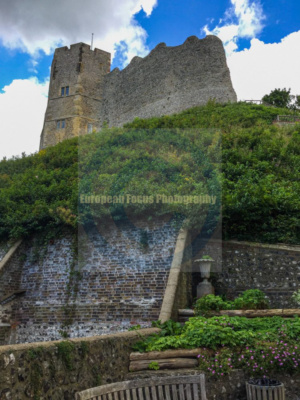
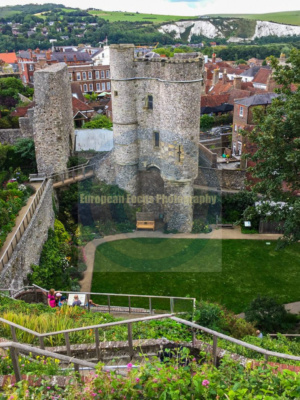
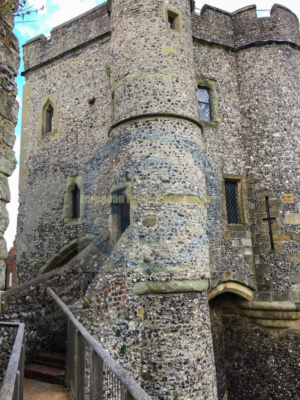
Lewes Castle is a medieval castle in the town of Lewes in East Sussex, England. Originally called Bray Castle, it occupies a commanding position guarding the gap in the South Downs cut by the River Ouse and occupied by the towns of Lewes and Cliffe. It stands on a man-made mount just to the north of the high street in Lewes, and is constructed from local limestone and flint blocks.
History

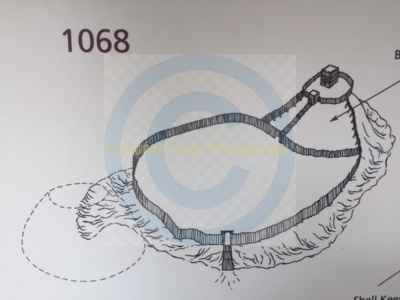
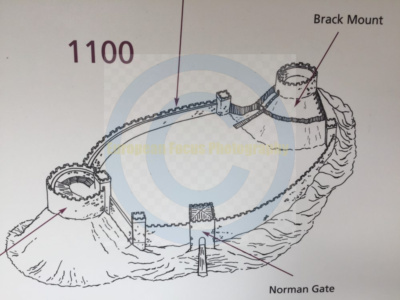
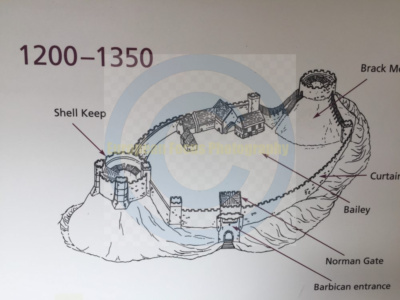
The castle follows a motte and bailey design but, unusually, it has two mottes,[2] and the only other castle in England to have that structure is Lincoln Castle.[1]
The first motte, known as Brack Mount, was completed shortly after the Norman Conquest of England in 1066 and the second motte, known as the Keep, was completed in the late 11th century.[2] Both mottes were built by William de Warenne, 1st Earl of Surrey.[2] The mottes would originally have been surmounted by wooden palisades but these were replaced with masonry shell keeps at the start of the 12th century.[1] The bailey area also had a stone wall with towers.[1]
Soldiers left the castle to engage with Simon de Montfort at the Battle of Lewes in 1264.[3]
Towers were added to one of the shell keeps in the 13th century and a barbican gate was added in the 14th century.[2] When the last of the de Warennes, John, the 7th Earl, died without issue in 1347, he was buried in Lewes Priory.[2] His title passed to his nephew Richard FitzAlan, 10th Earl of Arundel.[2]
The castle was leased by Sussex Archaeological Society from 1850, and was acquired by Charles Thomas-Stanford and gifted to the Sussex Archaeological Society in 1922.[2]
Source: Wikipedia