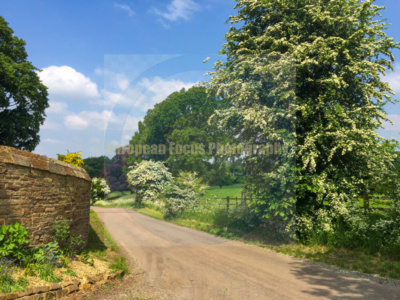
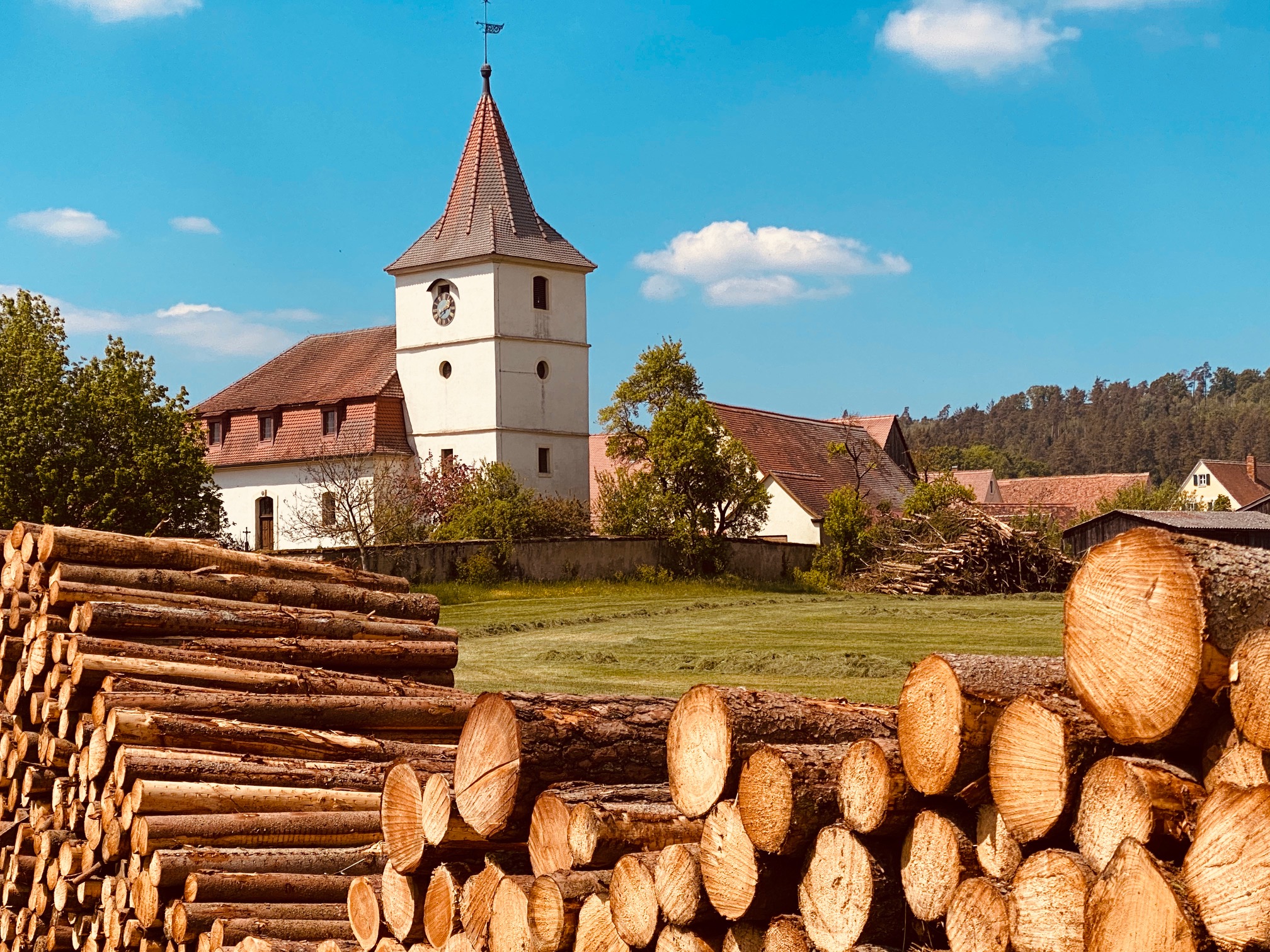
Watford, Northamptonshire
Photographed by James Derheim, European Focus Private Tours, in May of 2018
Watford is a village and civil parish in West Northamptonshire in England. At the time of the 2001 census, the parish’s population was 224 people,[1] including Murcott and increasing to 320 at the 2011 Census.[2] Watford is home to Watford Gap services, the UK’s oldest motorway service station, located directly on the M1 motorway and alongside the West Coast Main Line.
History of Watford
Roman era to the 5th century
It is known that the important Roman road Watling Street was constructed on the western boundary of the village. In the Roman era the Roman settlement of Bannaventa (‘A Gap in the Hills’), with defensive earth and timber ramparts and a ditch, was situated about two miles south-west of Watford. Today some remains of the settlement such as building platforms, mounds and crop marks are still visible.[3]
Anglo-Saxon period
After the departure of the Romans, the area eventually became part of the Anglo-Saxon kingdom of Mercia. Watford is mentioned as one of the lands belonging to Ethelgifu and was probably inherited from her own kindred. In the 7th century the Mercians converted to Christianity with the death of pagan King Penda. About 889 the area was conquered by the Danes and became part of the Danelaw – with Watling Street serving as the boundary. This was in effect until the area was recaptured by the English about 917 under Wessex King Edward the Elder, son of Alfred the Great. In 940 the Vikings of York captured Northamptonshire and devastated the area, with the county retaken by the English in 942. Northamptonshire is one of the few counties to have both Saxon and Danish town-names and settlements.[3] This may be reflected in the place-name’s etymology, where both Old Scandinavian ‘vað’ has been coupled with its English translation, ‘ford’. Alternatively, the first element may be a Scandinavianised form of original Old English ‘gewæd’, with the same meaning, or else Old English ‘wāþ’ (‘hunting’).[4]
1066 and later
In 1066 the local Saxon lord is recorded as Thor, a common Scandinavian name that may have dated back to the Viking invasions of several centuries prior. The first known recording of the affairs of Watford village is in the Domesday Book of 1086. At that time Watford was considered a fairly large village with a population that could have been more than 100 people. By 1086 the Saxons had been ousted by the Normans and Gilbert the Cook was Lord and Tenant-in-Chief of Watford and another parish. Baldwin was the son and successor of Gilbert in the reign of King Henry I.[3] By the time Baldwin died in the first year of Henry II, Watford was held by the Barony of Brunn which was held by Baldwin. The Barony and Watford with it passed to the husband of one of Baldwin’s daughters, Hugo Wac, who became the Baron of Brunn succeeding his wife’s father.
Medieval era
Watford has extensive settlement remains for an earlier form of the village in the medieval era. There is a stone building, and remains of gardens, traces of medieval dwellings, house-sites, paddocks, etc. Additionally, there are reconstructed cottages from this era. The significance of the medieval village remains is underscored by the adjoining ridge and furrow, evidence of an extensive medieval cultivation system which provided rich, well-drained land for crop planting.[3]
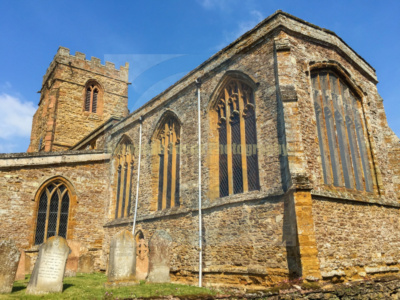
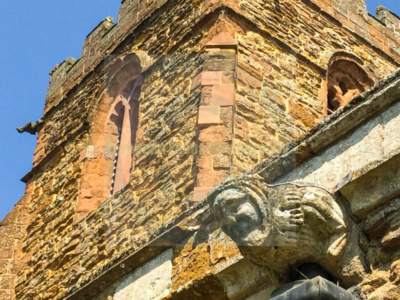
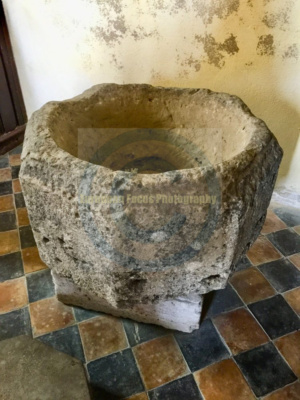
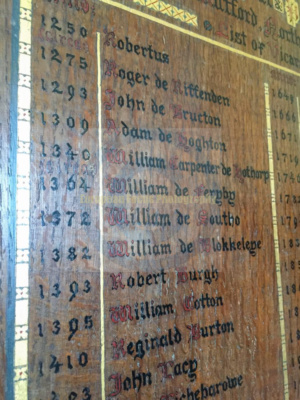
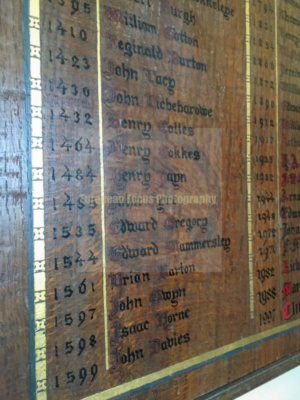
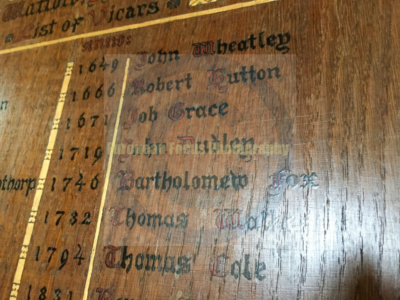
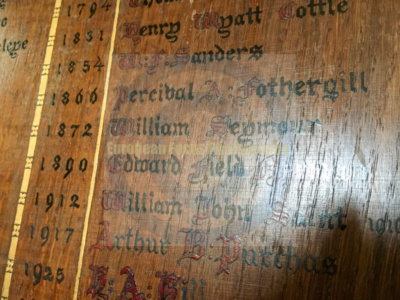
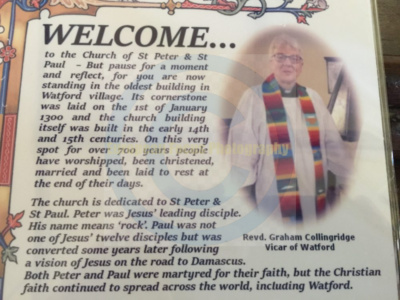
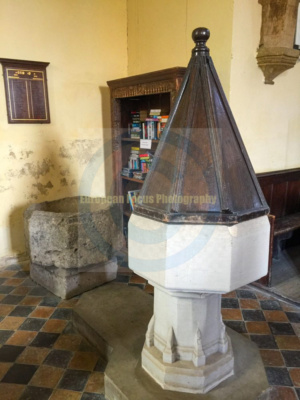
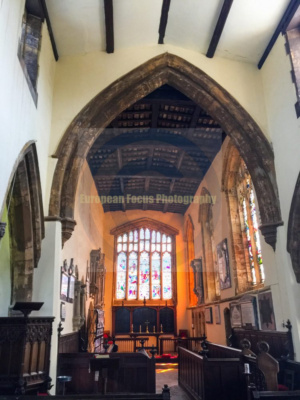
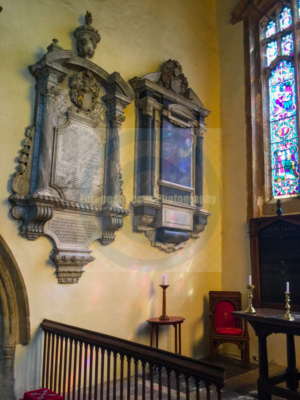
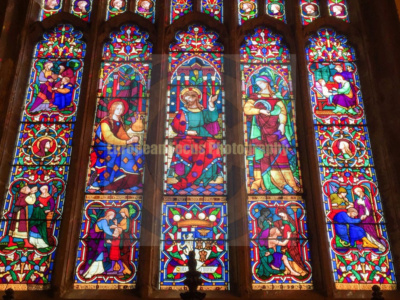
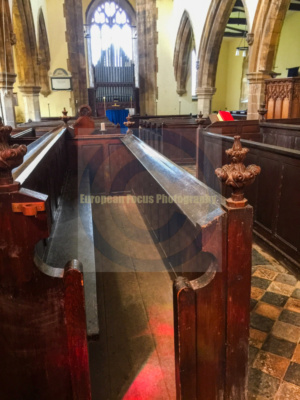
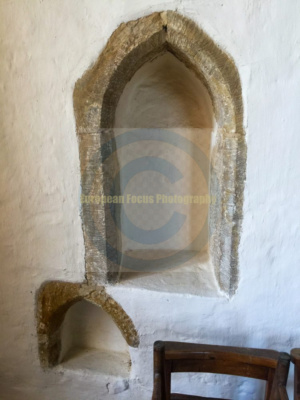
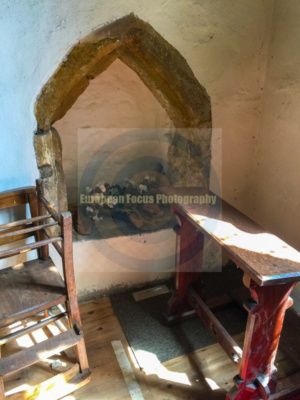
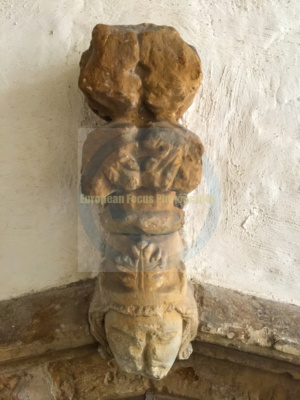
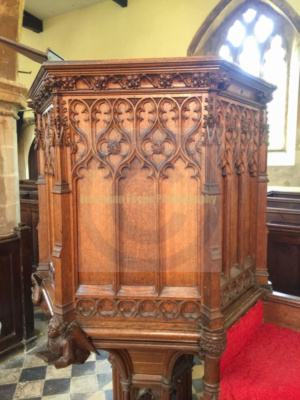
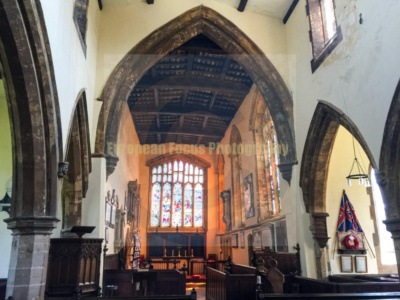
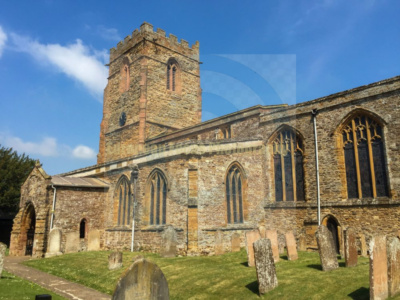
St Peter & St Paul’s Church is an Anglican Church and the parish church of Watford, Northamptonshire. It is a Grade I listed building and stands on the west side of the Church Street.
There is no reference to a church or priest in the entry for Watford in the Domesday Book.[1]
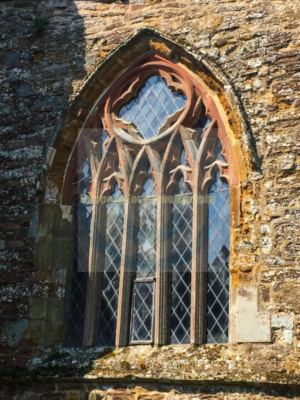
The main structure of the present building was erected in the 14th and 15th centuries, with further work in the 18th and 19th centuries. The church now consists of a nave, north and south aisles, chancel with north chapel, north and south porches and a west tower. A detailed description appears on the Historic England website.[2]
The parish registers survive from 1565, the historic registers being deposited at Northamptonshire Record Office.[3]
Watford is part of a united Benefice along with Long Buckby, West Haddon and Winwick. Each parish retains its own church building.
Source: Wikipedia