Hingham, Norfolk
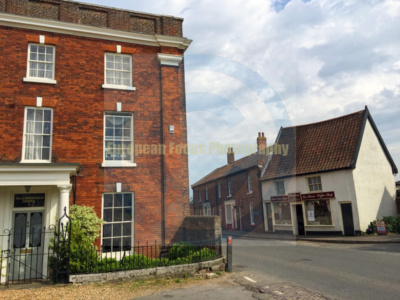
Photographed by James Derheim, European Focus Private Tours, on May 28, 2018
Hingham is a market town and civil parish in mid-Norfolk, England. The civil parish covers an area of 14.98 km2 (5.78 sq mi) and had a population of 2,078 in 944 households at the time of the 2001 census,[2] increasing to 2,367 at the 2011 census.[3]
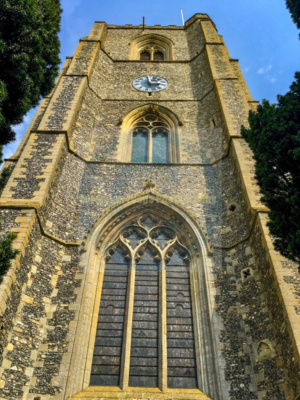
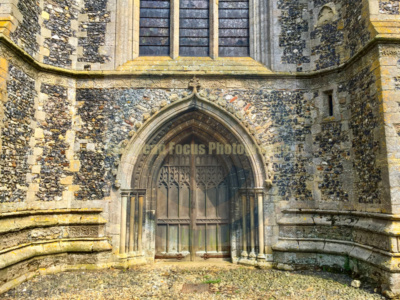
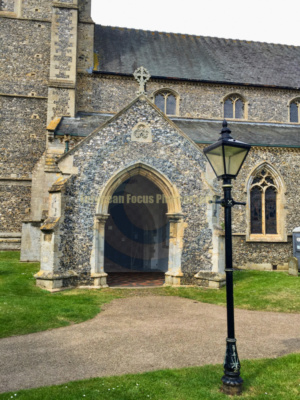
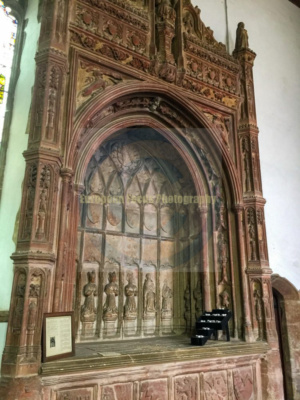
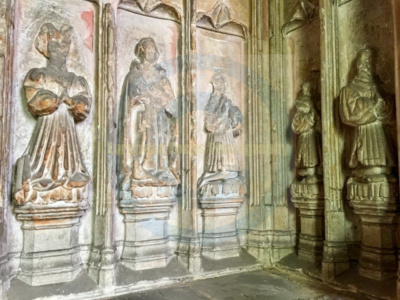
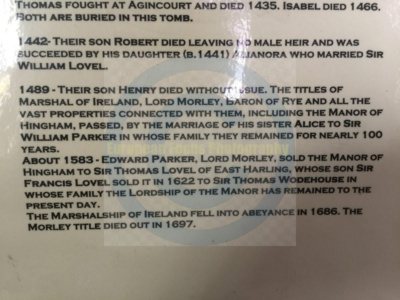
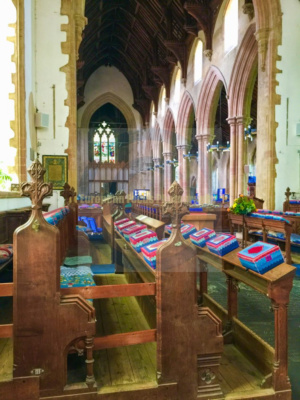
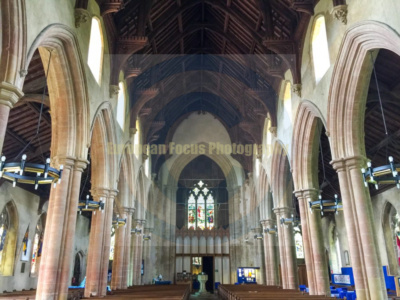
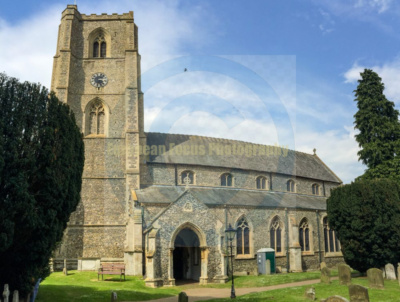
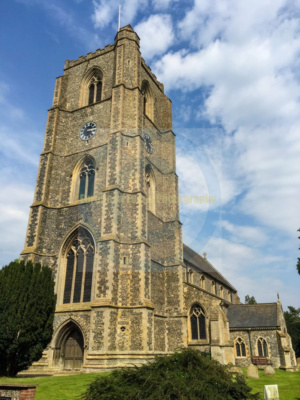
- Key Features: The church is known for its massive size (over 50 meters long), a landmark tower, and a 15th-century tomb.
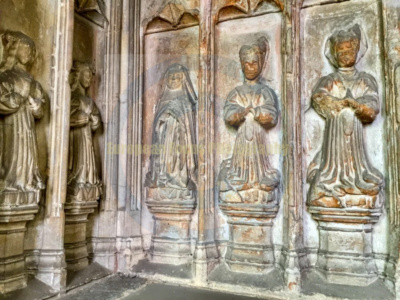
- Historical Context: The 16th-century Continental glass in its large window and the 15th-century Morley tomb are highlights of the interior.
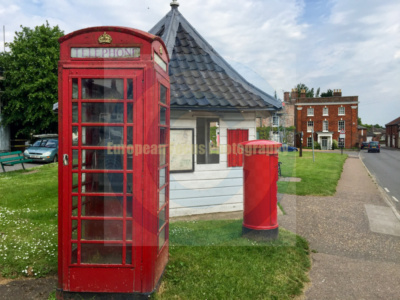
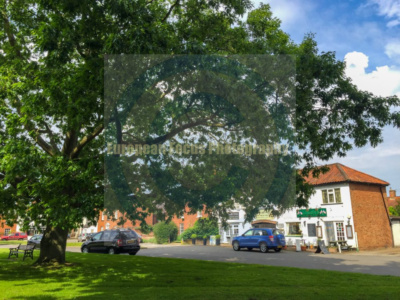
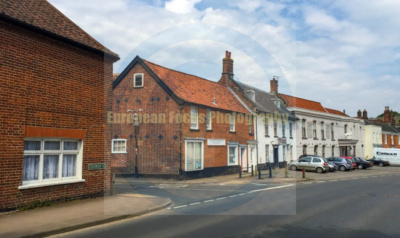
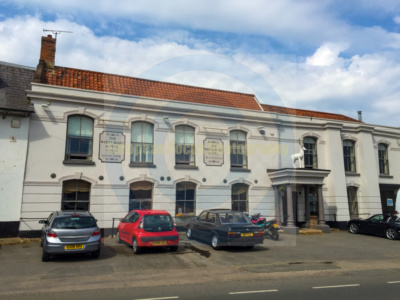
Grand architecture surrounds the historic market place and town greens. According to an 18th-century source, a fire destroyed many of the town’s buildings, leading the better-off local families to build the handsome Georgian homes for which the town is known. The same source claims that the Hingham gentry were “so fashionable in their dress that the town is called by the neighbours ‘Little London'”.[4]
Hingham is 13 miles (21 km) west[1] from Norwich, Norfolk’s county town.
History
The town’s name derives from the homestead or village of “Hega’s people”.[5]
The town, originally spelled “Hengham”, is an ancient settlement, as its Saxon name denotes.[6] It was the property of King Athelstan, in 925, and of William the Conqueror in 1066 and 1086 as a well populated parish in the hundred of Forehoe,[7] and retained many privileges coming from its royal ownership, including “the grandeur of … St Andrew’s,” a parish church rebuilt in the 1300s.[8][9] Thomas de Morley, 5th Baron Morley is buried in its chancel. In the years that followed, the town was a clear royal domain, for William the Conqueror and many others.
In 1414 the town was exempted from an English toll and in 1610, the town was granted a royal charter by James I.[10] Over the years, from 1154 to 1887, the town’s church is recorded as having had 32 rectors.[11][13]
By the 1600s, the town of Hingham was still agricultural. John Speed’s maps of the Kingdom of England during the Jacobean period in 1610 and 1611 showed that the town was near Wymondham (also called Wimundham or Windham).[14] This town was, at the time, situated in the countryside with diverse terrain, profuse windmills, well-watered soil, a large degree of inland water traffic, and few urban centres apart from Norwich, where a thriving cloth industry boomed.[15] With Speed’s drawing of a castle at the location of Hingham, the town must have been of some stature.
Many Puritans refused to conform to the wishes of the King (Charles I) and his loyal Archbishop (William Laud), so they fled to the Plymouth Bay or Massachusetts Bay colonies, in what has been labelled the “Great Migration”.[16] In 1633, migration from England to the Americas began with a number of participants on a ship named the Bonaventure. Robert Peck, the Rector of St Andrew’s Church, and his associate Peter Hobart, emigrated to the new colony of Massachusetts with half of his congregation, most likely all of the 133 people on the Diligent, which departed in June 1638 from Ipswich, England.[17][18][19][20][21] Peck had been censured by religious authorities for his Puritan practices, and his daughter had married the son of another well-known Puritan minister named John Rogers.[22][23]
The passengers on the Diligent, working-class people such as shoemakers and millers, a number of ministers, and gentry, were mostly Puritans.[24][25][26][27][28][29] Once there, the passengers founded “New” Hingham, to remind them of “Old” Hingham. Once most of the passengers settled there, the population of the town had doubled.[30] More specifically they were called East Anglians, after the former Kingdom of East Angles in which Hingham resided, as John Speed described it in 1610.[31] Amongst those who had emigrated were Samuel Lincoln, ancestor of President Abraham Lincoln, and Edward Gilman Sr., ancestor of Nicholas Gilman, New Hampshire delegate to the Continental Congress and signer of the U.S. Constitution.[32][33][34] To commemorate the lineage of Lincoln and the sister town in Massachusetts, today the town hall “is named the Lincoln Hall, and … the bust of Abraham Lincoln takes pride of place in the north aisle of the church” along with memorials to the Gilman family.[8][35][36]
The parishioners who left Hingham had been so prominent in the Hingham community that the town was forced to petition Parliament, saying their town had been devastated by the emigration. They told the House of Commons that “most of the able Inhabitants have forsaken their dwellings and have gone severall ways for their peace and quiett and the town is now left and like in the misery by reason of the meanness of the [remaining] Inhabitants.”[37][38] The argument by the remaining residents of Hingham that their town had been devastated was not unfounded. Historians and original documents from the time attest that “physically, mentally, socially, and spiritually” the town was moved from England to New England with the founding of “New” Hingham in 1635, with Peter Hobart and Robert Peck as some the most powerful and well-off individuals in the new town, at the top of the Old Ship Church.[39][40][41][42][43][8]

In the years that followed, Hingham continued to develop. Apart from the “sentimental attachment” between the Hingham in England and that in the Americas, St Andrew’s Church continued to stand, inns were created, and what is today a conservation area was created which “contains many Georgian buildings,” although many of the buildings were destroyed in a “disastrous fire in 1688”.[8] Even with changing prices and inconsistent weather, the town remained agricultural and had a stayed gentry in place into at least the 1740s.[44]
By the 1800s, Admiral Philip Wodehouse lived in the town. By the 1890s, it was still a “small market town”.[45] During World War I, 200 men from the town participated in the forces, 38 of whom perished on the battlefield, others who formed a company, and some who paid for war certificates.[46] In later years, World War I general Edmund Ironside lived in Southernwood, a house created in the 1700s where he died in 1959, an old windmill continued to turn in the town until 1937, later becoming a “4 storey stump”, a radio link between the two Hinghams was established in World War II, and the Lincoln Hall was built in 1922, later rebuilt and extended in 1977.[8] Other than that, the town has also maintained its connection with its sister town in the United States; for instance, in September 1985, a number of Hingham residents attended “the 350th birthday celebrations of Hingham, Mass.”.[8]
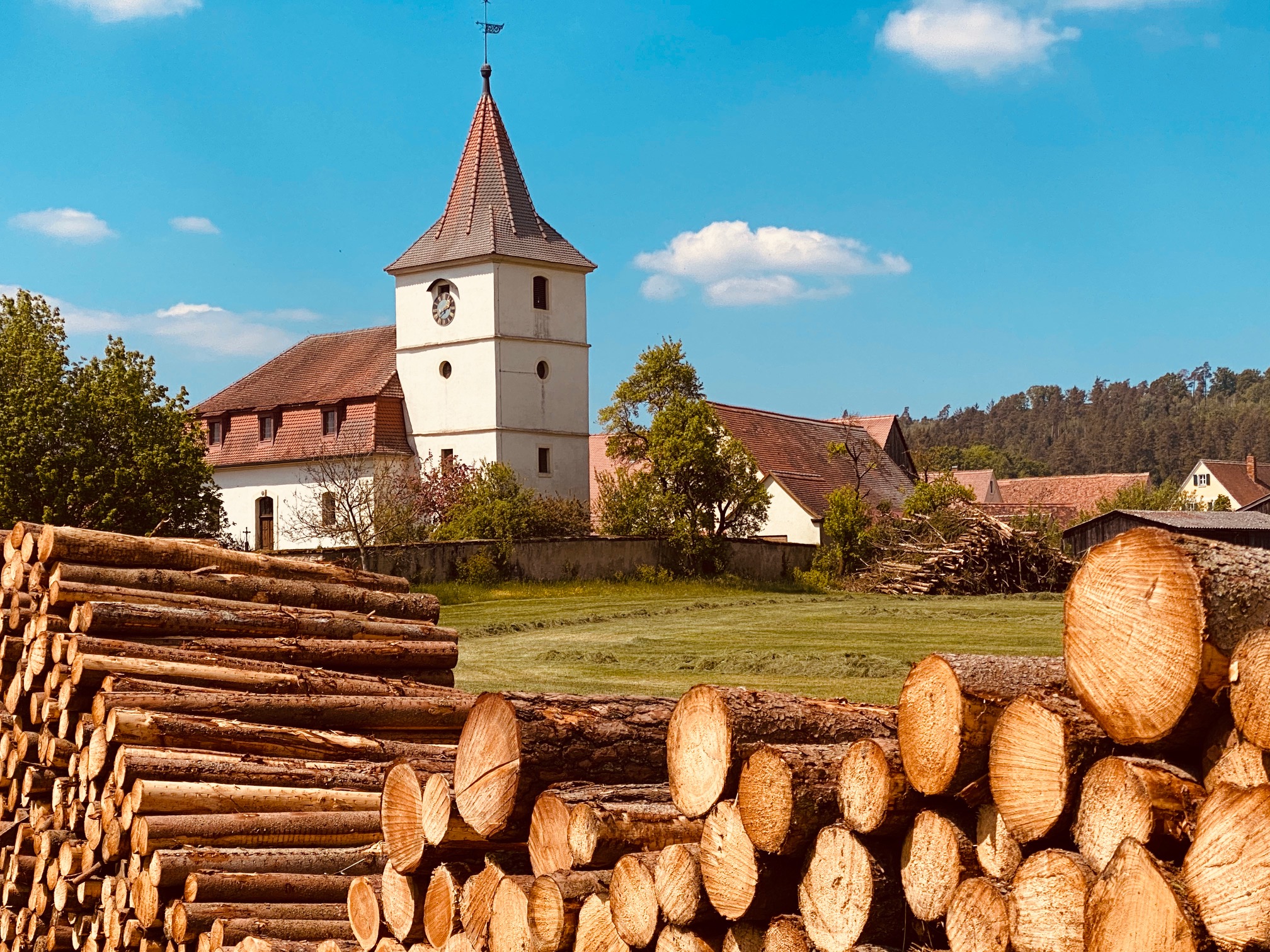
St. Andrew’s Church in Hingham, Norfolk, England, is a historic parish church famous for its connection to the ancestors of U.S. President Abraham Lincoln. The church features a bust of Lincoln and highlights the 17th-century migration of parishioners, including Samuel Lincoln, to Hingham, Massachusetts.
- Connection to Abraham Lincoln: The church memorializes the 16th U.S. President, whose ancestors hailed from this parish.
- Historical Significance: It served as the home parish for early settlers of Hingham, Massachusetts.
- Location: Situated in the market town of Hingham in mid-Norfolk.
- Key Features: Contains a bust of Abraham Lincoln to commemorate the link between the town and the USA