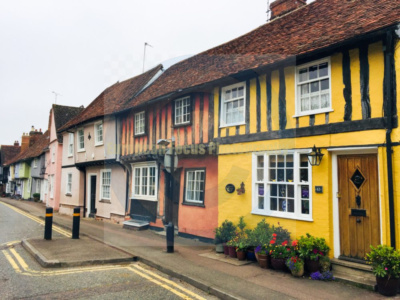
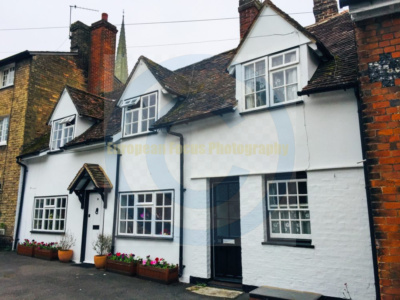
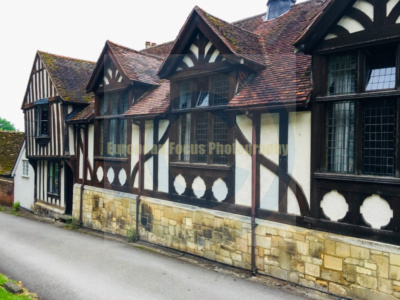
Saffron Walden, Essex
Saffron Walden was photographed by James Derheim, European Focus Private Tours, in late May, 2018
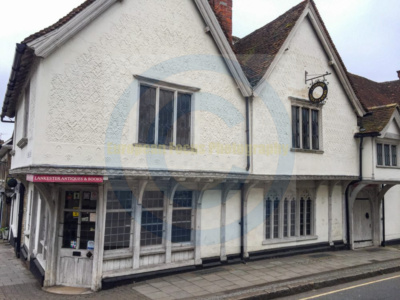
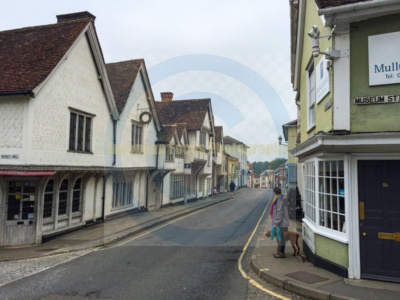
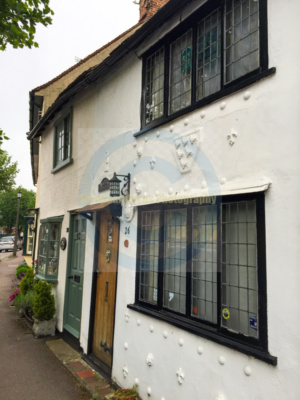
Saffron Walden is a market town and civil parish in the Uttlesford district of Essex, England, 12 miles (19 km) north of Bishop’s Stortford, 15 miles (24 km) south of Cambridge and 43 miles (69 km) north of London. It retains a rural appearance and some buildings of the medieval period. As well as the town itself, the parish also includes Little Walden and Audley End. At the 2021 census, the built up area had a population of 16,610, and the parish had a population of 17,022.
History
Archaeological evidence suggests continuous settlement on or near the site of Saffron Walden from at least the Neolithic period.[3] It is believed that a small Romano-British settlement and fort – possibly in the area round Abbey Lane – existed as an outpost of the much larger settlement of Cestreforda to the north.
The town was originally just called Walden, derived from the Old English walhdenu meaning ‘valley of the Britons’.[4]
After the Norman Conquest of 1066, a stone church was built. Walden Castle, dating from about 1140, may have been built on pre-existing fortifications.[5] A priory, Walden Abbey, was founded in around 1136 under the patronage of Geoffrey de Mandeville, 1st Earl of Essex.[3] The abbey was separated from Walden by Holywell Field. After the dissolution of the monasteries, Sir Thomas Audley converted its cloisters into a dwelling, which was subsequently rebuilt as Audley End House.
In the 13th century there had been a market at nearby Newport. The market was moved to Walden during de Mandeville’s tenure, increasing the town’s influence. A Tuesday market was held from 1295, and the town was granted its first formal market charter in about 1300. The town then became known as Chepyng (i.e. Market) Walden.[3] The town at that time was largely confined to the castle’s outer bailey, but in the 13th century the Battle or Repel Ditches were built or extended to enclose a larger area to the south. The focus of the town moved southwards to Market Square.
The main trading item in medieval times was wool. A guildhall was built by the wool-staplers in the market place, but demolished in 1847 to make way for the Corn Exchange.
Saffron
In the 16th and 17th centuries the saffron crocus (Crocus sativus) was widely grown, thanks to the town’s favourable soil and climate. The stigmas of the flower were used in medicines, as a condiment, in perfume, as an expensive yellow dye, and as an aphrodisiac. The industry gave Walden its present name.[3] In the records of the Court of Common Pleas, the town was called Magna Walden in Hilary Term 1484,[6] and Chipping Walden in the 15th and early 16th centuries,[7] but by the 1540s it had become Saffron Walden.[8]
Puritans and Quakers
The town and surrounding area, like much of East Anglia, was strongly Puritan during the 17th century. The population was influenced by the missionary John Eliot. By 1640, Samuel Bass’s family and a number of others had departed for the Massachusetts Bay Colony as part of the Great Migration.[9]
Saffron Walden was at the centre of the Eastern Association during the English Civil War. While the town was the headquarters of the New Model Army, Lieutenant-General of Horse, Oliver Cromwell paid a 19-day visit in May 1647, taking part in debates to seek a settlement between Parliament and the army.[10] He is thought to have stayed at the Sun Inn.[11]
By the end of the 18th century saffron was no longer in demand and the industry was replaced by malt and barley. More than 40 maltings stood in the town by the end of the century.[12] The trade was less lucrative than saffron, but the town continued to grow through the 19th century, and had a cattle market, corn exchange and other civic buildings. During this time Quakers became economically active in the area. The influential Gibsons – one of the founding families of Barclays Bank – aided the construction of several public buildings that remain today, such as the Saffron Walden Museum and the Saffron Walden Town Hall.[13][14]
The Eastern Counties Railway opened its route from London to Cambridge in 1845, taking a route along the valley of the River Granta to the west of the town. The nearest station to Saffron Walden on that line is Audley End railway station, 2 miles (3 km) south-west of the town at Wendens Ambo. The Saffron Walden Railway was subsequently built as a branch line from Audley End to Bartlow via Saffron Walden railway station, which opened in 1865. The branch line closed as part of the Beeching cuts in 1964, since when Audley End has again been Saffron Walden’s nearest station.[15][16]
Heavy industry arrived after the Second World War. Acrows Ltd, makers of falsework, built premises to the east of the town and became a significant employer and economic influence in the area.[17] For a short time there was a dedicated railway station for the works known as Acrow Halt.
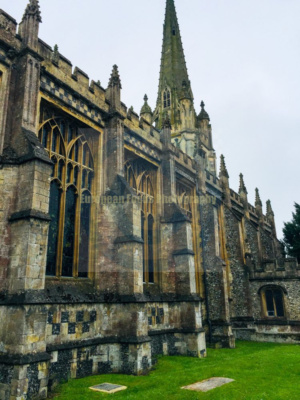
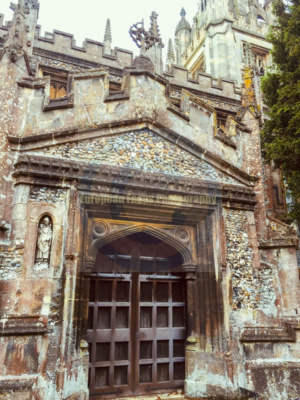
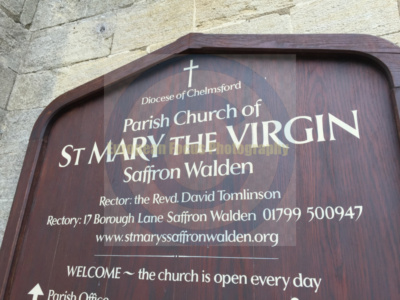
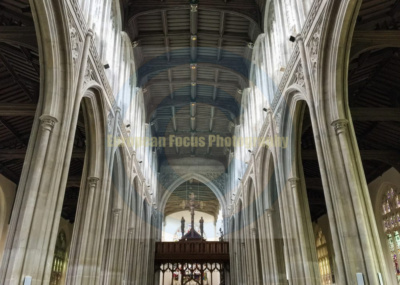
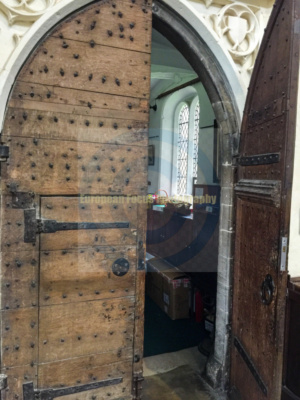
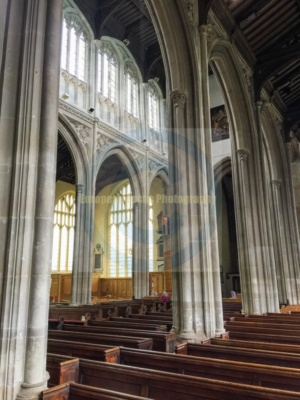
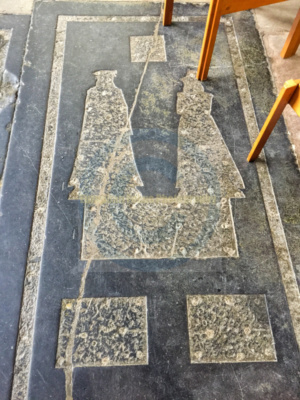
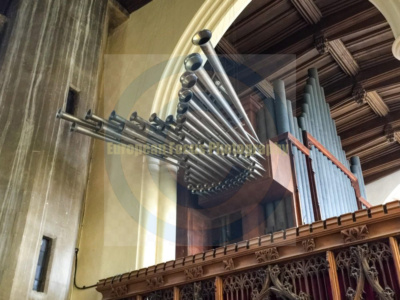
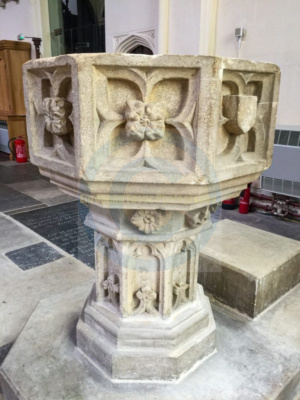
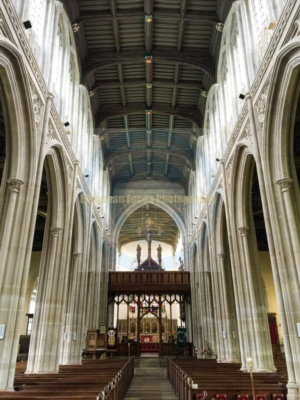
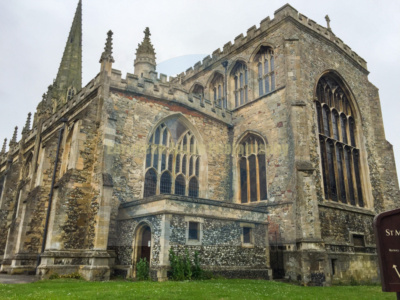
St Mary the Virgin, Saffron Walden (Church of England) is the largest parish church in Essex.[28] The church dates mainly from the end of the 15th century, when an old smaller church was extensively rebuilt by the master mason John Wastell, who was building King’s College Chapel in the nearby city of Cambridge. In 1769 it was damaged by lightning and the repairs, carried out in the 1790s, removed many medieval features. The spire was added in 1832 to replace an older lantern tower. The church is 183 feet (56 m) long and the spire, 193 feet (59 m) high, is the tallest in Essex.