Dedham, Essex
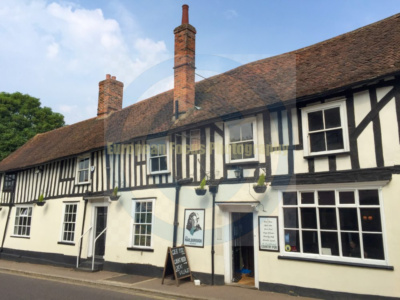
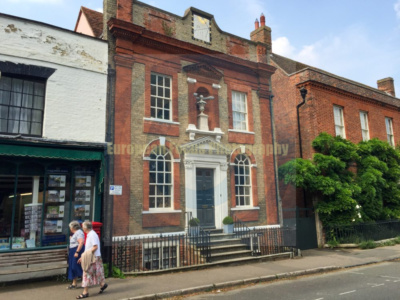
Dedham, Essex was photographed by James Derheim, European Focus Private Tours, in June of 2018.
Dedham is a village and civil parish in the City of Colchester district of Essex, England. It is near the River Stour, which is the border of Essex and Suffolk. The nearest town to Dedham is the small market town of Manningtree. The area around Dedham is recognised for its natural beauty, being designated as the Dedham Vale National Landscape. At the 2021 census the parish had a population of 1,992.
Dedham is frequently rated as containing some of England’s most beautiful Lowland landscape, most particularly the water meadows of the River Stour, which passes along the northern boundary of the village forming the boundary between Essex and Suffolk. Dedham has a central nuclear settlement around the Church and the junction of Mill Lane and the High Street (part of the B1029). Connected to Dedham are the hamlets of The Heath and Lamb Corner. The village forms a key part of the Dedham Vale.
Early documents record the name as Diddsham, presumably for a family known as Did or Didd. For centuries, the parish of Dedham was in the Hundred of Lexden.
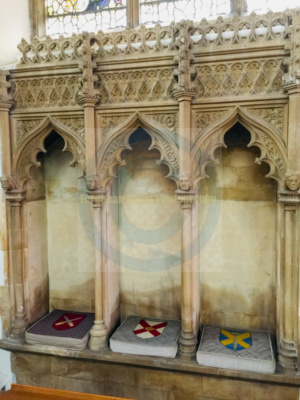
In the church:
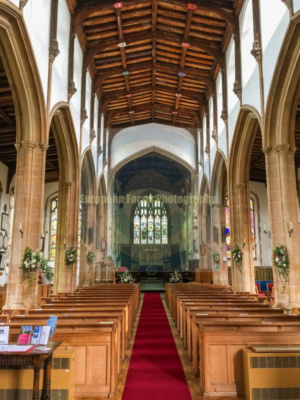
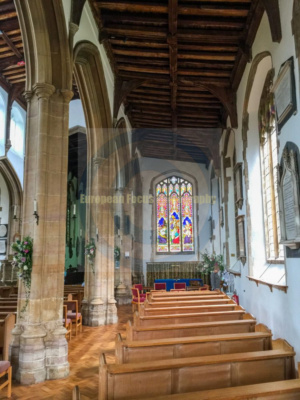
- Function: They are seats for the clergy—specifically the priest, deacon, and subdeacon—to sit during certain parts of the Mass.
- Structure: They usually consist of three, sometimes two or four, recessed arches or niches built directly into the south wall of the sanctuary.
- Design: They are often richly decorated with carved stonework, pinnacles, or canopies.
- Arrangement: The seats are often arranged on different levels, descending in steps from east to west
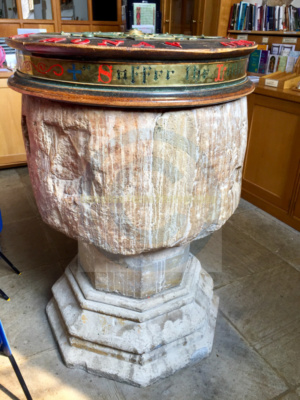
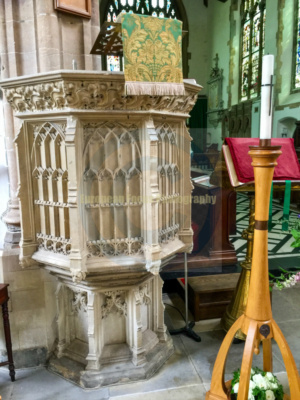
The baptismal font in the Church of St Mary the Virgin in Dedham, Essex, is believed to date from the fourteenth century. Key Features of the Font
- Basin: The octagonal basin is decorated with the emblems of the Four Evangelists (the Lion, Man, Bull, and Eagle) along with angels in alternate panels.
- Pedestal: The base likely belonged to one of the piers of an earlier church building on the site.
- Victorian Cover: Added much later in 1861, the oak cover was crafted by a local carpenter from timber salvaged from the ship Royal George.
- Inscriptions: The cover features a Greek palindrome that translates to “Wash my sin, not my face alone,” a copy of an inscription from the Hagia Sophia in Istanbul.
The church itself, which appears in several paintings by John Constable, was largely rebuilt starting in 1492, making the font one of the few surviving elements that predates the current 15th-century structure.
Dedham Classis
In 1582–1587, a schismatic Presbyterian Christian group called the Dedham Classis, which included dozens of members opposed to the established church, was active in north-east Essex. This group held clandestine meetings and prayer groups in and around Colchester and surrounding villages like Dedham, publishing and distributing versions of Wycliffe’s Bible and various other Calvinist texts obtained from London; the Dedham Classis is the best recorded of those active in the sixteenth century.
Dedham Settlers in the Massachusetts Bay Colony
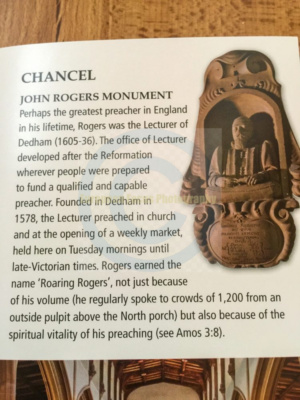
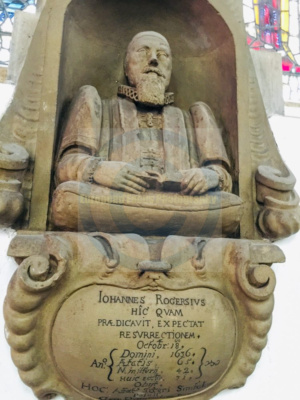
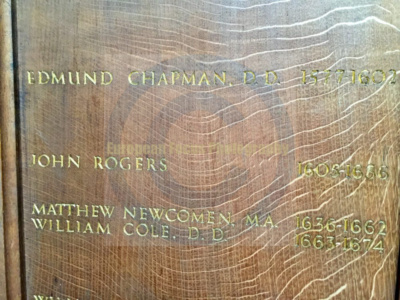
A group of early dissenters left Dedham to found the township of Dedham in the Massachusetts Bay Colony in 1635. Under the leadership of John Rogers, a preacher banned from his work in England, they established a settlement on the western edge of the colony first established in 1628, now a suburb of the city of Boston. Despite some early setbacks this township eventually proved very successful and a number of prominent US families can trace their ancestry from these early arrivals from East Anglia – see note below on William Tecumseh Sherman.
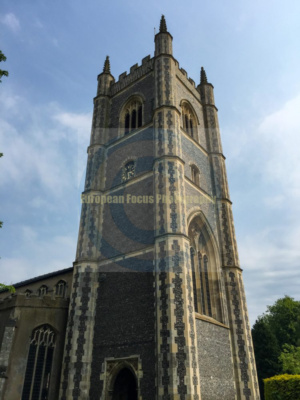
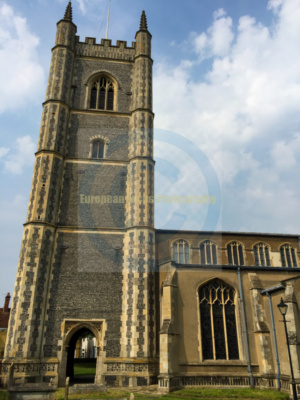
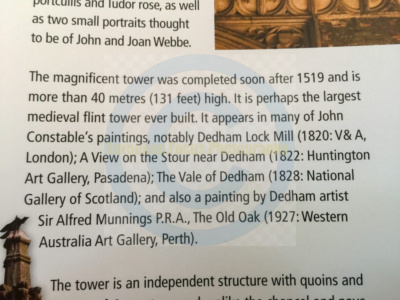
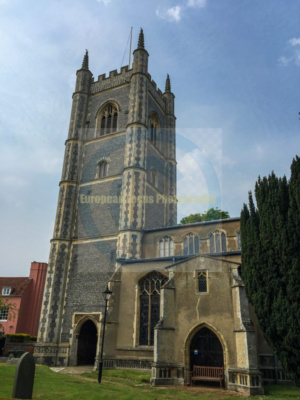
Dedham is at the heart of ‘Constable Country’ – the area of England where Constable lived and painted. Constable attended the town’s Grammar School (now the ‘Old Grammar School’ and ‘Well House’), and he would walk to school each morning alongside the River Stour from his family’s home in East Bergholt. Many of Constable’s paintings feature Dedham, including Dedham Mill, which his father owned, and Dedham Parish Church, whose massive Caen stone and flint tower is a focal point of the surrounding Dedham Vale.
Other artists
In 1937, Cedric Morris and Arthur Lett-Haines founded the East Anglian School of Painting and Drawing at Dedham. When, however, this burnt down, they moved to Hadleigh, Suffolk.
Of longer influence in Dedham was the horse painter Sir Alfred Munnings, who became President of the Royal Academy. His house in Dedham, Castle House, now contains a gallery of his work, and his studio.
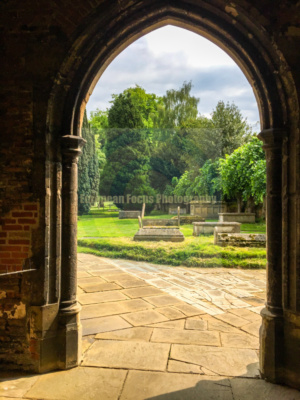
Tom Keating, the art restorer and famous art forger, was a Dedham resident until his death in 1984. He is buried in the churchyard of St Mary’s Church. Keating’s best known painting, a Constable pastiche called The Haywain in Reverse, is reportedly on display in the Granary Barn and Museum in Flatford. The sign over the local Sun Inn, depicting Greek sun god Helios in his chariot, was also painted by Keating.
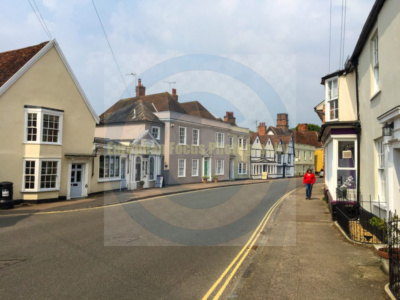
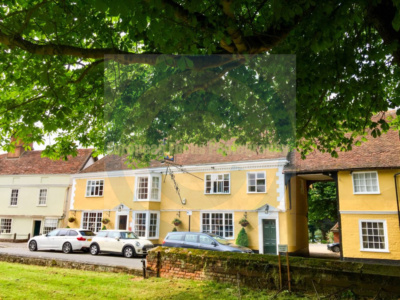
Dedham contains a number of well-preserved buildings:
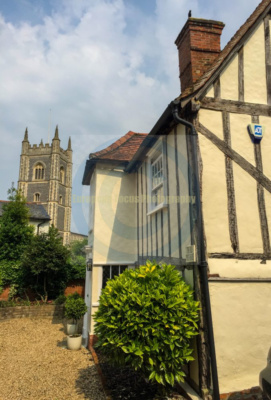
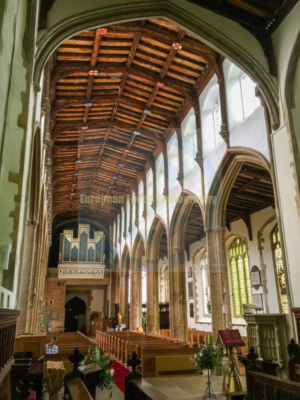
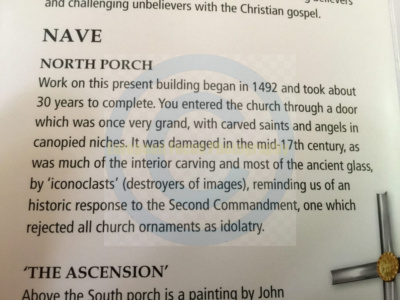
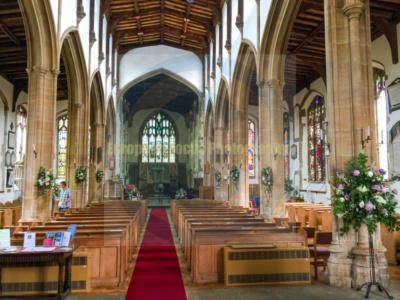
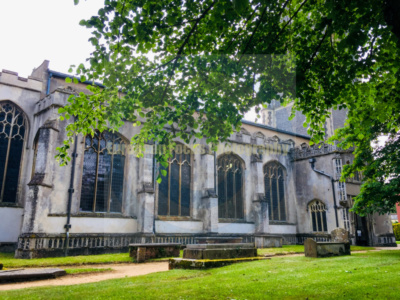
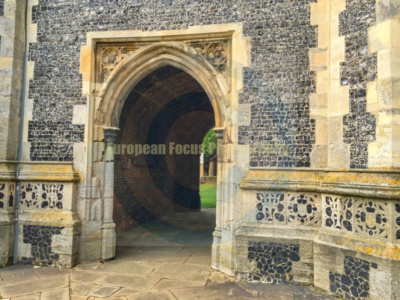
- Dedham Parish Church – St. Mary the Virgin, Dedham; the present building dates from the late 15th century, and was the last medieval ‘wool church’ to be completed, albeit in a more economical style than was originally intended. The Ascension by John Constable is on permanent display in the church A viewing platform on top of the tower (open to the public from Easter to Harvest) gives excellent views of the lower part of the Stour valley. The tower is 118 feet (36 m) high to the top of the pinnacles.
- Sherman’s Hall, a Grade I listed, Georgian-fronted townhouse used as a school until 1873 and now belonging to the National Trust.
- The Old Grammar School, founded by Elizabeth I. The present building dates from 1732 and was attended by John Constable. It is now private residences.
- The Sun Inn, a medieval building that retains its coaching arch.
- A Congregational church built in 1739 is now the Dedham Art and Craft Centre.
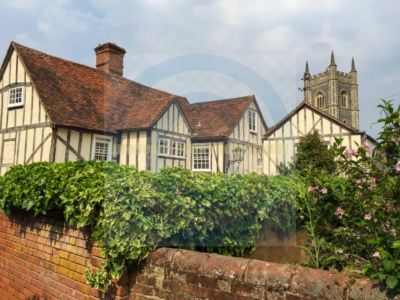
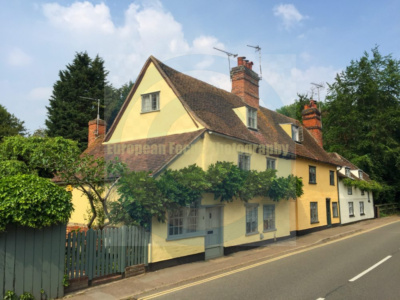
- Southfields, Grade I listed, is the most splendid of the many medieval buildings in the village. Formerly a factory used when Dedham was a wealthy wool town it is now a series of cottages.
- Castle House, the home of Sir Alfred Munnings and now the Sir Alfred Munnings Art Museum.
- The Assembly Rooms (previously known as the Hewitt Memorial Hall from 1917 to 1997 in memory of the brother of a local benefactor, William Wilkins Hewitt) dates back to c. 1745, with later additions. It was home to Littlegarth School, a private primary school founded in 1940, for several decades until 1994.
Architectural historian Nikolaus Pevsner wrote in 1954 “There is nothing at Dedham to hurt the eye” and in 1938 the Dedham Vale Society was founded with local architect Raymond Erith as its founding Chairman.
Notable people
- John Bond (1932–2012), footballer and later manager.
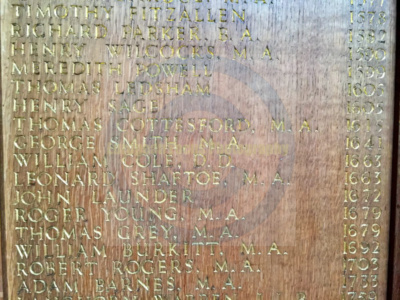
- William Burkitt (1650–1703), author of A Poor Man’s Help and Young Man’s Guide (1694), and Expository Notes on the New Testament (1700–03), which was in print for more than 150 years, was Vicar and Lecturer of Dedham from 1692 to 1703.
- Roger A. Freeman (1928–2005), Dedham farmer and author who became a world authority on the operations of the US Eighth Air Force in World War II.
- Birthplace of William Haggar (1851–1925), whose pioneering work with film at the start of the twentieth century made him one of Britain’s foremost directors.
- Samuel Meredith RN (1796–1873), the first person to be appointed to the rank of Chief Constable was born in the village.
- Matthew Newcomen (c.1610–1669), a co-author of Smectymnuus (1641), who preached before parliament in 1643, was Vicar and Lecturer of Dedham from 1636 to 1662.
- Liza Picard (1927–2022), Lawyer and historian
- Osborne Reynolds (1842–1912), engineer and physicist, who developed the understanding of electricity, magnetism, and fluid flow (part of the equation for determining the change between ‘streamline’ and ‘turbulent’ flow is still called a ‘Reynold’s Number’), was the son of a headmaster of Dedham Grammar School.
- Rear Admiral Ernest Roberts (1878–1933), rugby union international who represented England from 1901 to 1907.
- John Rogers (c.1570–1636), sometimes referred to as “Roaring” Rogers, who was the most famous preacher of his age, was Vicar and Lecturer of Dedham from 1605 to 1636.
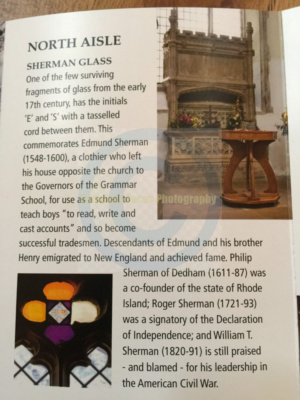
- Dedham is the ancestral home of General William Tecumseh Sherman, of American Civil War fame, and founding father Roger Sherman, the only person to have signed all four great state papers of the United States. Their ancestors emigrated to Massachusetts in the 1630s.
- Mary Whitehouse (1910–2001), social activist who opposed social liberalism and the mainstream British media, both of which she accused of encouraging a more permissive society is buried in Dedham.
(Wikipedia)