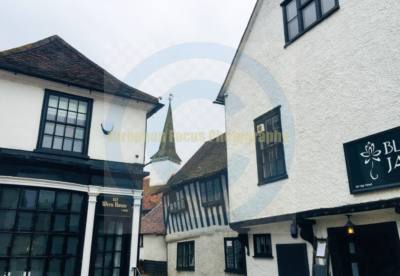
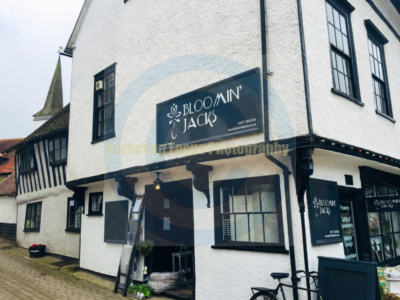
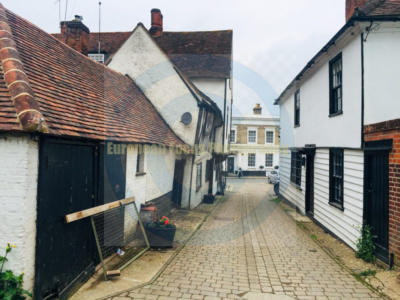
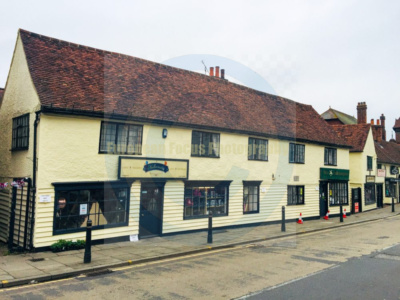
Chipping Ongar, Essex
Chipping Ongar was photographed by James Derheim, European Focus Private Tours, in late May of 2018
Chipping Ongar is a market town in the parish of Ongar, in the Epping Forest District of Essex, England. It is located 6 miles (10 km) east of Epping, 7 miles (11 km) south-east of Harlow and 7 miles (11 km) north-west of Brentwood. At the 2021 census the built up area as defined by the Office for National Statistics (which excludes Shelley) had a population of 3,967. The Royal Mail uses Ongar as the name for the post town covering the area; the name Chipping Ongar is not used in official postal addresses.
Toponymy
The name “Ongar” means “grass land” (cognate with the German word Anger). “Chipping” is from Old English cēping, “a market, a market-place”, akin to Danish købing and Swedish köping; the same element is found in other towns such as Chipping Norton, Chipping Sodbury, and Chipping Barnet.
History
In Saxon times there was an extensive estate and parish called Ongar, with its main settlement and parish church at High Ongar. Ongar gave its name to one of the Hundreds of Essex. Ongar Castle was built in the late 11th century, after the Norman Conquest, 0.75 miles (1.2 km) south-west of High Ongar on the opposite side of the Roding valley. A church dedicated to St Martin was built adjoining the castle around the same time, and Chipping Ongar was laid out as a new market town adjoining the castle and St Martin’s during the 12th century. The new town of Chipping Ongar became a separate parish, after which there were two parishes called Ongar: High Ongar and Chipping Ongar. The territory ceded to the new Chipping Ongar parish was modest, only covering 511 acres (207 hectares) immediately around the castle and town, whereas High Ongar parish retained 4,520 acres (1,829 hectares) covering an extensive rural area.

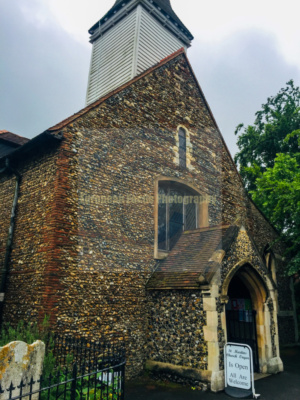
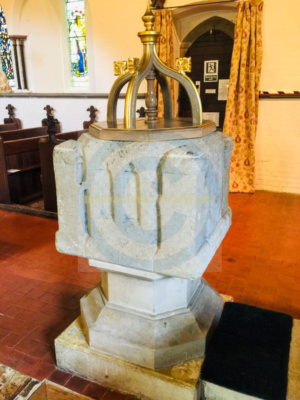
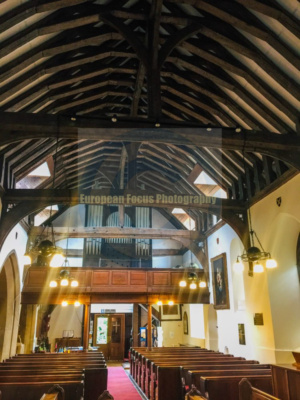
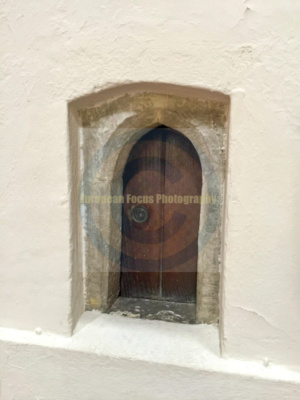
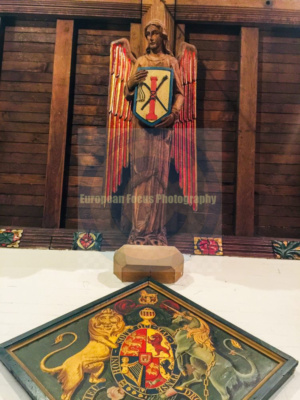
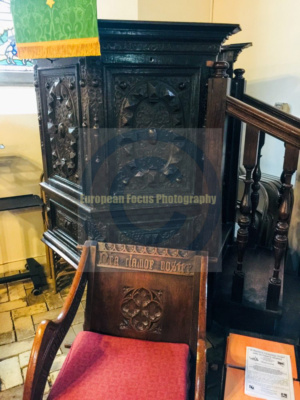
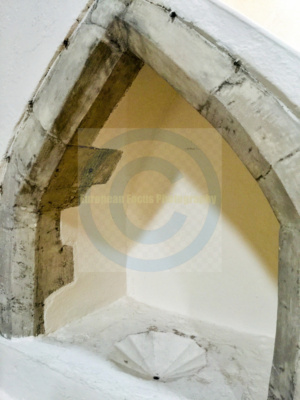
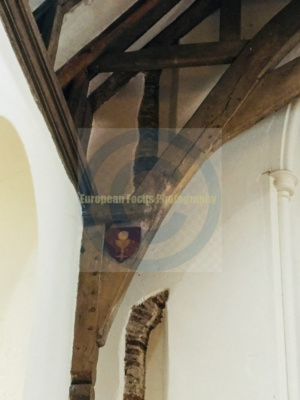
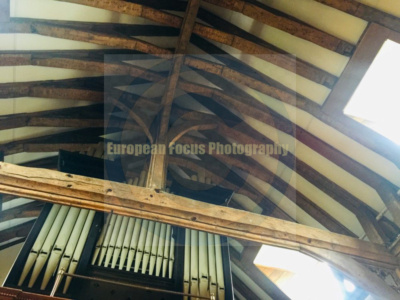
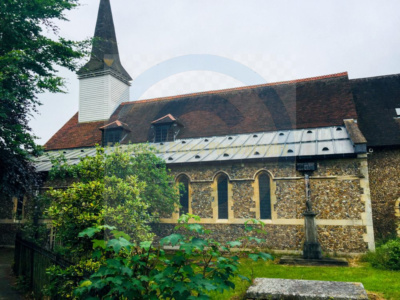
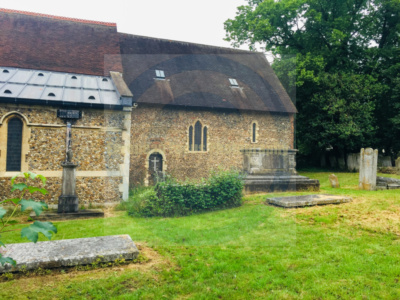
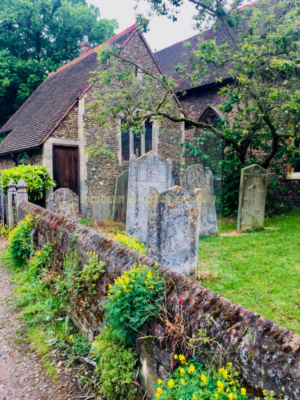
St Martin’s Church dates back to the late 11th century and shows signs of Norman work. A small window in the chancel is believed to indicate the existence of an anchorite’s cell in medieval times. The Gothic Revival architect C. C. Rolfe added the south aisle in 1884. St Andrew’s Parish Church in Greensted, 2 miles (3.2 km) west of Ongar, is believed to be the oldest surviving wooden church in the world.
Ongar Castle was demolished between 1558 and 1603.
The missionary and explorer David Livingstone, prior to his expeditions to Africa, lived in Chipping Ongar on the High Street in 1838 to “receive instruction from Rev. Richard Cecil, the Ongar Congregational minister, while training for the ministry”.
Ongar railway station was opened in 1865 on a branch line of the Great Eastern Railway. It was built as a through station to allow for a subsequent extension of the line to either Great Dunmow or Chelmsford, but the extensions were never built and Ongar station always served as a terminus. The branch line was transferred to London Underground in 1949 and became part of the Central line. For much of its time as part of the London Underground the last stretch of the line from Epping to Ongar mainly operated as a shuttle service separate from the rest of the line. With green belt policy having been introduced in this area after the Second World War diverting new housing development to other areas, London Underground did not see the economic case for investing in improving this line where usage was low and likely to remain so. The line from Epping to Ongar closed in 1994 and subsequently became a heritage railway, the Epping Ongar Railway.
In 1965 the parish of Chipping Ongar merged with its neighbours Shelley to the north and Greensted to the west to form a new civil parish called Ongar. The new parish also took in the Marden Ash area south of the town from High Ongar parish. Shelley and Greensted, like Chipping Ongar, had also formed part of the ancient Ongar parish before becoming separate parishes in medieval times. At the 1961 census (the last before the abolition of the civil parish), Chipping Ongar had a population of 1,673.
Several of the small private-sector businesses that operated through to the closing decades of the 20th century have closed down or relocated as the economic focus of the region has been redirected, especially since the opening of the M11 motorway in the 1970s, to larger towns in west Essex, especially Harlow and Brentwood. Local planning policies have focused increasingly on residential development, and Ongar, like very many of the smaller towns in the green belt around London, can be viewed primarily as a dormitory town for commuters to London, Brentwood, Harlow and Chelmsford. However, the single-track railway branch line that connected Ongar to Epping (and thereby to London), operated by the London Underground, was closed in 1994. Ongar has a range of retail shops.
Jane Taylor (1783–1824), who wrote the words of “Twinkle, Twinkle, Little Star”, is buried at the United Reformed Church in Ongar.
There is a memorial window to Father Thomas Byles in St Helen’s Catholic Church. He was parish priest in Chipping Ongar from 1905 and perished on RMS Titanic in 1912, refusing to leave in a lifeboat and staying to pray with the remaining passengers.
Ongar Grammar School in Chipping Ongar, a private school for boys, was opened as a boarding school in 1811 by William Stokes M.A. By 1845 the school was known as ‘Ongar Academy’ (not connected to an academy school in the 21st-century sense). It was a private grammar school by 1874, Chignell Grammar School by 1882, and was closed in 1940, before the introduction of secondary education under the Education Act 1944 and the Tripartite System.
RAF Chipping Ongar (also known as Willingale) is a former World War II airfield. The airfield is approximately 2 miles (3.2 km) northeast of Chipping Ongar. Opened in 1943, it was used by both the Royal Air Force and United States Army Air Forces. During the War it was used primarily as a bomber airfield. It was closed in 1959 after many years as a reserve airfield.
(Wikipedia)