Wetzlar, Hessen
Wetzlar, Hessen was photographed by James Derheim of European Focus Private Tours in September of 2018.
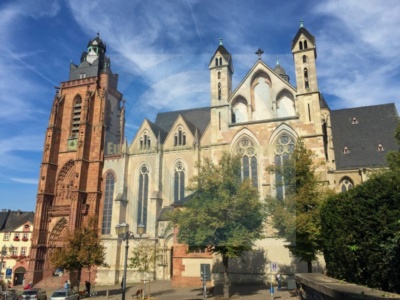
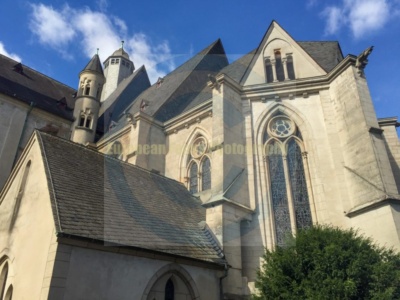
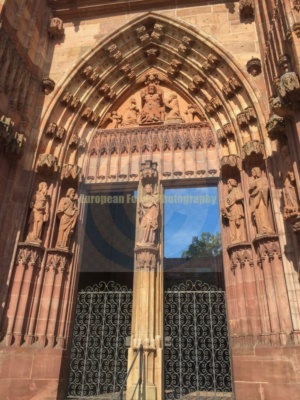
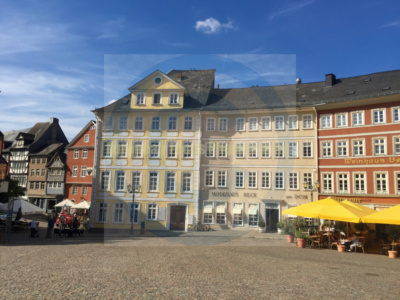
Wetzlar (German pronunciation: [ˈvɛtslaːɐ̯] ⓘ) is a city in the state of Hesse, Germany. It is the twelfth largest city in Hesse with currently 55,371 inhabitants at the beginning of 2019 (including second homes).[3] As an important cultural, industrial and commercial centre, the university town is one of the ten regional centres in the state of Hesse. A former free imperial city, it gained much of its fame as the seat of the Imperial Supreme Court (Reichskammergericht) of the Holy Roman Empire. Located 51 kilometres north of Frankfurt,[4] at 8° 30′ E, 50° 34′ N, Wetzlar straddles the river Lahn and is on the German Timber-Frame Road, which passes mile upon mile of half-timbered houses. Historically, the city has acted as the hub of the Lahn-Dill-Kreis on the north edge of the Taunus. Tourists know the city for its ancient town and its medieval Catholic/Protestant shared cathedral of St. Mary. Notable architectural features include the Eisenmarkt and the steep gradients and tightly packed street layout of a medieval town. The building of the sandstone cathedral commenced in the 12th century in Romanesque style. In the later Middle Ages the construction continued under a master plan in Gothic style. The church was never finished—one steeple still remains uncompleted. The cathedral suffered heavy damage in the Second World War from aerial bombing, but restoration took place in the 1950s. On the outskirts of town along the river stand the ruins of several stone towers.
Free Imperial City

At some unknown time, Wetzlar was granted market rights, and thereby, the right to levy market dues. Within a year, a market community came into being. The monastery’s forerunners were surely part of the crystallization point at which believers, traders and craftsmen met, above all on holidays.
The Hohenstaufen Emperor Frederick I Barbarossa (r. 1152–1190) created a Reichsvogtei (roughly “Imperial Bailiwick”), and in 1180 put Wetzlar’s citizens on the same level as Frankfurt’s. Wetzlar became a Free Imperial City and kept this distinction until 1803. For the town’s protection, and to secure the Wetterau as an Imperial Province, he expanded high above Wetzlar the Imperial Castle (Reichsburg), which had most likely already stood in one form or another before then. The origin of the name “Reichsburg Kalsmunt” is not quite clear. The following explanation cannot be ruled out: Kals- = Karls and munt ≈ vassal, that is, a liege of the Frankish court. Thus it would seem to be a case of a building work from Charlemagne’s time (“Charlemagne” is “Karl der Große” – “Charles the Great” (740s–814) – in German). Imperial coinage was struck at Kalsmunt. The commercial road, which crossed the Lahn at Wetzlar, the town’s iron production, to which the Iron Market (forum ferri) still bears witness, the wool weaving mill and tanning seemed a good basis on which to develop the town further.
In 1285 the “false emperor” Dietrich Holzschuh, called Tile Kolup, who claimed to be Frederick II, Holy Roman Emperor (who actually had already died in Italy in 1250) came to Wetzlar. When the rightful king, Rudolph I (r. 1273–1291), heard of this and came to Wetzlar, the city leaders seized Tile Kolup and handed him over. He was sentenced as a warlock, a heretic and a blasphemer to a fiery death, which he suffered the next day in Wetzlar at the stake.
Until 1250, most of the town fortifications, whose remains can still be seen today, were complete. By the middle of the 14th century, it is reckoned, the town’s population was 6,000, making it by the standards of the time a “city”. About 1350, the high point of the town’s development in the Middle Ages was reached.
Decades-long feuds with the Counts of Solms, who were trying to make Wetzlar into a Solms-domain city, threatened the vital commercial road. The Emperor supported the town, albeit vainly. The city plunged into debt and in 1387 it fell under forced administration; however, it was incorporated into the Swabian League of Towns. The town’s decline led by the end of the Thirty Years’ War to a drop in population, to 1,500.
A stroke of luck came Wetzlar’s way in 1689 when the Holy Roman Empire’s highest court, the Reichskammergericht (Imperial Chamber Court), was moved from Speyer to Wetzlar after Speyer had been devastated by the French in the War of the Palatinate Succession. Besides Vienna (residence of the Emperor) and Regensburg (seat of the Imperial Diet) Wetzlar thus gained a central function within the Holy Roman Empire and although it remained a tiny town it was regarded as one of its capitals. The court became the town’s main employer; at the Empire’s dissolution in 1806, it had a staff of about 150 including 20 judges, while a further 750 derived their income from it.[14]
In the summer of 1772, Johann Wolfgang von Goethe was at the Reichskammergericht as a trainee. His novel The Sorrows of Young Werther is inspired by real events which Goethe experienced in Wetzlar. In 1803 Wetzlar came under the rule of Karl Theodor Anton Maria von Dalberg, the Archchancellor of the Holy Roman Empire and a close ally of Napoleon Bonaparte and thus lost its status as a free town. With the Empire’s dissolution in 1806, the great court also met its end. It was replaced by a school of law founded by Karl von Dalberg in 1808, which not only continued the Reichskammergericht’s function of training constitutional lawyers, but also employed many of the former staff as teachers. A former legal trainee, Franz Stickel (1786–1848), was selected to translate the Code Napoleon that Dalberg introduced in his territories in 1810–11.[15]
After the Congress of Vienna, the area passed to Prussia in 1815, and in 1822 it became the seat of the newly formed district of Wetzlar, which later became an exclave of the Rhine Province.
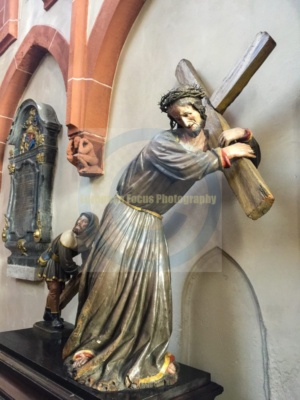
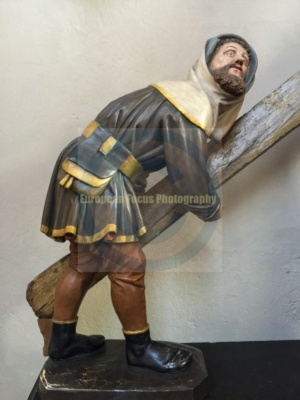
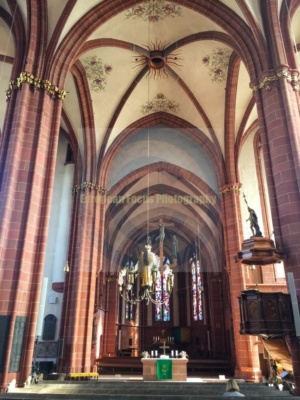
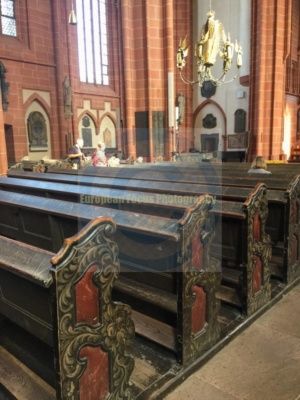
Wetzlar Cathedral

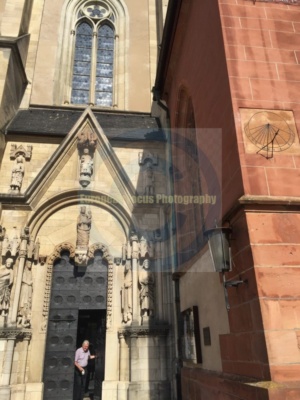
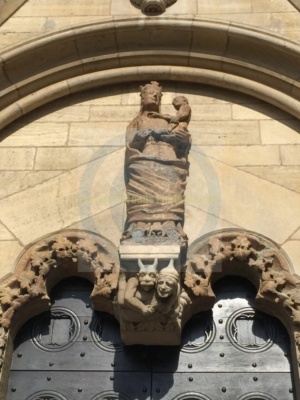
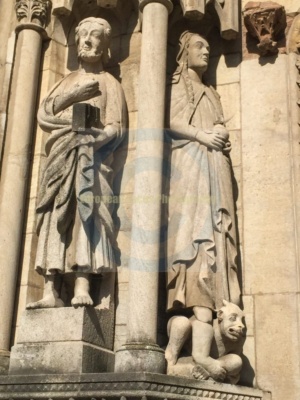
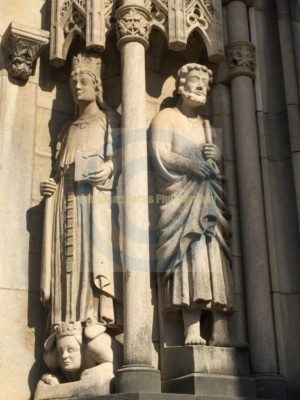
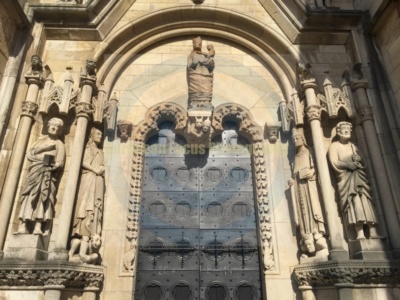
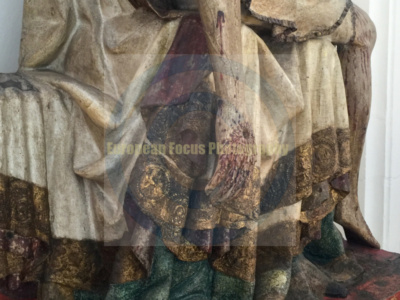
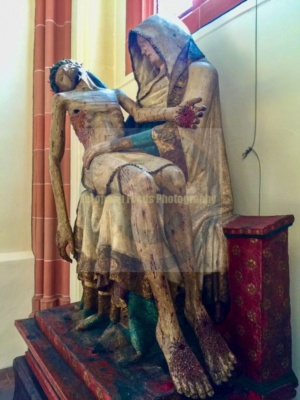
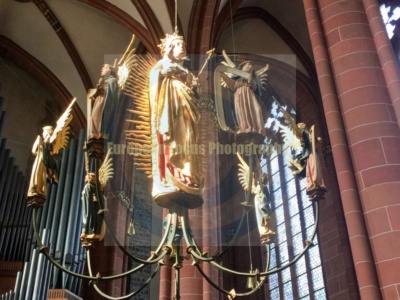
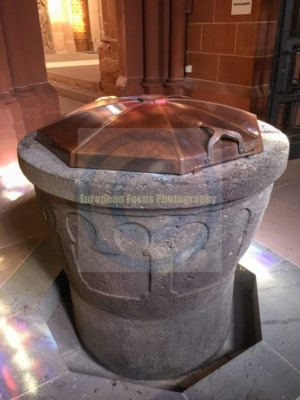
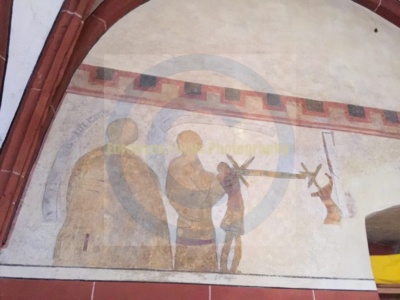
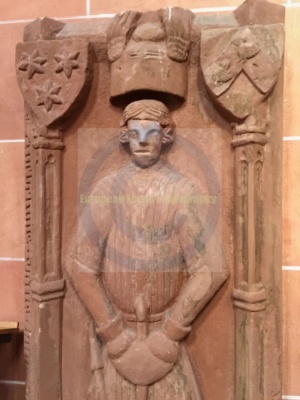
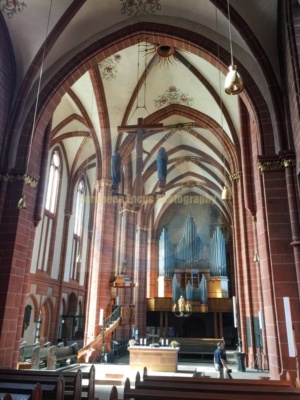
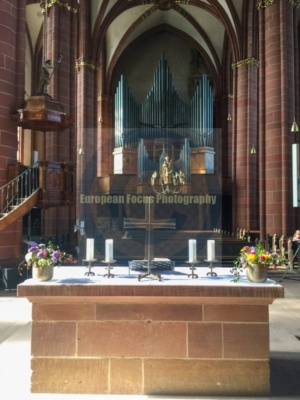
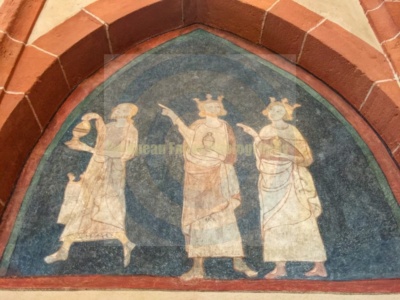
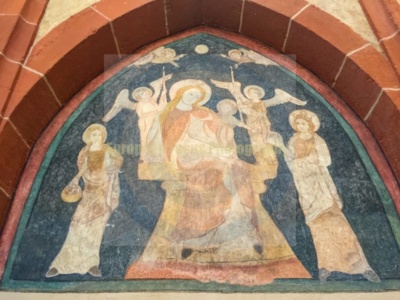
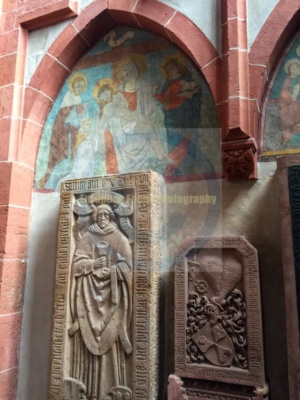
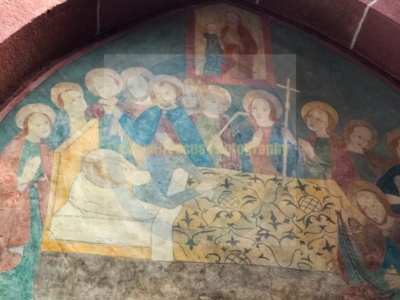
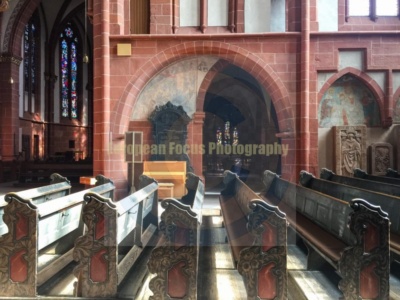
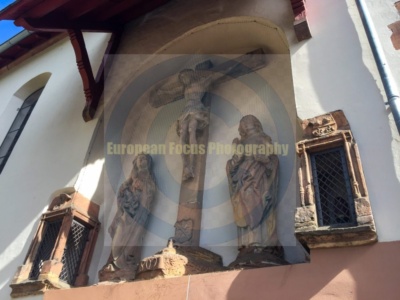
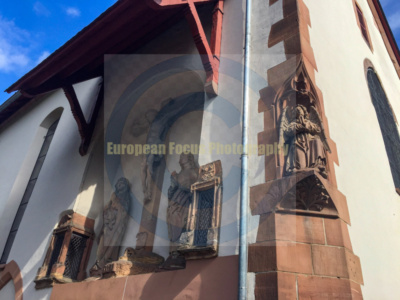
The Wetzlarer Dom (Wetzlar Cathedral) is one of Wetzlar’s landmark buildings. Building work began on the cathedral in 1230 and is still not finished. It is the successor to a former “Church of the Saviour” consecrated in 897. The monastery and parish church was called Cathedral as of the late 17th century. This designation was acquired during the time that the Reichskammergericht was active in Wetzlar (1693–1806), when the Elector-Archbishop of Trier was Monastery Provost, making the church a “Bishop’s Church”.