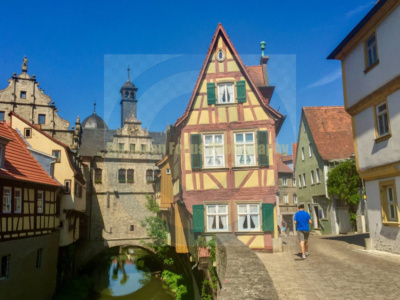
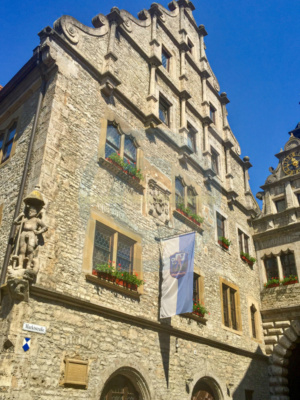
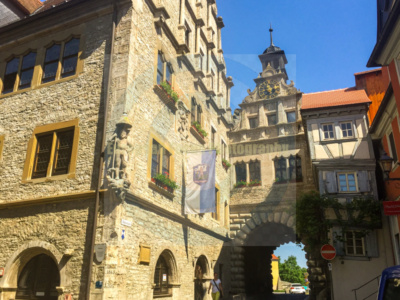
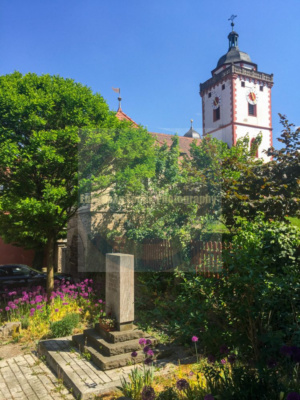
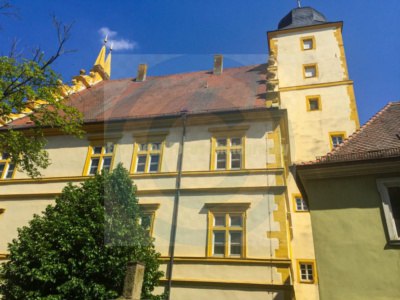
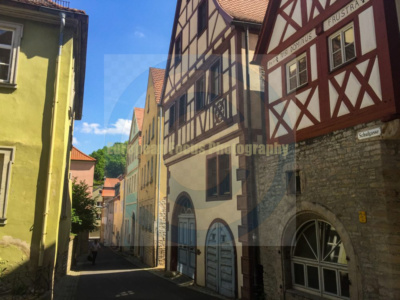
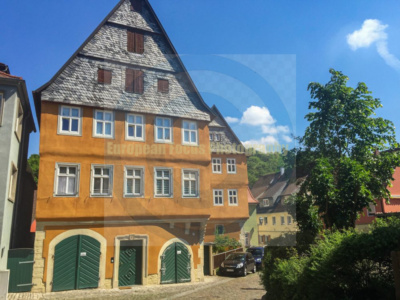
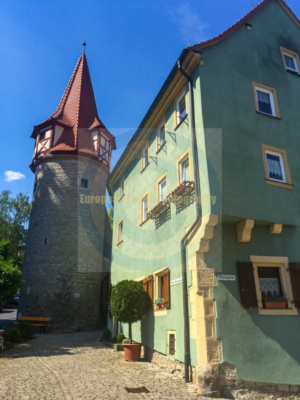
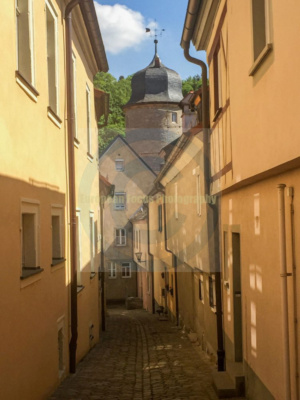
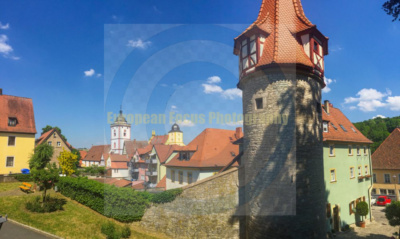
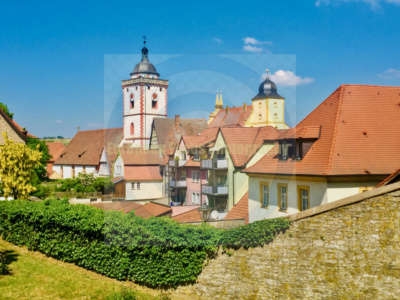
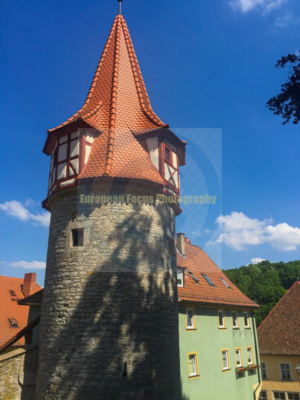
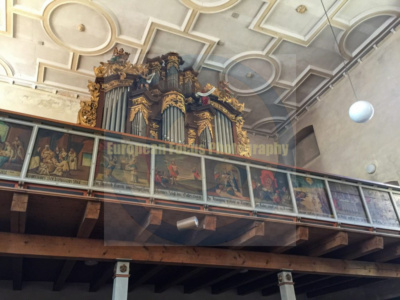
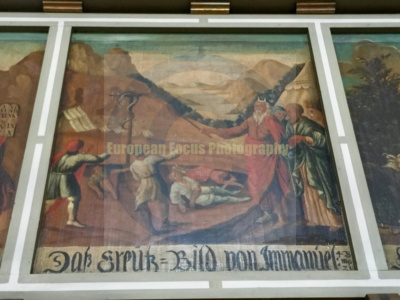
Marktbreit, Bavaria
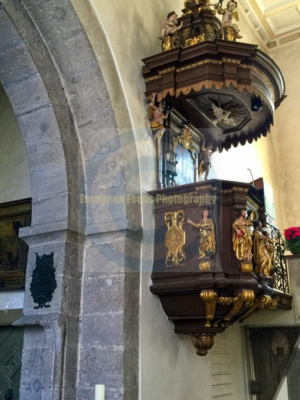
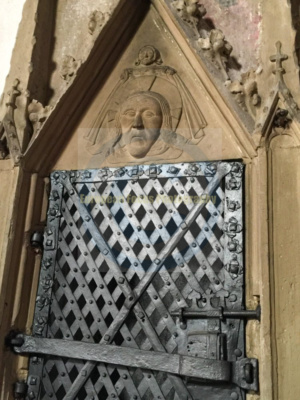
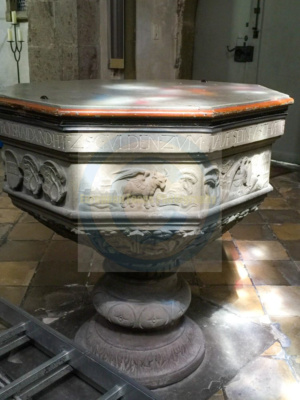
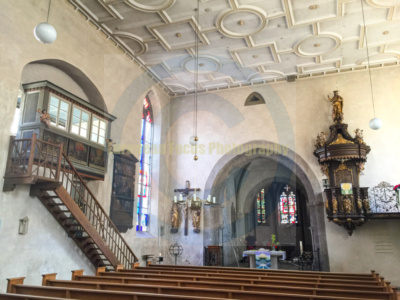
Marktbreit was photographed by James Derheim, European Focus Private Tours, in April and September, 2018
Marktbreit am Main (German pronunciation: [maʁktˈbʁaɪt] ⓘ) is a town in the district of Kitzingen in the Regierungsbezirk Unterfranken in Bavaria, Germany. It is situated at the most southern point of the Main river. Marktbreit is the birthplace of Alois Alzheimer who first identified the symptoms of what is now known as Alzheimer’s disease. With its suburb Gnodstadt, Marktbreit has around 3,700 inhabitants.
Roman settlement
Near Markbreit, the site of a large Roman legionary fortress (or castrum legionarium) known locally as the Römerlager Marktbreit, was discovered in 1985 and celebrated as a minor scientific sensation because it was never suspected that a legionary fortress was built so far northeast in enemy territory.[3] It was built in Augustan times in enemy territory beyond the “Limes” frontier in preparation for an invasion of the rest of Germany.[4]
It was identified on aerial photos in 1985, and archaeologists were active in 1986-1992. The palisade (2¼ km long, using 21,000 trees) appeared to be finished and several buildings were complete. The surface area of 37 ha suggested that the base was built for two legions or one legion and many auxiliary troops. There were no traces of actual occupation and it took some time to conclude that this was not the result of erosion, but from the fact that the base had been prepared but was never used.
The headquarters (praetorium), the residences of three centurions, store rooms (horrea), and kilns had already been finished before the settlement was abandoned. There are no traces of violence, and precious objects appear to have been taken away, which suggests that the Marktbreit castrum was evacuated when strategic realities had changed and made it unnecessary.
However, a rebellion in Pannonia delayed the execution of the invasion plan, and the defeat of Varus in the Teutoburg Forest put an end to all Roman ambitions east of the Rhine, and the base was never used.
Later history

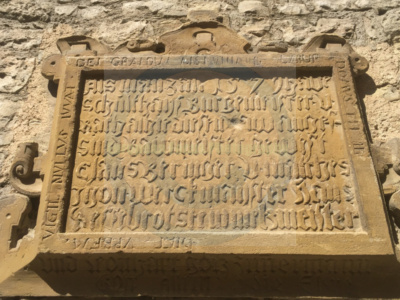
Gnodstadt was first mentioned in a document in 1124. Marktbreit was first mentioned as “broite inferior” in a document of the Count of Castell in 1258. From 1351 Gnodstadt was ruled by Hohenlohe-Brauneck. In 1557, King Ferdinand granted Marktbreit the right to hold markets, thus the name “Markt”breit that has since been used.[5]
In the 17th and 18th century Marktbreit was an important marketplace because the shortest way to the Danube from the Main (which flows into the Rhine) starts in Marktbreit.
In 1806, Marktbreit came to the Kingdom of Bavaria.[5]
Gnodstadt became a part of Marktbreit on 1 May 1978.