Sparsholt, Hampshire
Photographed for a genealogist who was on a private tour in May, 2017.
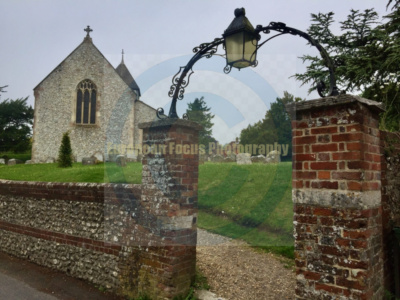
The present church is essentially the result of the Victorian renovation and expansion in the 1880s; William Butterfield, architect of the Royal Hampshire County Hospital in Winchester, was employed by the Rev. E.D. Heathcote, then fairly recently arrived as vicar, to remedy the ruinous state of the old building. The tower was strengthened and topped by a wooden belfry and spire, now covered with cedar shingles. The chancel was extended and a north aisle built to include space for the organ and a vestry. The old wooden gallery was taken down and part of it used as a screen between the organ space and the chancel.
During this work, several intriguing and interesting discoveries were made. The bones of a horse, which might have been buried alive, were unearthed at the east end in what may well have been early rites connected with churchyards. A chalk coffin containing the burial wrappings of a medieval priest, a pewter chalice and paten were discovered in the region of the pulpit. The coffin can be seen outside the church by a blocked up entrance to the chancel. The pewter ware is in the treasury of Winchester Cathedral. The medieval church had been brightly painted and a fresco was revealed behind the altar showing St Stephen. This could not be preserved but there is an extant contemporary watercolour of it and the stone canopy over the original was repositioned above the south door.