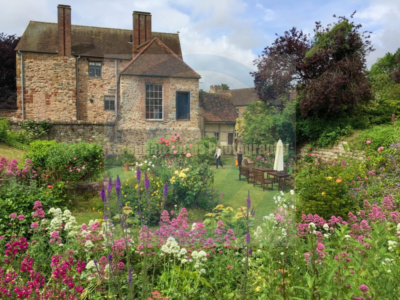
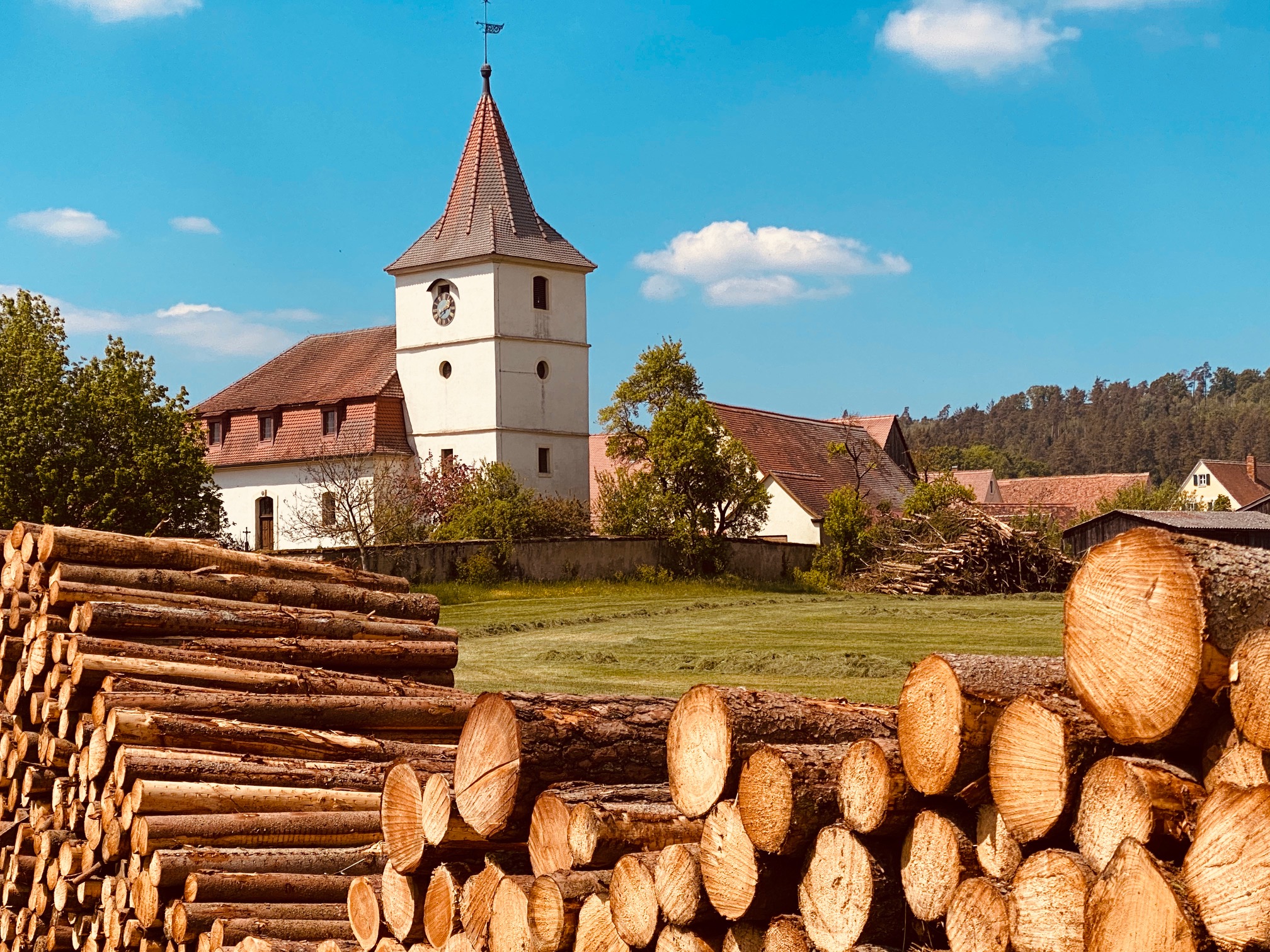
Taunton, Somerset
Photographed by James Derheim, European Focus Private Tours, on June 1, 2017
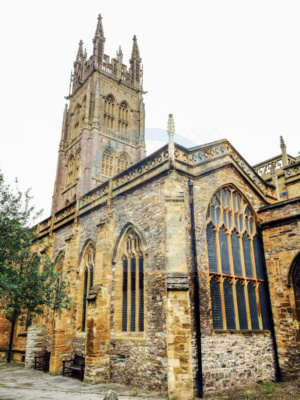
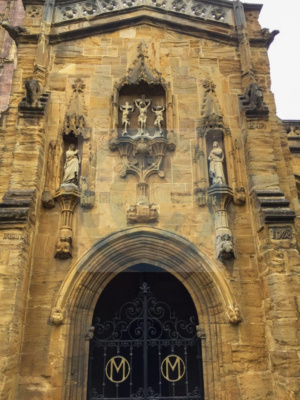
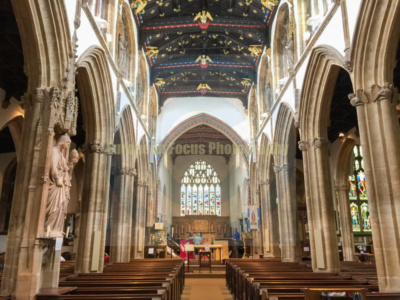
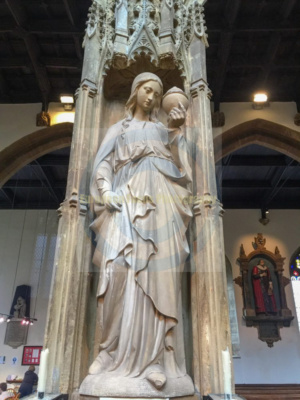
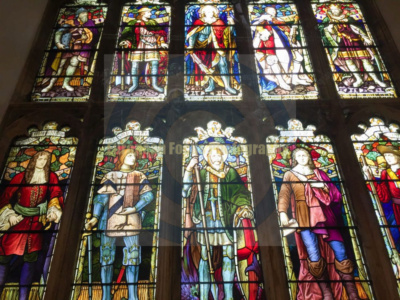
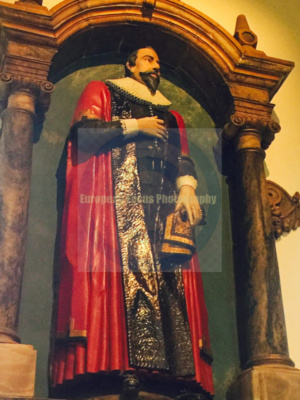
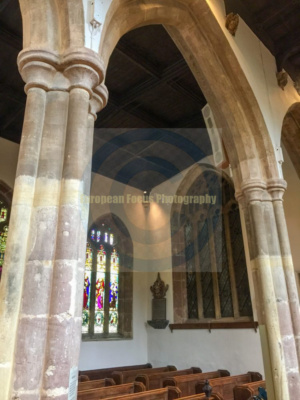
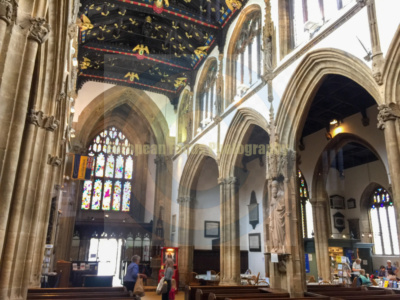
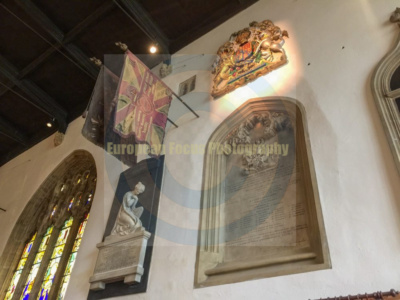
The Taunton Minster Church of St Mary Magdalene, built of sandstone more in the South Somerset style, retains an attractive painted interior, but its prime feature is a 15th and 16th-century tower rebuilt in the mid-19th century. It is one of the country’s best examples and a landmark 158 feet (48 m) high.[122][123] It was termed by Simon Jenkins, “the finest in England. It makes its peace with the sky not just with a coronet but with the entire crown jewels cast in red-brown stone.”[124] It holds 12 bells and 3 bells “hung dead” for the clock.[125]
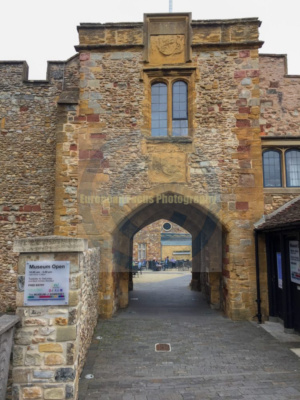
Taunton (/ˈtɔːntən/ TAWN-tən) is the county town of Somerset, England. It is a market town and has a minster church. Its population in 2011 was 64,621.[2] Its thousand-year history includes a 10th-century monastic foundation, owned by the Bishops of Winchester, which was rebuilt as Taunton Castle by the Normans in the 12th century. Parts of the inner ward house were turned into the Museum of Somerset and Somerset Military Museum. For the Second Cornish uprising of 1497, Perkin Warbeck brought an army of 6,000; most surrendered to Henry VII on 4 October 1497.[3][4] On 20 June 1685, the Duke of Monmouth crowned himself King of England in Taunton in the failed Monmouth Rebellion. Judge Jeffreys led the Bloody Assizes in the Castle’s Great Hall.[5]
The Grand Western Canal reached Taunton in 1839 and the Bristol and Exeter Railway in 1842. Today it hosts Musgrove Park Hospital, Somerset County Cricket Club, is the base of 40 Commando, Royal Marines, and is home to the United Kingdom Hydrographic Office on Admiralty Way.[6] The popular Taunton Flower Show has been held in Vivary Park since 1866, and on 13 March 2022, St Mary Magdalene parish church was elevated to the status of Taunton Minster.[7]
The town name derives from “Town on the River Tone” or Tone Town.[8][3] Cambria Farm, which now hosts a park and ride close to the M5 motorway Junction 25, was the site of Bronze and Iron Age settlement and a Roman farm.[9] There was a Romano-British village near the suburb of Holway.[10] Taunton was important in Anglo-Saxon times[11] as a burh with a mint.[3] King Ine of Wessex threw up an earthen castle about 700, but it was levelled in 722 by his queen, Æthelburg of Wessex, to prevent seizure by rebels.[3]
A monastery was founded before 904.[12] The bishops of Winchester owned the manor, and obtained the first charter for their “men of Taunton” from King Edward in 904, freeing them from all royal and county tribute. Some time before Domesday, Taunton became a borough with privileges and a population of some 1,500,[11] including 64 burgesses[3] governed by a portreeve appointed by the bishops. Somerton took over from Ilchester as county town in the late 13th century,[13] but declined; the county-town status passed to Taunton about 1366.[14] Between 1209 and 1311 the Bishop of Winchester’s manor of Taunton expanded two-and-a-half times.[15] The parishes of Staplegrove, Wilton, and Taunton were part of Taunton Deane hundred.[16]
In 1451, during the Wars of the Roses, Taunton saw a skirmish between the Earl of Devon, and Baron Bonville.[3] Queen Margaret and her troops passed through in 1471 to defeat at the Battle of Tewkesbury.[3] In the Second Cornish uprising of 1497 most Cornish gentry supported Perkin Warbeck’s cause and on 17 September a Cornish army some 6,000 strong entered Exeter before advancing on Taunton.[3][4] Henry VII sent his chief general – Giles, Lord Daubeney – to attack the Cornish. When Warbeck heard that the King’s scouts were at Glastonbury he panicked and deserted his army. On 4 October 1497, Henry VII reached Taunton, where he received the surrender of the remaining Cornish army. Ringleaders were executed and others fined a total of £13,000.[17]

Taunton Castle changed hands several times in the Civil War of 1642–1645, as did the town.[18] During the Siege of Taunton it was defended by Robert Blake from July 1644 to July 1645, and suffered destruction of many medieval and Tudor buildings.[3] On 20 June 1685, the Duke of Monmouth crowned himself King of England at Taunton during the Monmouth Rebellion. In the autumn of that year Judge Jeffreys lived in the town during the Bloody Assizes that followed the Battle of Sedgemoor.[5]

The town lacked a charter of incorporation until 1627.[11] This was renewed in 1677, but lapsed in 1792 due to vacancies in the corporate body, and was not reincorporated until 1877. The medieval fairs and markets (a weekly market remains) were celebrated for the sale of woollen cloth called “Tauntons” made in the town. On the decline of the woollen industry in the west of England, silk-weaving was introduced at the end of the 18th century.[19]
In 1839 the Grand Western Canal reached Taunton, aiding southward trade,[20] which was enhanced by the arrival of the railway in 1842.[3]
A permanent military presence came to Jellalabad Barracks in 1881.[21]
In the Second World War, the Bridgwater and Taunton Canal formed part of the Taunton Stop Line, set to curb any advance of a German invasion. Pillboxes can still be seen along its length.