Civita di Bagnoregio, Umbria
Civita di Bagnoregio, Italy was photographed in various years by James Derheim, European Focus Private Tours
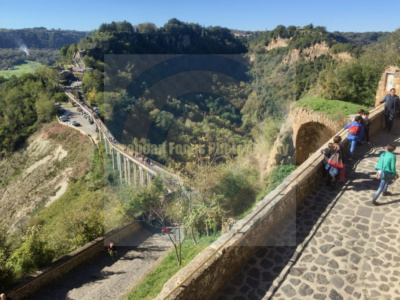
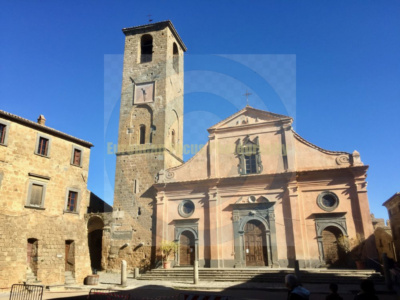
Civita di Bagnoregio is a hilltop village in central Italy. It’s accessed via a pedestrian bridge from the nearby ticket office in Bagnoregio village. The Porta Santa Maria gateway was built by the Etruscans. Founded in the 7th century, the Romanesque San Donato Church sits in the main square. Nearby is the Geological and Landslides Museum, whose exhibits document projects to shore up the village’s eroding hillside.
The Church of San Donato, the main church in the “dying town” of Civita di Bagnoregio, is a Romanesque structure situated in the central piazza, originally founded in the 7th or 8th century upon an earlier Roman temple. It served as the city’s cathedral until a devastating earthquake in 1695 caused the episcopal seat to move.
- Origins and Architecture: The church dates back to the 7th or 8th century, with major reconstructions occurring over time. The current façade was redesigned in the Renaissance style around 1511, under the direction of architect Nicola Matteucci of Caprarola.
- Key Features: Inside, it houses a revered 15th-century wooden crucifix attributed to the school of Donatello, which is traditionally paraded on Good Friday. It also features a fresco from the school of Perugino.
- Ancient Elements: The bell tower incorporates two ancient Etruscan sarcophagi at its base, highlighting the layers of history in the town.
- Post-1695: Following the 1695 earthquake, which destroyed much of the town and its infrastructure, the bishop moved to the nearby town of Bagnoregio.
- Cultural Significance: The church has remained a focal point for the remaining, largely abandoned, town, often referred to as “Il paese che muore” (the dying town). The church was also close to the birthplace of Saint Bonaventure, a prominent 13th-century theologian born in Civita.