Ostrava, Moravia-Silesia
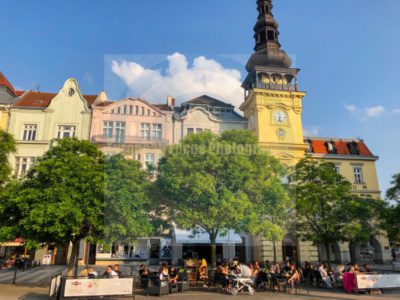
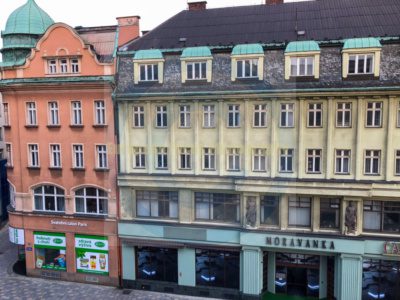
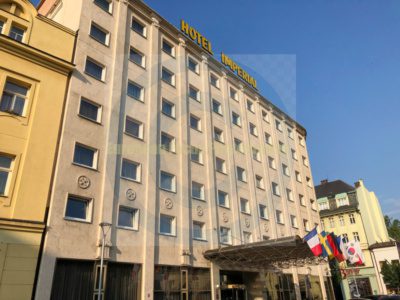
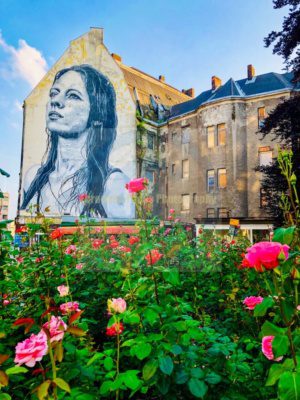
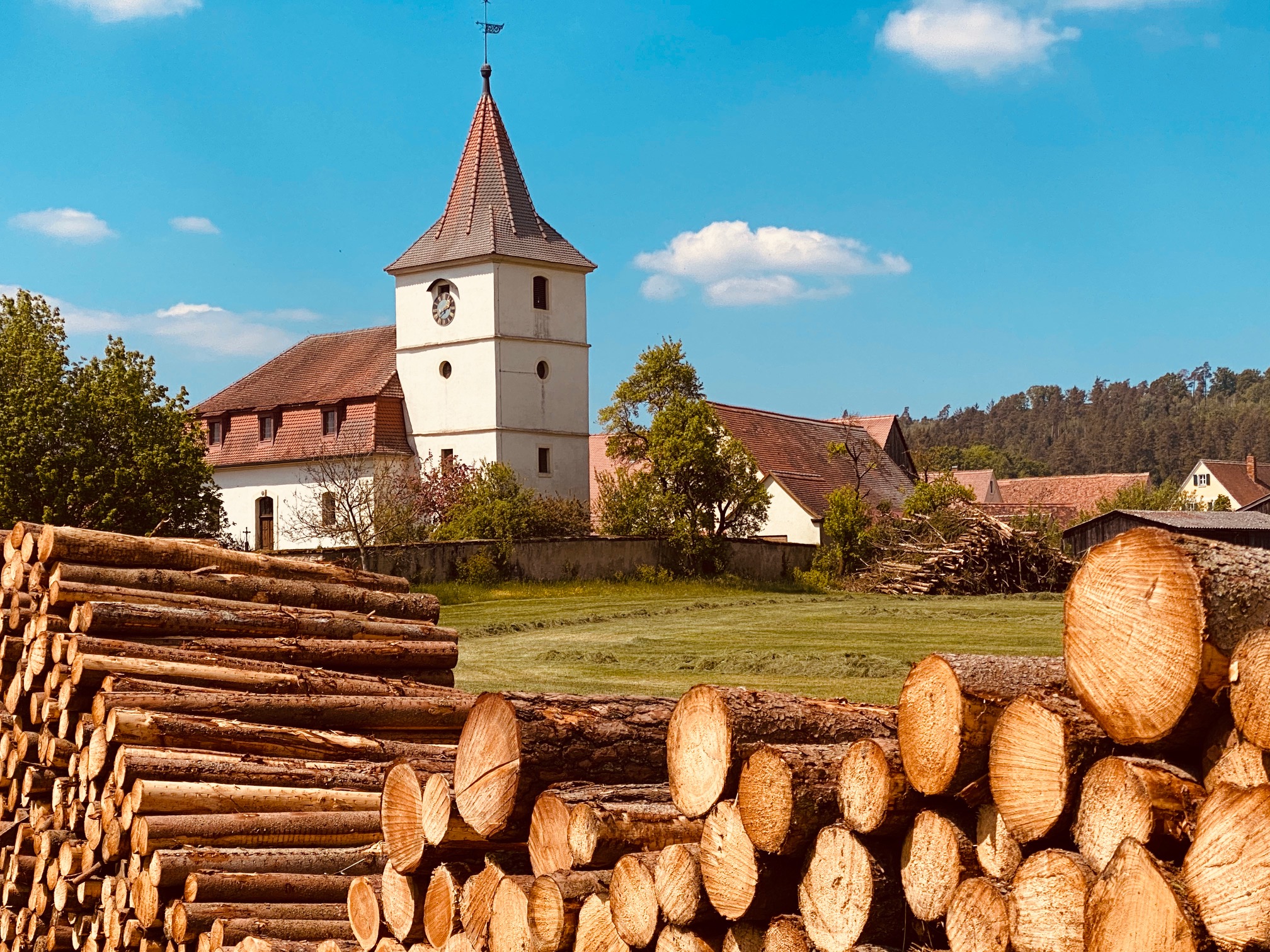
Ostrava, Moravia-Silesia was photographed by James Derheim, owner of European Focus Private Tours, in June of 2019.
Ostrava is a city in the north-east of the Czech Republic and the capital of the Moravian-Silesian Region. It has about 283,000 inhabitants. It lies 15 km (9 mi) from the border with Poland, at the confluences of four rivers: Oder, Opava, Ostravice and Lučina. Ostrava is the third largest city in the Czech Republic in terms of both population and area, the second largest city in the region of Moravia, and the largest city in the historical land of Czech Silesia. It straddles the border of the two historic provinces of Moravia and Silesia. The wider conurbation — which also includes the towns of Bohumín, Havířov, Karviná, Orlová, Petřvald and Rychvald — is home to about 500,000 people, making it the largest urban area in the Czech Republic apart from the capital Prague.
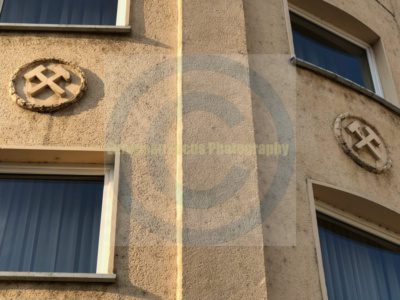
Ostrava grew in importance due to its position at the heart of a major coalfield, becoming an important industrial engine of the Austrian empire. During the 20th century it was known as the “steel heart” of Czechoslovakia thanks to its status as a coal-mining and metallurgical centre, but since the Velvet Revolution (the fall of communism in 1989) it has undergone radical and far-reaching changes to its economic base. Industries have been thoroughly restructured, and the last coal was mined in the city in 1994. However, remnants of the city’s industrial past are visible in the Lower Vítkovice area, a former coal-mining, coke production and ironworks complex in the city centre which retains its historic industrial architecture. Lower Vítkovice has applied for inclusion in the UNESCO World Heritage List.
The first written mention of Slezská Ostrava (Silesian Ostrava) dates from 1229, when it was described as a settlement. The first mention of Moravian Ostrava (Moravská Ostrava) in 1267 describes it as a township. Ostrava grew on the banks of the Ostrá River (now the Ostravice) from which it took its name. The river still divides the city into two main parts: Moravian Ostrava (Moravská Ostrava) and Silesian Ostrava (Slezská Ostrava). The settlement occupied a strategic position on the border between the two historic provinces of Moravia and Silesia and on the ancient trade route from the Baltic Sea to the Adriatic Sea known as the Amber Road. Its location helped the town to grow and flourish.
However, Ostrava began to decline in importance after the Thirty Years’ War, and it was occupied by Danish forces in 1626, and by Swedish forces from 1642 to 1650.

A turning point in Ostrava’s history came in 1763 with the discovery of extensive deposits of high-quality bituminous coal on the Silesian bank of the Ostravice River. In 1828, the owner of the local estates, Rudolf Jan, the archbishop of Olomouc, established an ironworks, which was named after him as the Rudolfshütte. Later, the ironworks passed into the ownership of the Rothschild family and became known as the Vítkovice Ironworks. The company became the driving force behind Ostrava’s industrial boom. By the second half of the 20th century, the city was nicknamed the country’s “steel heart”.

In 1931 the Jewish community in Ostrava numbered 6,865 (5.4% of the population). About 8,000 Jews from the Ostrava district were murdered in the Holocaust during the German occupation in World War II. The Nisko Plan included the first deportation train transports of 1,301 Jews from Ostrava on 17 and 26 October 1939. In 1994, a Holocaust memorial to the Jewish victims of Ostrava was built in Milada Horáková Park. During World War II the city was occupied by Germany. The occupiers operated a Gestapo prison in the city, and several forced labour camps, including three labour “education” camps, located in Moravská Ostrava, Vítkovice, and Kunčice, and the E21 subcamp of the Stalag VIII-B/344 prisoner-of-war camp in the present-day district of Petřkovice.
After the war, the city’s German-speaking population were expelled in accordance with the Potsdam Agreement. 231 German-speaking citizens were killed in a massacre at an internment camp, known as the Hanke Lager Massacres. The liberation of Ostrava by the Red Army led to the city entering its greatest period of expansion. Initially, the new housing projects were on a relatively-small scale focusing on the Poruba district and featuring architecture in the Socialist realism style. Later, however, the authorities built larger-scale developments of prefabricated apartment blocks in Poruba and created a series of satellite estates to the south of the city (Ostrava-Jih). The city centre was gradually depopulated, and its people were moved out to the suburbs, as part of a long-term plan to destroy the city centre entirely and to turn the land over to coal-mining.

The 1990s brought a rapid decline in the city’s traditional industrial sectors: iron, steel, chemicals and coal-mining. The last coal was mined on 30 June 1994, which was accompanied by major investments to rectify ecological damage done by decades of heavy industry. The projects ultimately brought major improvements in the city’s environment and quality of life. Ostrava became an important tourist centre that offered easy access to the nearby Hrubý Jeseník and Moravian-Silesian Beskids mountains.
As well as hundreds of hectares of recultivated former mining land, the city also has numerous natural landscape features of interest, many of which are protected nature reserves. They include the Polanský Forest and the Polanská Meadows, both of which form part of the Poodří (Oder Basin) nature reserve.
A rare geological feature found in the city is the granite erratic boulders. Originally from Scandinavia, they were left behind after the last ice age, when the ice sheets retreated. Another feature is the Ema slag heap, an artificial hill made of mining waste (slag) that offers panoramic views. The waste is still burning deep beneath the surface, which gives the slag-heap its own microclimate.
(Wikipedia)