Trujillo
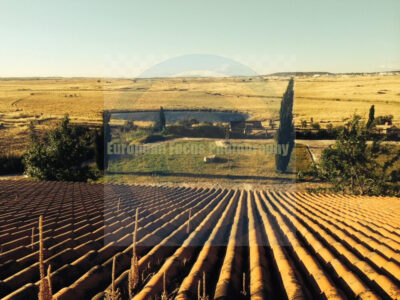
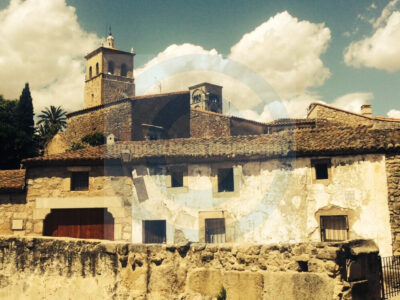
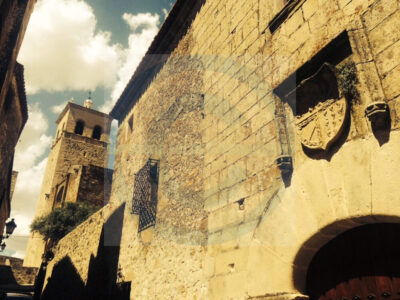
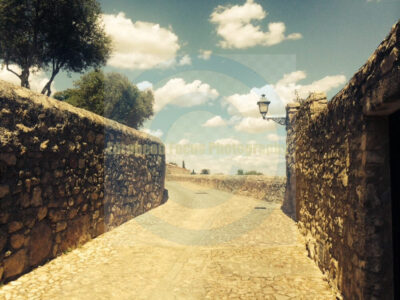
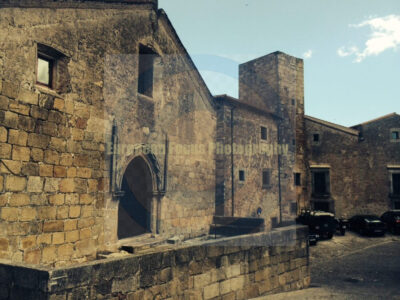
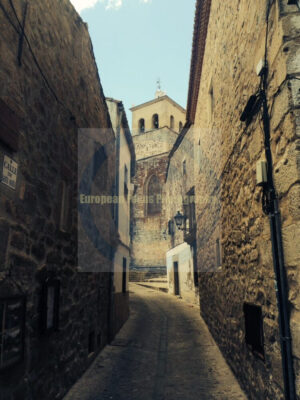
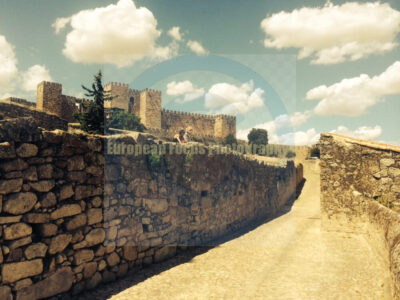
Trujillo, Spain was photographed by James Derheim, European Focus Private Tours, in 2017
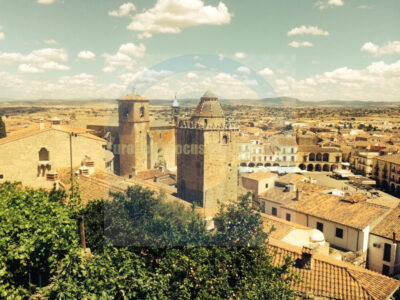
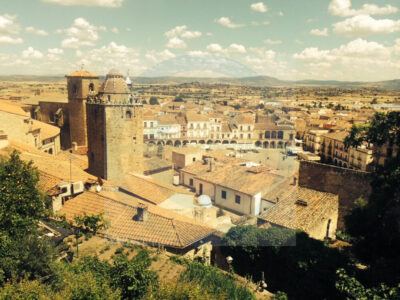
Trujillo is a municipality located in Extremadura, an autonomous community of Spain in the Province of Cáceres. In 2013 the municipality had 9,086 inhabitants (INE Census, 2013).
Originally settled on a granite knoll, which was readily fortified, Trujillo now extends to the southeast of its original site. Likewise, it lies on the A-5 road route connecting central Spain with the Portuguese border. The old town contains many medieval and renaissance buildings.
It hosts the national cheese festival in early May.
Antiquity
Trujillo is identified with the Roman Turgalium, which became a prefecture of Emerita Augusta.[2] Regardless of whether there was a previous indigenous settlement or not, Romans developed Turgalium seeking to alter pre-existing economic and trade networks and draw indigenous populations from the surroundings together.[3]
Middle Ages
Following the Islamic conquest after 711, Trujillo became one of the main towns in the region (known as ترجالة Turjaala in Arabic). This taifa was subject to the Umayyad Emirate and the subsequent Caliphate ruled until the middle of the 11th century. During this time the ethnic tensions between Berbers and Arabs weakened the Caliphate militarily.
Following the seizure of a large part of the territory of the former Taifa of Toledo by the Almoravids from Alfonso VI, Trujillo became a site from where Almoravid razzias were launched against the land of Talavera in the early 12th century.
During the time of Almohad rule, wars with Portugal, Castile and León guaranteed that the possession of Trujillo was tenuous. Rule alternated between these kingdoms and the Almohads, returning for the last time to the Muslims in 1195. Between 1188 and 1195 it was the headquarters of the military order of Trujillo.
In the Spring of 1196, with help from the Kingdom of León, Almohads raided the Tagus valley and occupied Santa Cruz and Trujillo, which had been previously left forsaken by the order of Trujillo.
An army formed by forces of the military orders and the Bishop of Plasencia laid siege to Trujillo with the support of Ferdinand III. Ibn Hud tried to relieve the town but was driven off by the besieging army.
The town was finally captured on 25 January 1232. During the final assault, according to the local legend, the Christian forces were faltering just short of victory when many reported seeing the Virgin Mary (known as Virgen de la Victoria in Spanish, or the Virgin Mary of Victory) between the two towers, or Arco del Triunfo, in the castle. Sufficiently inspired, Christian troops pressed on and achieved victory, defeating the Muslims, who were inside.
Together with Plasencia, Cáceres and Coria, Trujillo was one of the few major realengo (royal demesne) towns in the region, where otherwise maestrazgo lands tended to prevail.
Alfonso X granted Trujillo a fuero in 1256.
John II conferred on Trujillo the status of city (ciudad) in 1430 by means of a privilegio rodado. The crown also granted Trujillo a weekly market privilege in 1465. Trujillo sustained intense population growth in the second half of the 15th century. Trujillo hosted a sizeable an economically prosperous morería (Mudéjar community), with an aljama of up to four hundred people by the late 15th century. Likewise, the judería (Jewish community) had its own synagogue, traces of which have been identified archaeologically. In 1491, a dispute within the community over alterations to the synagogue was brought before Abraham Senior, rab de la corte, who ruled against the changes; Senior himself also owned property in Trujillo. After the expulsion of the Jews from Castile a year later, the synagogue was transferred by the Crown to local religious institutions and ultimately to the convent of Santa Isabel, while tombstones from the Jewish cemetery were granted to the monastery of Santa María de la Encarnación.
Trujillo managed to avoid becoming a lordship, but in 1475 it lost the villages of Logrosán, Garciaz, Cañamero, Acedera, Navalvillar and Zorita, which became part of a lordship under Gutierre Álvarez de Toledo. Political life and council member posts in the late middle ages were brokered among an urban oligarchy formed by the lineages of the Altamiranos, the Bejaranos, and the Añasco. Social inequality was prominent by the late 15th century, and begging and poverty were an issue at the time. (Wikipedia)