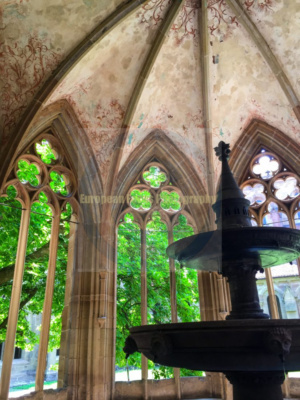
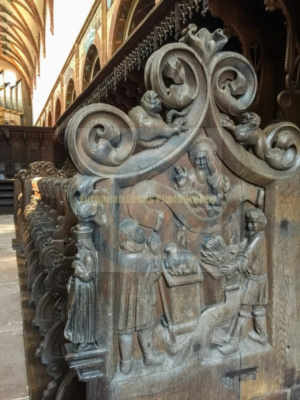
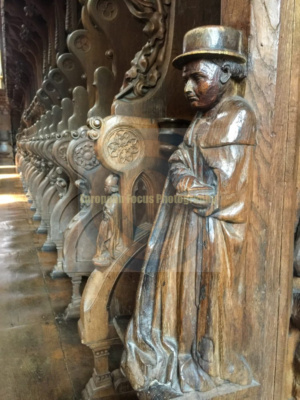
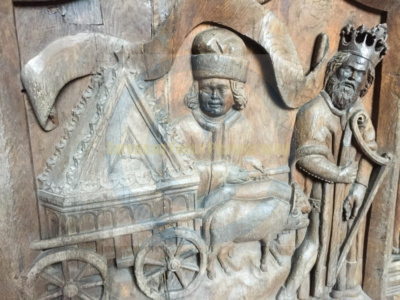
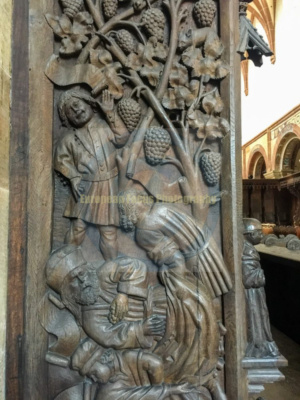
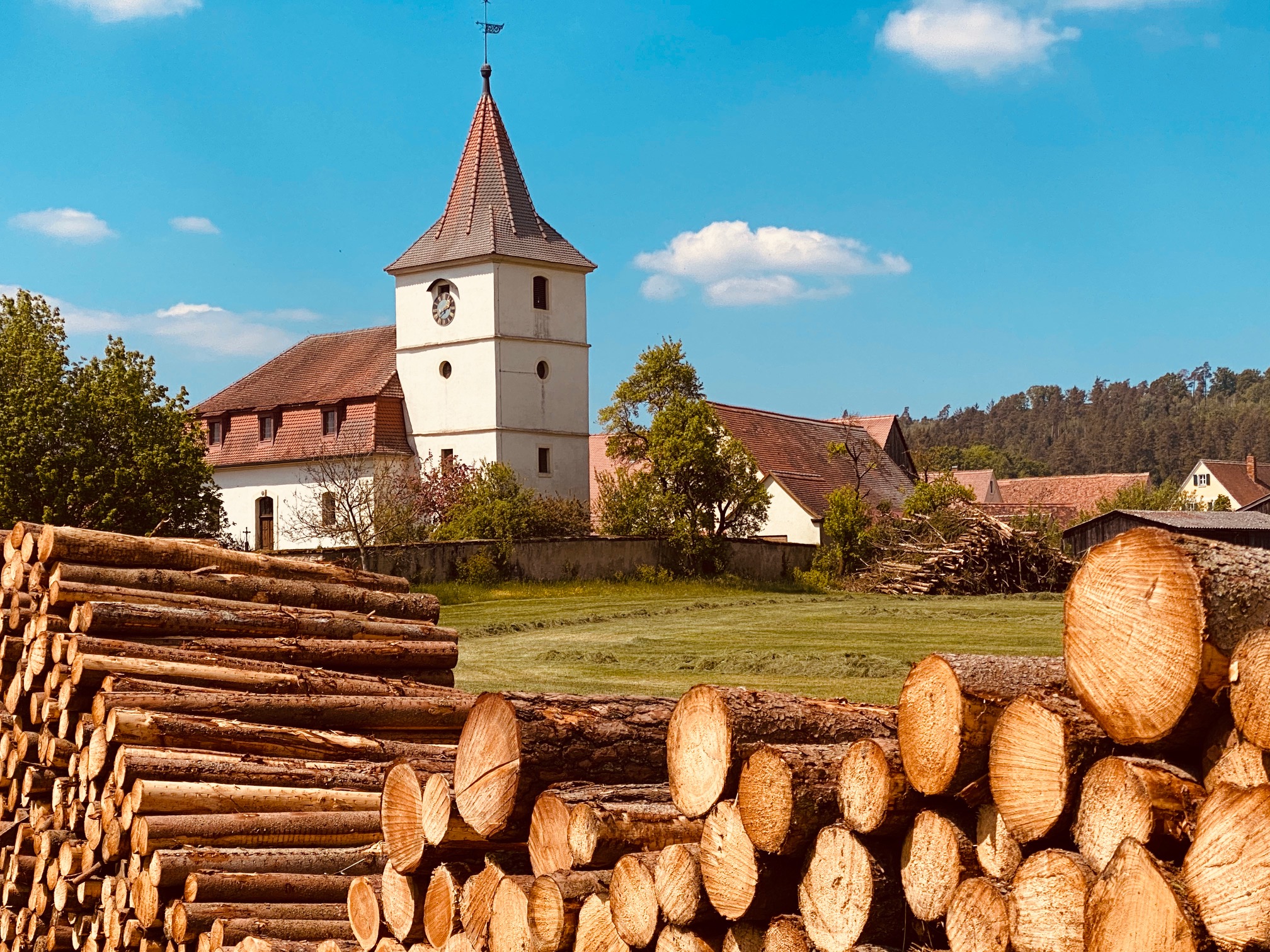
Maulbronn Monastery, Baden-Wuerttemberg
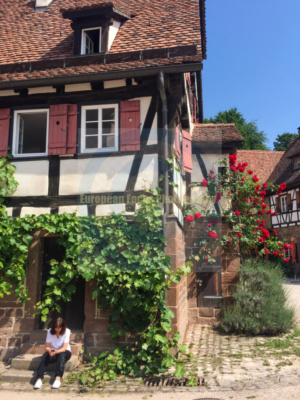
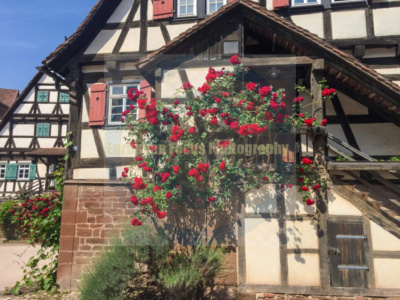
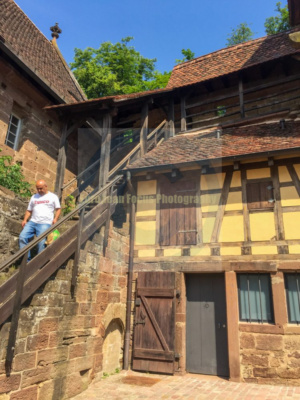
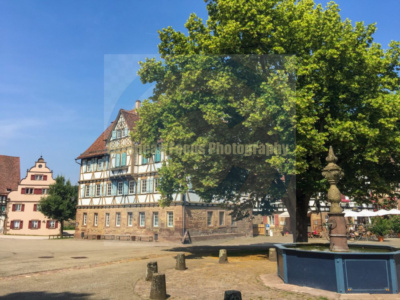
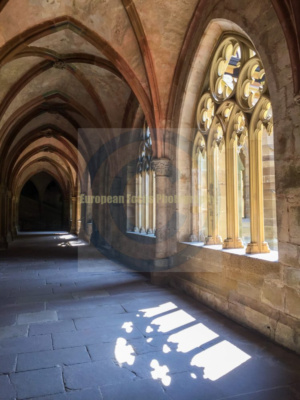
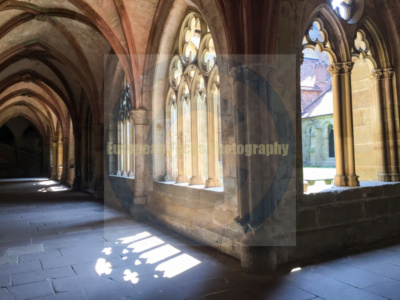
Maulbronn Monastery was photographed by James Derheim of European Focus Private Tours in early June, 2018
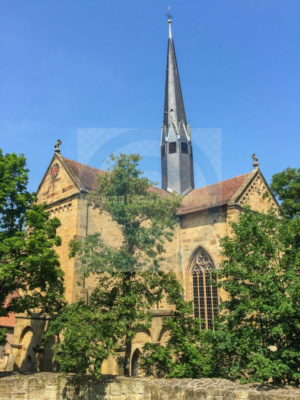
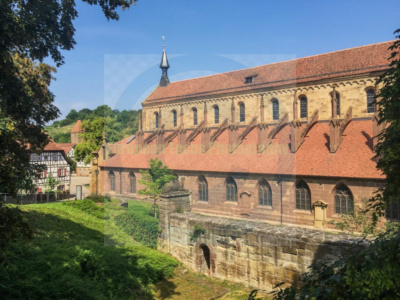
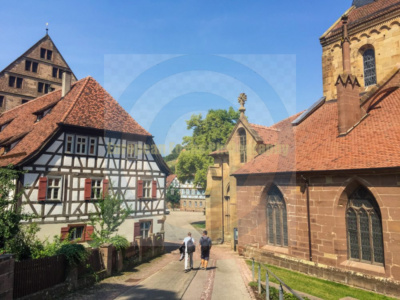
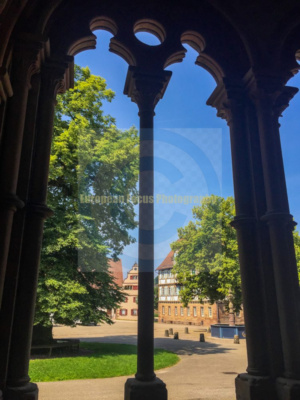
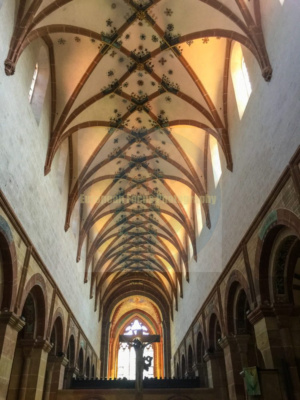
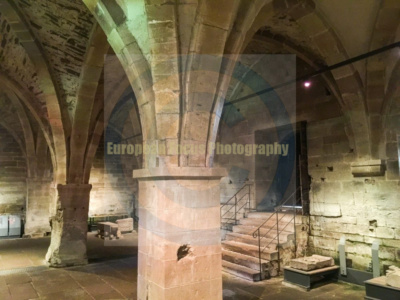
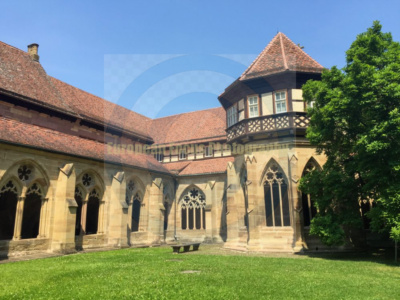
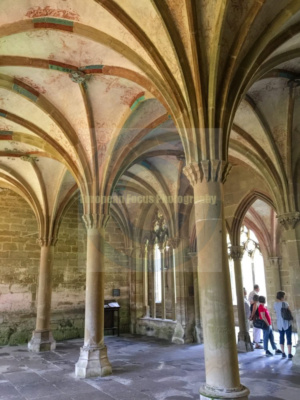
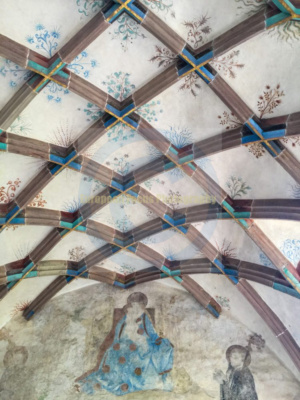
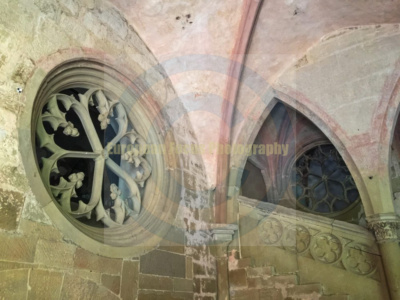
Maulbronn Monastery (German: Kloster Maulbronn) is a former Cistercian abbey and ecclesiastical state in the Holy Roman Empire located at Maulbronn, Baden-Württemberg. The monastery complex, one of the best-preserved in Europe, was named a UNESCO World Heritage Site in 1993.
The monastery was founded in 1147 and experienced rapid economic and political growth in the 12th century, but then hardship in the late 13th century and the 14th century. Prosperity returned in the 15th century and lasted until Maulbronn was annexed by the Duchy of Württemberg in 1504. Over the 16th century, the Cistercian monastery was dissolved and replaced with a Protestant seminary. It also became the seat of an important administrative district of the Duchy and later Kingdom of Württemberg.
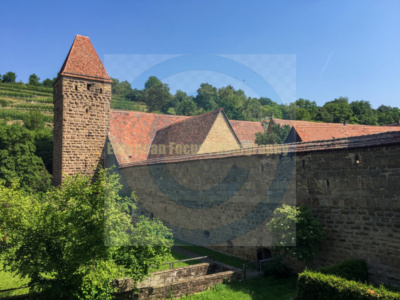
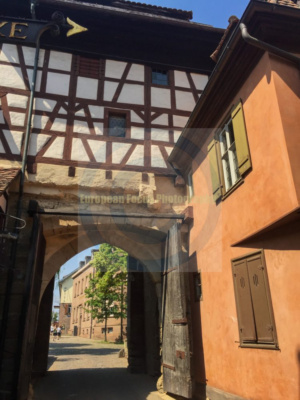
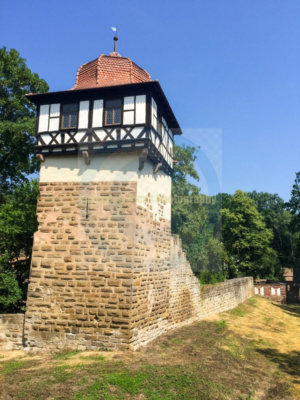
The complex, surrounded by turreted walls and a tower gate, today houses the Maulbronn town hall and other administrative offices, and a police station. The monastery itself contains an Evangelical seminary and a boarding school.
History
|
Imperial Monastery of Maulbronn
Reichsabtei Maulbronn
|
|||||||||
|---|---|---|---|---|---|---|---|---|---|
 |
|||||||||
| Status | Imperial Abbey | ||||||||
| History | |||||||||
|
• Abbey founded
|
1147 | ||||||||
|
• Placed under Imperial protection
|
1156 | ||||||||
|
• Annexed by Württemberg
|
1504 | ||||||||
|
|||||||||


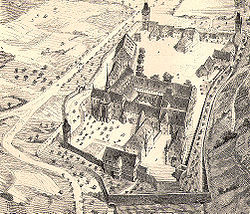
In 1138, a free knight named Walter von Lomersheim donated an estate at Eckenweiher (now Mühlacker) to the Cistercian Order for the establishment of a new monastery. The donation was received by Neubourg Abbey, which dispatched a party of 12 monks. They arrived in 1138, but found Eckenweiher to be lacking in water and pasture space. In 1147, the Eckenweiher monks were moved to a new site near the source of the Salzach river by the Bishop of Speyer, Günther von Henneberg. This site, Mulenbrunnen, about 8 kilometers (5.0 mi) from Eckenweiher, was ideal for the Cistercians. Located in the hilly Stromberg region, it was rich in water[a] and, though it was also near the Roman road running from Speyer to Cannstatt, was isolated. Construction of the Maulbronn Monastery complex began soon thereafter and was largely completed by 1200–01; the abbey church was consecrated in 1178 by Arnold I, Archbishop of Trier.
The new abbey at Maulbronn soon began a period of steady economic growth and legal security with the backing of both Bishop Henneberg, a supporter of the Cistericans and the Hohenstaufen, who were at the time the rulers of the Holy Roman Empire. In 1148, Bishop Henneberg waived Maulbronn’s obligation to pay levies for the large amount of forest its monks had to clear and Pope Eugene III granted the monastery the right of patronage. Meanwhile, Maulbronn aggressively pursued the acquisition of new territory. In 1151, Maulbronn established Bronnbach Abbey, then acquired the Füllmenbacher and Elfinger farmsteads in 1152 and 1153 respectively, and then established Schöntal Abbey in 1157.[ Maulbronn has exempted from paying tithes and was made an Imperial Abbey by Emperor Frederick I in a 1156 that listed Maulbronn’s possessions as comprising eleven farmsteads, portions of eight villages, and numerous vineyards. The monastery’s holdings were again confirmed by Pope Alexander III in 1177; by then, Maulbronn owned seventeen farmsteads.
The 13th and 14th centuries were periods of strife for Maulbronn, though in the second half of the 13th century it was granted legal jurisdiction over its territories by Pope Alexander IV. Per the rules of the Cistercian Order, its lands had to be worked by its lay brothers. However, the number of lay brothers at Maulbronn dwindled over the 13th century, owing to conflict between them and the monks, and as a result the monastery increasingly relied on hired laborers to work its land. Around 1236, the House of Enzberg became Maulbronn’s patrons and vögte, or protectors. There was persistent conflict with the Enzbergs, however, and one dispute in 1270 even saw the monastery temporarily suppressed. Emperor Charles IV transferred the vogtei of Maulbronn to the Electoral Palatinate in 1372, but this act drew the monastery into the power struggle between the Palatinate and the expanding County of Württemberg.
Prosperity returned to Maulbronn in the 15th century. Its abbots demonstrated the monastery’s wealth in 1450, when it made easily the largest contribution of any Cistercian abbey that year to Cîteaux Abbey, the order’s seat. In 1464, Maulbronn assumed the debts of Pairis Abbey in Alsace and incorporated it as a priory. Maulbronn also came to control the convents of Mariental, Rechtenshofen, Lichtenstern, Heilsbruck, and Koenigsbruck. The number of monks at Maulbronn peaked at one hundred thirty-five in the 1460s and only dipped below one hundred again at the end of the century. In 1492, Emperor Maximilian I withdrew the vogtei of Maulbronn from the Palatinate. Maximilian I additionally forbade any further fortification of the abbey, and ordered its existing works demolished.
Annexation by Württemberg


In 1504, during the War of the Succession of Landshut, Ulrich, Duke of Württemberg took Maulbronn after a seven-day siege. Ulrich subsequently had Maulbronn’s vogtei transferred to him, effectively annexing the monastery and its territories into the Duchy of Württemberg. In 1525, the monastery was occupied by peasants participating in the German Peasants’ War in 1525 and the monks were expelled.
Duke Ulrich adopted the Lutheran faith in 1534 and subsequently ordered the dissolution of all monasteries within Württemberg’s territories, and seized their properties. Maulbronn was the sole exception to this order, as it was to host monks expelled from other monasteries. In 1536, Maulbronn’s abbot relocated to Pairis and the next year began legal action to reclaim Maulbronn. The Imperial Diet of the Holy Roman Empire decided in the Cistercians’ favor at the 1548 Augsburg Interim, which followed the defeat of Ulrich and the other Protestant princes in the Schmalkaldic War. Ulrich was ordered to restore the Württemberg’s monasteries and convents and, though he tried to delay their restoration, the Cistercians returned to Maulbronn in 1548. After the 1555 Peace of Augsburg restored religious peace in the Empire, however, Christoph, Duke of Württemberg was able to fully reform the Duchy.
In 1556, Christoph reformed the monasteries. Following a program created by one of his advisors, Johannes Brenz, he established Protestant seminaries in thirteen of Württemberg’s monasteries. Maulbronn’s holdings were absorbed into the Duchy and organized into a new administrative district. A Protestant Valentin Vannius, a former monk at Maulbronn, was appointed abbot and thus the head of Maulbronn’s seminary in 1558.
Two Lutheran colloquys were held at Maulbronn, in 1564 and 1576.
The Thirty Years’ War forced the monastery school to close until 1656.
During the Nine Years War, Maulbronn was part of the defensive network of the Eppingen lines, built from 1695 to 1697 by Louis William, Margrave of Baden-Baden.
In the later years of the 17th century, Duke Louis III tasked his court architect, Georg Beer, with renovating the monastery for the seminary. In that time, Louis III had a hunting lodge built on the monastery grounds, likely designed by Beer.
Secularization and preservation
Maulbronn Monastery was finally secularized by King Frederick I in 1806.
Efforts to preserve and restore the medieval character of the monastery complex began in 1840.
The monastery school was taken over by the Nazi Party in 1941. It was reopened in 1945–46.